Accenture Links Promotions to AI Agents vs Agentic AI
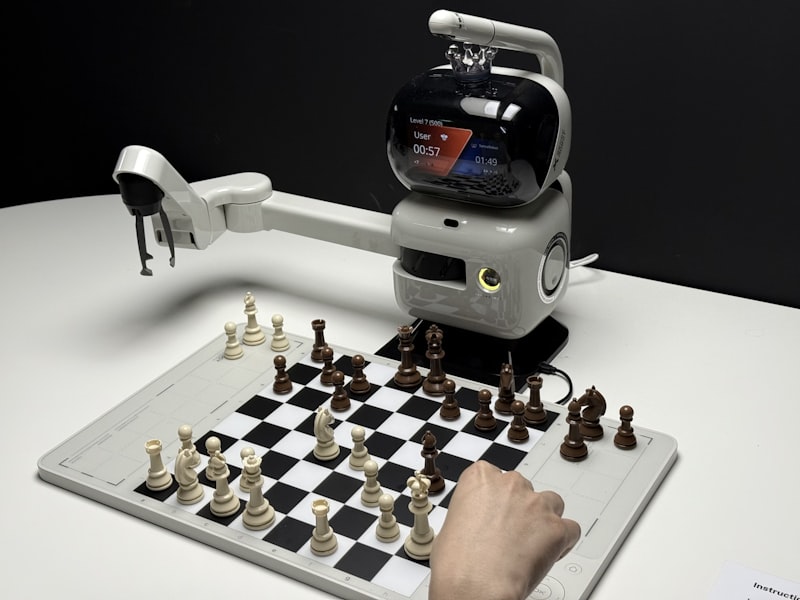
Accenture ties promotions to AI agent mastery. Understanding autonomous agents vs agentic AI distinctions now determines career advancement at major firms.
Accenture is tying promotions directly to hands-on experience with autonomous AI systems — and the distinction between ai agents vs agentic ai is now officially part of how the consulting giant evaluates its 750,000-person workforce.
The policy, confirmed by Accenture leadership in May 2025, requires employees to demonstrate practical competency with both discrete AI agents and broader agentic AI architectures before advancing to senior roles. It's one of the most concrete examples yet of a major employer restructuring career ladders around AI fluency — not as a soft skill, but as a hard prerequisite.
What Accenture Is Actually Requiring — and Why the Distinction Matters
This isn't just a training checkbox. Accenture's framework draws a deliberate line between two concepts that most organizations still use interchangeably.
AI agents are task-specific: a bot that monitors a client's cloud spend, flags anomalies, and files a ticket. Agentic AI refers to systems that chain multiple agents together, plan across steps, and execute multi-stage workflows with minimal human input. The difference is roughly analogous to a single specialist versus a self-organizing project team.Accenture CEO Julie Sweet told investors in April 2025 that the company had already embedded AI agents into more than 200 internal workflows, with agentic systems handling end-to-end processes in finance, HR, and client delivery operations. The promotion criteria formalize what was already becoming an informal expectation.
So what does this mean for the average Accenture consultant? In plain terms: if you haven't shipped something autonomous, your path to senior manager just got longer.
---
The Numbers Behind the Policy Shift
Accenture's workforce strategy didn't emerge from nowhere. The company has publicly committed to $3 billion in AI investment through 2026, up from an earlier $2 billion pledge. According to the company's fiscal 2024 annual report, AI-related bookings hit $4 billion — roughly 30% of total new business. That growth rate is what makes the promotion mandate logical from a business standpoint: they need people who can deliver on the work they're already selling.
The internal training program, called LearnVantage, has reportedly enrolled over 400,000 employees in AI-related coursework since 2023, according to Accenture's workforce disclosures. But completion rates for the more advanced agentic AI modules have lagged, which appears to be a direct driver of the harder promotion requirement.
"We're not just talking about AI fluency — we need people who've actually built and run these systems for clients. There's no shortcut to that."
— Accenture Chief People Officer Ellyn Shook, speaking at a workforce summit in March 2025
That's a notable shift from where most enterprise AI training sat even 18 months ago: mandatory e-learning modules, optional certifications, and a vague expectation to "use AI in your daily work."
---
What This Signals for the Broader Industry
Accenture isn't operating in isolation. IBM has been restructuring its consulting workforce around AI delivery for two years. Deloitte committed to $2 billion in generative AI training across its global practice in 2024. McKinsey has embedded AI fluency assessments into its evaluation cycles.
But tying promotions to demonstrated agentic AI experience is a harder line than any of those firms have publicly drawn. Most competitors still treat AI competency as a differentiator rather than a floor.
The broader implication: the ai agents vs agentic ai distinction is moving from a technical taxonomy into an HR framework. Within the next 18 months, expect to see this language showing up in job descriptions, performance reviews, and hiring criteria across consulting, finance, and enterprise tech — not just at Accenture.
For employees, the calculus is fairly simple: get hands-on with agentic systems now, or watch colleagues who have move ahead faster. For companies watching Accenture, the question is whether a formal mandate accelerates adoption or just accelerates departures among staff who don't want to retrain.
What to Watch Next
The real test comes in Accenture's fiscal year 2026 performance reviews — the first full cycle under the new criteria. If attrition spikes among mid-level staff or promotion rates drop sharply, expect the policy to quietly soften. If agentic AI delivery metrics improve, expect competitors to follow with their own versions of the same mandate.
Either way, the line between ai agents vs agentic ai has just become a career-defining distinction for roughly three-quarters of a million people. That's not a trend — that's a structural change in how professional services firms are rebuilding themselves around autonomous systems, and it won't reverse.
---
Related Reading
- Anthropic Raises B at B Valuation - AI Stock Selloff: Markets Reprice Risk - AI Hiring Bias: Employer Compliance Guide - AI Stocks Reset in 2026: The Software Reckoning - AI Adoption Is Reshaping Workplaces Faster Than Ever