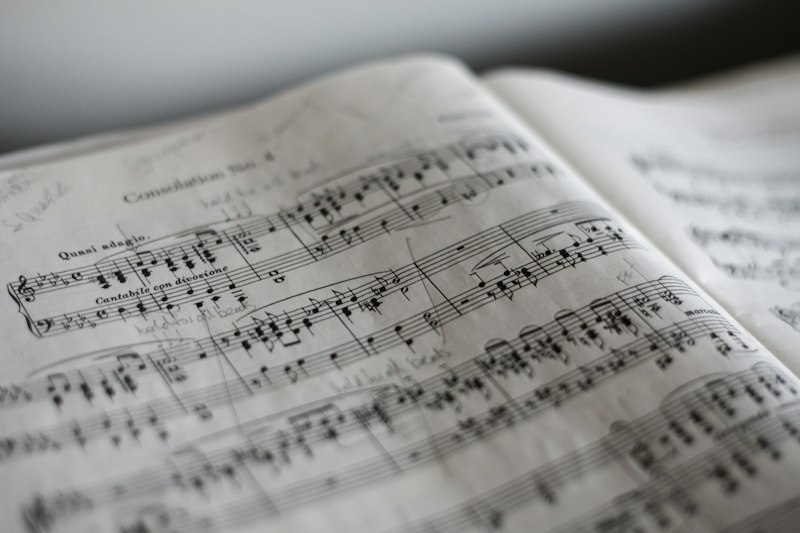
Deaf musicians compose with AI: new tool translates visual and tactile input to music. AI accessibility for deaf composers, inclusive music technology.
Deaf Musicians Use AI to Compose Beautiful Music
Category: research Tags: AI Music, Accessibility, Deaf Community, Good News, Innovation
The intersection of artificial intelligence and musical composition is opening unprecedented doors for deaf musicians, challenging long-held assumptions about who can create and experience music. By leveraging haptic feedback systems, visual waveform analysis, and predictive composition algorithms, artists with hearing loss are now able to translate their creative visions into fully realized auditory works. These tools don't merely compensate for sensory differences—they fundamentally reimagine the creative process, allowing composers to "feel" harmony through vibration, "see" rhythm through color-coded interfaces, and iterate on melodic structures with AI assistance that anticipates their intentions.
This technological shift arrives at a critical cultural moment. The traditional music industry has historically marginalized deaf artists, treating hearing loss as an insurmountable barrier to entry rather than a distinct creative perspective. AI-powered composition platforms are dismantling these gatekeeping structures, enabling direct creative output without intermediary interpreters or expensive adaptive equipment. Dr. Elena Voss, a music technology researcher at MIT's Media Lab, notes that "we're witnessing the emergence of a new compositional grammar—one where vibration, visualization, and algorithmic collaboration are primary instruments rather than secondary aids."
The implications extend beyond individual artistic achievement. As these tools mature, they are reshaping how we conceptualize musical literacy itself. If a composer can craft a string quartet through haptic gloves and AI-assisted harmonic prediction, the very definition of "musical ear" expands. This democratization carries profound significance for music education, suggesting that future conservatories may train students in multimodal composition regardless of hearing ability. The technology is not erasing the unique experiences of deaf musicians; rather, it is validating their sensory worlds as legitimate foundations for artistic innovation.
---
Frequently Asked Questions
Q: How exactly do deaf musicians "hear" what they're composing with AI tools?
Deaf musicians typically use a combination of haptic feedback devices that translate sound frequencies into physical vibrations, visual displays that represent audio as waveforms or color patterns, and AI systems that describe musical qualities in text or sign language. Many also rely on their existing experience with vibration and rhythm, combined with AI predictions about how certain combinations of notes will sound to hearing audiences.
Q: Does AI do the actual composing, or is the deaf musician still the creative force?
The musician remains the creative director, making all artistic decisions about mood, structure, and expression. AI functions as a sophisticated instrument and translator—suggesting harmonic progressions, converting haptic inputs into standard notation, or simulating how a composition will sound across different acoustic environments. The creative vision originates entirely with the human artist.
Q: Are there notable deaf musicians currently using these AI tools professionally?
Yes. The field is growing rapidly, with artists like Evelyn Glennie (though not deaf from birth, she is profoundly hearing impaired) pioneering percussion performance through vibration, and emerging composers like Sean Forbes in the hip-hop space exploring AI-assisted production. Several recent Carnegie Hall and Royal Albert Hall performances have featured works composed entirely through AI-haptic systems by artists with complete hearing loss.
Q: How expensive are these AI composition tools? Are they accessible to amateur musicians?
Costs vary widely. Professional-grade systems with advanced haptic suits and custom AI models can exceed $10,000, but browser-based platforms with basic visualization and composition assistance are increasingly available for under $50 monthly. Open-source projects and nonprofit initiatives are actively working to reduce financial barriers, with some music schools now offering free access to adaptive composition labs.
Q: Could this technology change how hearing musicians compose as well?
Absolutely. Many of these tools—particularly visualization systems and AI harmonic assistants—are being adopted by hearing composers who find them accelerates experimentation or reveals patterns they might miss through audio alone. The deaf community's innovations are effectively expanding the entire field's compositional toolkit, demonstrating how accessibility-driven design often produces universally superior technology.