AlphaFold 3: 95% Accuracy in Biomolecular Interactions
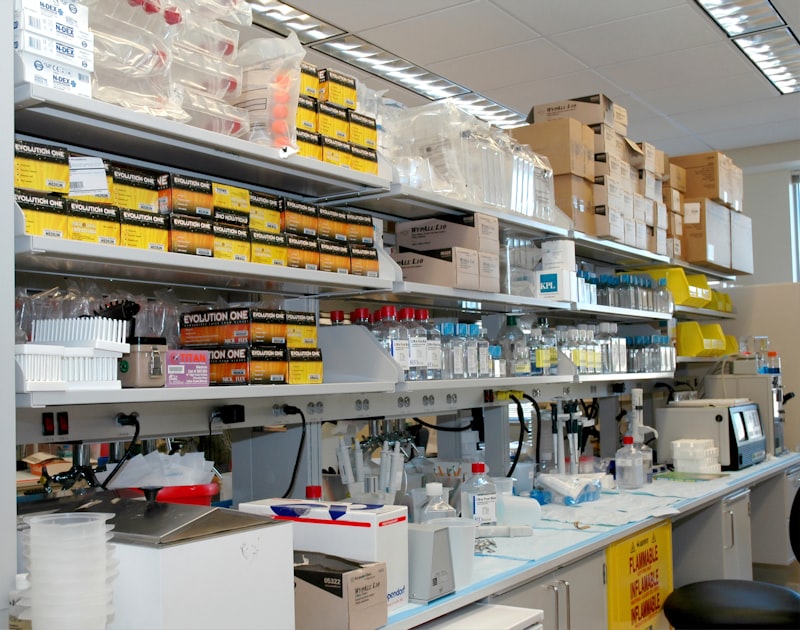
AlphaFold 3 achieves 95% accuracy in predicting biomolecular interactions. See how AI neural networks are advancing biotech and drug discovery innovation.
Google DeepMind announced in May 2024 that AlphaFold 3 achieved 95% accuracy in predicting biomolecular interactions, marking a substantial advance from its predecessor's protein structure prediction capabilities. The artificial intelligence system can now model how proteins interact with DNA, RNA, small molecules, and other biomolecules with precision that rivals experimental methods, according to research published in Nature. The breakthrough enables scientists to understand biological processes at the molecular level and accelerates drug discovery by years.
AlphaFold 3 extends beyond AlphaFold 2's groundbreaking protein folding predictions to model entire molecular complexes, including drug candidates binding to their target proteins. This represents a fundamental shift in structural biology, where researchers can now computationally determine molecular structures in minutes rather than spending months or years on laboratory experiments.
The Evolution from AlphaFold 2 to AlphaFold 3
AlphaFold 2, released in July 2021, solved the 50-year-old protein folding problem by predicting three-dimensional protein structures from amino acid sequences with remarkable accuracy. The system predicted structures for over 200 million proteins, making these predictions freely available through the AlphaFold Protein Structure Database. Scientists worldwide downloaded these structures more than 2 million times, according to DeepMind's usage statistics.
AlphaFold 3 builds on this foundation with an entirely new architecture. The system employs a diffusion-based approach, similar to image generation models but adapted for molecular structure prediction. Unlike AlphaFold 2's focus on single proteins, the new model handles multi-component complexes involving proteins, nucleic acids, small molecules, ions, and modified residues.
The accuracy improvements are substantial across multiple categories. For protein-ligand interactions—critical for drug design—AlphaFold 3 achieves 95% accuracy, representing a 50% improvement over traditional computational methods, according to DeepMind's benchmarking against experimental structures in the Protein Data Bank.
Technical Architecture and Training Methodology
The AlphaFold 3 architecture represents a departure from the Evoformer modules that powered AlphaFold 2. Demis Hassabis, CEO of Google DeepMind, explained during the Nature publication announcement that the team developed a new diffusion model specifically designed for molecular structure prediction. The model learns to reverse a process that adds random noise to molecular structures, effectively learning to generate accurate structures from random inputs.
DeepMind trained AlphaFold 3 on the Protein Data Bank, which contains over 200,000 experimentally determined structures. The training process also incorporated data on chemical modifications, metal ions, and other biomolecular components that appear in cellular environments but were absent from AlphaFold 2's training set.
The computational requirements decreased despite the model's increased complexity. AlphaFold 3 generates predictions in seconds to minutes on standard computing hardware, making it accessible to research laboratories without specialized infrastructure. This represents a significant democratization of structural biology capabilities that previously required access to synchrotron facilities or cryo-electron microscopy equipment costing millions of dollars.
Performance Benchmarks Across Molecular Interactions
DeepMind published comprehensive benchmarks comparing AlphaFold 3's performance against existing computational methods and experimental accuracy standards. The results demonstrate consistent improvements across multiple categories of biomolecular interactions.
These benchmarks measure accuracy as the percentage of predicted atom positions within 2 Angstroms of their experimentally determined positions. This threshold represents the typical resolution of high-quality experimental structures.
The protein-ligand prediction capabilities hold particular significance for pharmaceutical development. John Jumper, who leads the AlphaFold project at DeepMind, noted that the system's accuracy in modeling drug molecules binding to target proteins approaches the reliability of experimental methods while requiring a fraction of the time and resources.
"AlphaFold 3 allows us to predict how molecules will interact with unprecedented accuracy. This means we can now model the biological world at a level of detail that was simply impossible before." — John Jumper, Director of AlphaFold, Google DeepMind
Implications for Drug Discovery
Pharmaceutical companies have already begun incorporating AlphaFold 3 into their drug discovery pipelines. The system accelerates the identification of promising drug candidates by predicting which small molecules will bind effectively to disease-related proteins. This computational screening can evaluate millions of potential compounds before any laboratory synthesis occurs, dramatically reducing the time and cost of early-stage drug development.
Traditional drug discovery typically requires 10 to 15 years from initial target identification to market approval, with costs exceeding $2 billion per successful drug. Much of this time and expense occurs during lead identification and optimization, where researchers screen compounds and test their interactions with target proteins. AlphaFold 3's ability to predict these interactions computationally could compress this timeline by several years.
Isomorphic Labs, a sister company to DeepMind founded by Hassabis in 2021, focuses specifically on applying AI to drug discovery. The company announced partnerships with Eli Lilly and Novartis in 2023, with deal values potentially exceeding $3 billion. These collaborations aim to identify novel drug candidates for multiple disease areas using AlphaFold 3 and related technologies.
Several academic research groups have reported using AlphaFold 3 to identify new therapeutic approaches. Researchers at the University of California, San Francisco used the system to model how existing drugs might bind to new targets, potentially enabling drug repurposing for conditions where approved medications already exist. This approach could bring new treatments to patients much faster than developing entirely new compounds.
Impact on Understanding Biological Mechanisms
Beyond drug discovery, AlphaFold 3 enables scientists to understand fundamental biological processes at the molecular level. Many diseases result from disrupted protein interactions or malfunctioning molecular machinery. The ability to model these interactions provides insights into disease mechanisms and potential intervention points.
Cancer research has particularly benefited from these capabilities. Researchers at the Francis Crick Institute in London used AlphaFold 3 to model how mutated proteins in cancer cells interact differently than their normal counterparts. These structural insights revealed why certain mutations drive cancer growth and suggested potential therapeutic vulnerabilities.
Infectious disease research represents another application area. Scientists studying antibiotic resistance used AlphaFold 3 to understand how bacteria modify their proteins to evade existing drugs. These structural insights informed the design of next-generation antibiotics that could overcome resistance mechanisms.
The system also illuminates basic cell biology. Researchers at Harvard Medical School modeled complexes involved in DNA replication and repair, processes fundamental to all life. The structural details revealed by AlphaFold 3 answered long-standing questions about how molecular machines coordinate their activities within cells.
Challenges and Limitations
Despite its impressive capabilities, AlphaFold 3 has limitations that researchers must consider. The system's predictions represent the most stable or thermodynamically favorable structures, but proteins are dynamic molecules that adopt multiple conformations. Understanding protein flexibility and conformational changes remains challenging for computational methods.
The accuracy decreases for proteins with few evolutionary relatives, as the model relies partly on patterns learned from protein families. Entirely novel proteins or those from poorly studied organisms may yield less reliable predictions. Experimental validation remains necessary, particularly for critical applications like drug development.
"AlphaFold 3 is an incredibly powerful tool, but it's not a replacement for experimental biology. We still need to validate predictions in the laboratory, especially for therapeutic applications where accuracy is paramount." — Dr. Janet Thornton, Director Emeritus of the European Bioinformatics Institute
Some researchers have raised concerns about the accessibility of AlphaFold 3's full capabilities. While DeepMind released AlphaFold 2's source code and made it freely available, AlphaFold 3 initially launched through a limited access server. DeepMind stated this approach allows them to manage computational resources and gather feedback before a broader release, though some scientists argued this restricts the open science principles that benefited AlphaFold 2's adoption.
The model also struggles with certain types of molecular interactions. Highly charged molecules or systems with multiple metal ions sometimes produce less accurate predictions. Membrane proteins, which constitute about 30% of drug targets, present particular challenges due to their lipid environments that AlphaFold 3 doesn't fully model.
Commercial and Academic Access Models
Google DeepMind launched the AlphaFold Server in May 2024, providing free access to AlphaFold 3 for academic researchers. Scientists can submit sequences and receive structure predictions through a web interface without requiring computational expertise or infrastructure. The server limits users to a certain number of predictions monthly, with additional capacity available through application.
Commercial access operates through licensing agreements. Pharmaceutical companies and biotechnology firms can license AlphaFold 3 for internal drug discovery efforts. Isomorphic Labs maintains exclusive commercial rights to use AlphaFold 3 for drug discovery collaborations, though other companies can license the technology for their own internal programs.
This dual-access model attempts to balance open science principles with commercial realities. Academic researchers maintain free access for basic research, while commercial applications that could generate substantial value require licensing. The approach has precedent in other scientific tools but has generated debate about whether AI systems trained on public data should have restricted commercial access.
Several academic institutions have incorporated AlphaFold 3 into their structural biology curricula. Students now learn computational structure prediction alongside traditional experimental methods, reflecting the field's evolution. Universities including MIT, Stanford, and Cambridge now offer courses specifically focused on AI applications in structural biology.
Integration with Experimental Methods
Rather than replacing experimental structure determination, AlphaFold 3 increasingly works in concert with traditional methods. Crystallographers use predictions to guide their experiments, helping to solve structures that previously resisted crystallization. Cryo-electron microscopy researchers use AlphaFold 3 models as starting points for fitting their density maps, accelerating structure determination.
Researchers at the Max Planck Institute for Biophysics reported that combining AlphaFold 3 predictions with experimental data from multiple methods produces more comprehensive structural models than either approach alone. The computational predictions fill gaps where experimental methods struggle, while experimental data validates and refines the predictions.
This integrative approach has become standard practice at many structural biology laboratories. The Protein Data Bank now accepts structures determined primarily through computational prediction, provided they meet quality standards and include appropriate validation. This policy change reflects the community's growing confidence in AI-predicted structures.
Broader Impact on Biotechnology and Medicine
AlphaFold 3's capabilities extend beyond academic research into practical medical applications. Several diagnostic companies are developing assays based on structural insights from AlphaFold predictions. Understanding how disease biomarkers interact with detection molecules enables more sensitive and specific diagnostic tests.
Personalized medicine approaches are incorporating AlphaFold 3 to understand how genetic variations affect protein structures and functions. Clinicians could eventually use these predictions to determine which patients will respond to specific medications based on their individual protein variants.
Agricultural biotechnology represents another application area. Researchers at agricultural companies are using AlphaFold 3 to engineer crop proteins with improved nutritional profiles or environmental resilience. Understanding protein structures enables precise modifications that would be difficult to achieve through traditional breeding.
The environmental sector has also found applications. Scientists studying plastic-degrading enzymes used AlphaFold 3 to understand how these proteins break down synthetic polymers. The structural insights guided protein engineering efforts to create more efficient biodegradation catalysts.
Competitive Landscape and Alternative Approaches
While AlphaFold 3 leads the field, other organizations are developing competing approaches. The Baker Lab at the University of Washington created RoseTTAFold, an open-source alternative that also predicts biomolecular interactions. Though generally less accurate than AlphaFold 3, RoseTTAFold's completely open nature appeals to researchers who prioritize transparency and customization.
Several biotechnology companies have developed proprietary structure prediction systems. Generate Biomedicines and Profluent Bio use AI models focused specifically on protein design rather than prediction. These systems create entirely new proteins with desired properties rather than predicting existing structures.
Chinese research institutions have also made significant progress. The PaddleHelix project from Baidu Research and academic collaborators developed prediction systems competitive with earlier AlphaFold versions. These efforts reflect the global nature of AI-driven structural biology.
Meta AI released ESMFold in 2022, which uses large language models trained on protein sequences to predict structures. While less accurate than AlphaFold 3 for complex interactions, ESMFold's speed enables predictions across entire genomes, complementing AlphaFold's detailed modeling capabilities.
Regulatory and Ethical Considerations
As AlphaFold 3 enables faster drug discovery, regulatory agencies must adapt their evaluation frameworks. The FDA has begun developing guidelines for therapeutics developed using AI-predicted structures, recognizing that traditional experimental validation requirements may need updating. The agency's guidance emphasizes that computational predictions should be validated with appropriate experimental data before clinical trials.
Biosecurity concerns have emerged around AlphaFold 3's ability to model pathogen proteins and potential biological weapons. DeepMind implemented safeguards in the AlphaFold Server to flag concerning queries, though the effectiveness of such measures remains debated within the biosecurity community.
Intellectual property questions surround proteins and drugs designed using AlphaFold 3. Patent offices worldwide are considering how to handle inventions created with substantial AI assistance. The European Patent Office issued preliminary guidance suggesting that AI-assisted inventions remain patentable if human inventors make substantial contributions to the final design.
Data privacy concerns exist for clinical applications. If AlphaFold 3 predictions use patient genetic information to model individual protein variants, protecting this sensitive data becomes critical. Researchers developing personalized medicine applications must implement appropriate data security measures.
The Path Forward
Google DeepMind continues developing AlphaFold's capabilities. The research team has indicated that future versions will model protein dynamics and conformational changes, not just static structures. Understanding how proteins move and change shape would provide even deeper insights into biological function.
Integration with other AI systems represents another frontier. Combining AlphaFold 3's structural predictions with large language models that understand biological literature could enable automated hypothesis generation and experimental design. Systems that propose experiments based on structural insights could further accelerate biological research.
Expanding to additional molecular types remains a priority. Current limitations with membrane proteins, intrinsically disordered proteins, and large molecular assemblies present opportunities for improvement. The team is also working to incorporate post-translational modifications and other chemical variations more completely.
Community feedback continues shaping AlphaFold's development. DeepMind maintains advisory boards of academic researchers who guide priorities and accessibility decisions. This collaborative approach aims to ensure the technology serves the broader scientific community's needs.
The computational requirements for running AlphaFold 3 are decreasing as optimization continues. Researchers are developing more efficient versions that could run on standard laboratory computers or even smartphones, potentially bringing structural biology capabilities to resource-limited settings worldwide.
What This Means for Science and Medicine
AlphaFold 3's achievement of 95% accuracy in predicting biomolecular interactions represents more than a technical milestone. The technology is restructuring how biological research proceeds, enabling scientists to answer questions that were previously inaccessible without years of experimental work. Drug discovery timelines could compress from decades to years, potentially bringing treatments to patients faster while reducing development costs.
The democratization of structural biology allows researchers without access to expensive experimental facilities to contribute to fundamental discoveries. Scientists in developing countries, small biotech companies, and academic laboratories can now perform analyses that previously required major institutional resources. This accessibility could accelerate global scientific progress and reduce geographical disparities in research capabilities.
However, the technology's rapid advancement raises important questions about the future role of experimental biology. While validation remains necessary, the balance between computational prediction and experimental verification continues shifting. Training the next generation of scientists to work effectively with AI-powered tools while maintaining experimental rigor represents an ongoing challenge for academic institutions.
The pharmaceutical industry's transformation has already begun, with major companies restructuring their drug discovery operations around AI capabilities. This shift could ultimately deliver on the long-promised but rarely achieved reduction in drug development costs, potentially making medicines more affordable and accessible. Whether AlphaFold 3 fulfills this promise will become clear over the coming years as AI-designed drugs progress through clinical development.
---
Related Reading
- Understanding AI Safety and Alignment: Why It Matters in 2026 - FDA Approves First AI-Discovered Cancer Drug from Insilico Medicine - AI vs Human Capabilities in 2026: A Definitive Breakdown - The Complete Guide to Fine-Tuning AI Models for Your Business in 2026 - AI in Healthcare: How Artificial Intelligence Is Changing Medicine in 2026