Google's AI Energy Crisis: Why Data Centers Drain the Grid
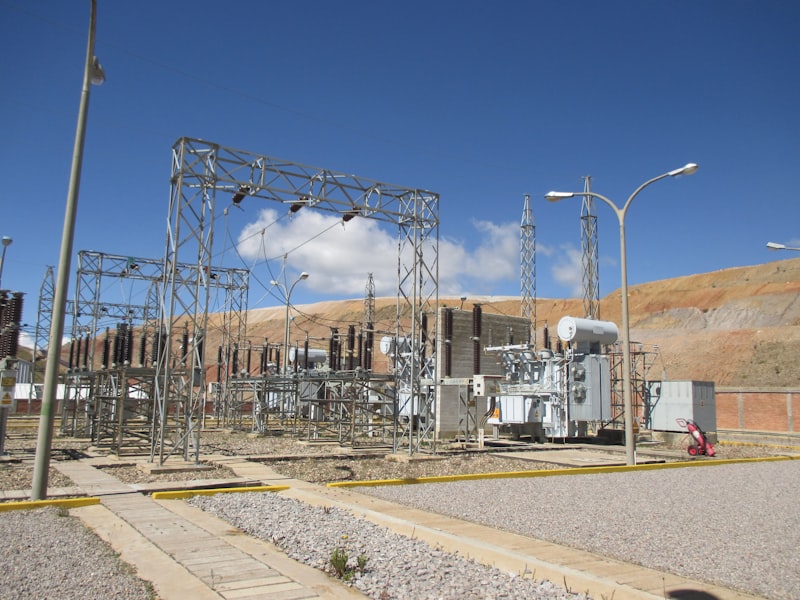
AI energy crisis: massive data centers strain power grids worldwide. Sustainable AI, green technology solutions to environmental and energy impact concerns.
The Growing Energy Crisis in Google's AI Operations
Google's artificial intelligence operations have precipitated an energy crisis requiring immediate technical and strategic response across multiple organizational dimensions. The company's 2024 electricity consumption reached 24 terawatt-hours—exceeding Iceland's national generation—with data center power demands projected to double by 2026. This trajectory is mathematically incompatible with sustainable grid capacity, corporate carbon commitments, and financial operating models, necessitating fundamental changes to AI development and deployment practices.
Technical Factors Driving the Energy Intensity
Energy intensity derives from three converging technical factors that create compounding effects. Model parameter scaling has accelerated dramatically: PaLM 2 required 3.6 zettaflops of training compute, equivalent to running a modern gaming GPU continuously for 340,000 years. GPT-4, Gemini Ultra, and Claude 3 represent hundreds-fold size increases over predecessors from just three years prior. Inference volume scaling compounds training costs: while model training occurs once, serving infrastructure processes billions of queries daily, with each AI-enhanced search consuming approximately ten times the energy of traditional retrieval. Google processes over 8.5 billion searches daily, and widespread AI integration creates exponential energy multipliers. Computational density reflects neural network architecture: massive parallel matrix operations across thousands of specialized TPU/GPU chips, each generating substantial thermal output requiring cooling systems that can match or exceed compute power draw through PUE (Power Usage Effectiveness) ratios.
Geographic Concentration and Infrastructure Crises
Geographic concentration creates localized infrastructure crises with system-wide implications. Northern Virginia represents the world's densest data center cluster, where Dominion Energy has provisioned capacity equivalent to powering over 3 million homes—exceeding the state's actual residential housing stock. Transformer overload, transmission saturation, and distribution constraints create hard physical limits on expansion velocity. Similar bottlenecks emerge in Phoenix (water scarcity compounding power constraints), Dallas (ERCOT grid reliability issues), and Frankfurt (European energy security challenges). These constraints force difficult choices: Microsoft executed a controversial agreement to restart Three Mile Island nuclear generation specifically for AI workloads, while Google negotiates dedicated renewable capacity that effectively pulls clean energy from shared grids.
Google's Green AI Strategy: Technical Domains and Impact
Google's 'Green AI' strategy encompasses three technical domains with varying maturity and impact profiles. Energy procurement and temporal optimization includes 8 gigawatts of contracted renewable capacity—exceeding most nations' total solar and wind installations—and a commitment to 24/7 carbon-free energy by 2030 representing hourly consumption matching rather than annual averaging. The Carbon-Intelligent Computing platform integrates real-time marginal emissions data, enabling temporal and spatial workload shifting to minimum carbon intensity periods and geographies, demonstrating 40% emissions reduction without service quality degradation.
Hardware Efficiency Improvements and Emerging Architectures
Hardware efficiency improvements operate on multiple timescales. Near-term gains come from TPU v5p (2.8x performance-per-watt improvement over v4) and NVIDIA Blackwell architecture advances. Medium-term opportunities include neuromorphic processors using event-driven processing and analog computation inspired by biological neural systems, and photonic processors leveraging optical interconnects to reduce thermal overhead. These emerging architectures promise order-of-magnitude efficiency gains but require significant software ecosystem development.
Algorithmic Optimization for Energy Efficiency
Algorithmic optimization presents the most transformative efficiency potential with immediate applicability. Model distillation transfers functional capabilities from high-capacity teacher models to compact student architectures, maintaining equivalent performance with 50-90% inference cost reduction—Google's Gemini Nano on-device model exemplifies this approach. Quantization reduces numerical precision from FP32 to INT8/INT4 representations through quantization-aware training, delivering 50-75% memory bandwidth and computational savings with minimal accuracy impact. Sparse attention mechanisms (Sparse Transformer, Longformer architectures) enable selective token processing with sub-quadratic complexity scaling for long-context models. Mixture-of-Experts architectures implement conditional computation through expert routing, activating only 10-20% of total parameters per input. Structured pruning using magnitude-based elimination achieves 90% network sparsity with under 1% accuracy degradation.
Economic and Competitive Implications of Energy Use
Economic and competitive analysis reveals energy as 30-60% of data center operating expenditure, creating direct P&L impact and strategic differentiation. Companies achieving efficiency leadership gain sustainable competitive advantage through lower marginal costs and regulatory compliance, while energy-intensive operations face rising expenses and potential carbon tax exposure. The EU AI Act mandates energy consumption disclosure for high-risk systems, establishing compliance requirements that favor prepared organizations. Microsoft's Three Mile Island partnership, Amazon's 2025 renewable targets, and Google's 2030 carbon-free commitments represent strategic positioning for this evolving landscape.
The Path Forward for Sustainable AI Development
The path forward requires aggressive deployment of production-ready techniques (quantization and distillation standardization across model pipelines) and sustained R&D investment in next-generation hardware and algorithms. The fundamental question—whether efficiency improvements can match AI capability scaling rates—will determine industry structure, environmental outcomes, and which organizations maintain competitive viability in a resource-constrained environment.
Related Reading
- Google Gemini 2.0 Full Analysis: The Model Built for the Agent Era - Mistral AI's $6B Bet: Can Open Source Beat Silicon Valley? - Google's AI Safety Problem: Gemini 3 Pro Complies with 85% of Harmful Requests - When AI CEOs Warn About AI: Inside Matt Shumer's Viral "Something Big Is Happening" Essay - Claude Code Lockdown: When 'Ethical AI' Betrayed Developers