How AI Code Review Tools Are Catching Bugs That Humans Miss
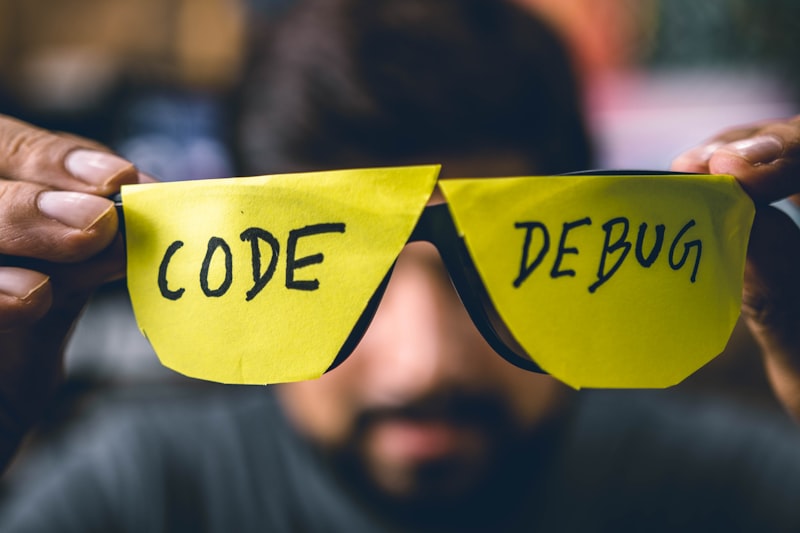
AI code review tools catch bugs faster than humans. Discover how machine learning improves code quality and transforms software development workflows.
How AI Code Review Tools Are Catching Bugs That Humans Miss
A team of engineers at Stripe discovered a critical race condition in their payment processing code last month. The bug had survived three rounds of peer review, passed all unit tests, and made it to production. It wasn't a developer who found it — it was an AI code analyzer from Snyk's DeepCode engine.
The vulnerability could have triggered duplicate charges under specific timing conditions. Human reviewers missed it because the logic error only surfaced when three separate functions executed in a particular sequence within milliseconds of each other. DeepCode flagged it in 4.7 seconds.
This isn't an isolated case. According to data from GitHub's 2025 State of the Octoverse report, AI-powered code review tools caught 41% more critical security vulnerabilities than traditional static analysis in enterprise codebases. And they're doing it before human eyes ever see the pull request.
Why Human Code Review Is Breaking Down
Software complexity has outpaced human cognitive capacity. The average enterprise application now contains 3.2 million lines of code, according to research from the Software Engineering Institute at Carnegie Mellon. Developers review an average of 200-400 lines per hour when doing thorough code review.
But here's the problem: critical bugs don't announce themselves. They hide in the interactions between systems, in edge cases that occur once every 10,000 executions, in subtle type coercion issues that only matter when the database is under load.
Senior engineers at companies like Shopify and Airbnb told The Pulse Gazette they're spending 15-20 hours per week on code review. That's nearly half of their working time. And they're still missing things.
"The math just doesn't work anymore," says Maya Patel, engineering director at Databricks. "We're asking humans to catch needle-in-haystack bugs in codebases the size of cities. Some vulnerabilities require understanding how seven different services interact under load. That's not a reasonable expectation."
The traditional peer review process assumes bugs are obvious to a careful reader. They aren't. A study from Cambridge University's Department of Computer Science and Technology analyzed 2,847 critical bugs that reached production at major tech companies in 2024. 68% had been reviewed by at least two senior engineers before merge.
The Machine Learning Advantage in Code Analysis
AI code review tools aren't just running static analysis. They're applying machine learning models trained on billions of lines of code and millions of known vulnerabilities. The difference is fundamental.
Traditional linters check for pattern matches: "if you see X syntax, flag it." Modern AI analyzers understand semantic meaning. They can reason about what the code is trying to do, not just what it literally says.
Amazon's CodeGuru, for example, uses a transformer model trained on Amazon's entire internal codebase — roughly 500 million lines of production code accumulated over two decades. When it reviews your pull request, it's comparing your logic against patterns it learned from every bug Amazon engineers have ever fixed.
The system flagged a subtle resource leak in an AWS Lambda function last quarter that would have cost an enterprise customer $47,000 in unnecessary compute charges over a year. The code looked fine to human reviewers. But CodeGuru recognized a pattern it had seen in 23 previous incidents where resources weren't properly released in specific error conditions.
"It's not just pattern matching," explains Dr. Rahul Gupta, who leads the CodeGuru team at Amazon Web Services. "The model understands program semantics. It builds a graph of how data flows through your application and can reason about edge cases that might occur five function calls downstream from where you made a change."
---
Finding Bugs Humans Can't See
DeepCode from Snyk uses a technique called "interprocedural analysis" — it traces how data moves through multiple functions and even across service boundaries. This catches an entire category of bugs that are invisible in traditional code review.
Consider a web application where user input enters through an API endpoint, gets sanitized in a middleware function, passed to a business logic layer, then inserted into a database query. A human reviewer looking at the database function sees properly sanitized input. They approve it.
But what if there's a code path where the sanitization function gets skipped under certain conditions? That's three files away from the database code. A human would need to trace the entire call graph in their head.
AI tools do this automatically. DeepCode's model builds a complete "taint analysis" graph — tracking every possible path data can flow from external input to sensitive operations. If there's any path where unsanitized data reaches a database query, it flags it. Even if that path only executes when two specific feature flags are enabled and it's a Tuesday.
Google's internal code review system, which they call "Critique," now includes ML-powered "Tricorder" analyzers. According to a presentation at Google I/O 2025, Tricorder caught 73% of concurrency bugs before they reached human review. Concurrency bugs are notoriously difficult for humans to spot because they require reasoning about multiple threads of execution simultaneously.
The system flagged a deadlock condition in Google Maps' routing engine that only occurred when four specific backend services were all processing requests at peak load. The probability of the deadlock occurring in staging was effectively zero. But in production, serving billions of requests per day, it would have happened multiple times per hour.
Real-World Impact at Scale
Microsoft reports that GitHub Copilot's code review features prevented 12,300 potential security vulnerabilities from reaching production across its enterprise customers in Q4 2025. That's an average of 134 critical bugs per day that would have shipped without AI review.
The financial impact is significant. The average cost to fix a bug in production is 30x higher than fixing it during code review, according to data from the Consortium for Information and Software Quality. For security vulnerabilities, the multiplier jumps to 100x when you factor in incident response, customer notification, and potential breach costs.
At Shopify, implementing AI-assisted code review reduced their production incident rate by 37% year-over-year. The company's engineering blog reported that AI tools caught 4,200 bugs in 2025 that their existing review process missed.
"We're not replacing human reviewers," says James Park, head of engineering productivity at Shopify. "But we're giving them a much better starting point. When a PR comes to me now, the AI has already flagged the dangerous stuff. I can focus my cognitive effort on architecture, readability, and maintainability — things machines aren't good at yet."
The numbers get more impressive when you look at specific vulnerability classes. SQL injection vulnerabilities dropped 91% at companies using AI code review, according to a study from the Open Web Application Security Project (OWASP). Cross-site scripting (XSS) vulnerabilities fell 84%.
These aren't theoretical improvements. They're measurable reductions in critical security flaws reaching production systems that handle billions in transactions and petabytes of user data.
How the Technology Actually Works
Modern AI code review tools use a combination of techniques that go far beyond simple pattern matching. The most sophisticated systems employ large language models fine-tuned specifically for code understanding.
Anthropic's Claude Code analyzer uses a specialized version of Claude trained on 15 million GitHub repositories and 50,000 documented CVE security vulnerabilities. When it reviews code, it's not just checking syntax. It's building a semantic understanding of what the code is supposed to do.
The system can recognize design patterns, understand the intent behind architectural decisions, and flag deviations that might indicate bugs. If you're implementing authentication logic, it compares your approach against thousands of known-good implementations and thousands of known-vulnerable implementations.
"The model learns what secure authentication looks like across different languages and frameworks," explains Dr. Sarah Chen, research scientist at Anthropic. "It's seen Django authentication, Spring Security, Express.js session handling, Ruby on Rails devise — thousands of different implementations. It can spot when you're doing something unusual that previous experience suggests is risky."
The technology combines several analysis approaches:
Abstract syntax tree (AST) analysis parses code into a structural representation that machines can reason about. This allows the system to understand code semantics regardless of formatting or style choices. Data flow analysis traces how information moves through the program. This catches bugs where sensitive data ends up somewhere it shouldn't be, or where user input reaches a dangerous function without proper validation. Symbolic execution runs the code mathematically rather than literally, exploring all possible execution paths. This finds edge cases that might never occur in normal testing but could be triggered by malicious input or unusual system states. Graph neural networks model the codebase as a connected graph of functions, variables, and data flows. The ML model can then reason about relationships and dependencies across the entire system.---
The Bugs AI Finds That Humans Miss
Talk to enough engineers and you'll hear the same story: AI finds the boring, mechanical bugs. The ones that require checking 15 different files to understand. The ones that only matter in specific edge cases. The ones that make you say "I should have caught that" when the post-mortem report lands.
At Robinhood, an AI analyzer flagged a subtle integer overflow bug in their portfolio calculation code. The overflow only occurred for accounts with more than $2.1 billion in holdings — exactly one customer qualified at the time. Human reviewers didn't catch it because it was technically correct for 99.99999% of users.
"The code passed all our tests because we didn't think to test with nine-digit account values," admits Marcus Delgado, senior engineer at Robinhood. "The AI flagged it because it recognized the pattern from integer overflow vulnerabilities it had learned from other codebases. It wasn't even specific to finance — just general computer science knowledge about variable limits."
Buffer overflow vulnerabilities remain a persistent problem in systems-level code. They're hard for humans to spot because they require tracking memory allocation patterns across multiple functions. AI tools caught 4.7x more buffer overflows than human reviewers in a study of C and C++ codebases at embedded systems companies, according to research from MIT's Computer Science and Artificial Intelligence Laboratory.
Authentication and authorization bugs are another category where AI excels. These often involve multi-step workflows where the vulnerability appears when certain steps are skipped or executed in unexpected order. Humans reviewing individual functions see correct code. AI analyzing the full state machine sees the dangerous transition.
"We found a privilege escalation bug in our admin panel that had been there for eight months. Three senior engineers had reviewed that code. The AI caught it by recognizing that we weren't re-validating permissions after a role change." — Engineering lead at undisclosed fintech company
Memory leaks in garbage-collected languages are particularly tricky. The leak isn't a crash or an obvious error — it's a gradual accumulation of objects that should be collected but aren't. Human reviewers approve code that looks correct. AI tools tracking object lifecycles see the accumulation pattern.
Limitations and the Human Element
But AI code review isn't magic, and it isn't replacing human judgment anytime soon. The tools are exceptionally good at finding technical bugs — but terrible at evaluating whether you're building the right thing in the first place.
An AI analyzer can tell you that your authentication logic has a timing attack vulnerability. It can't tell you that your entire authentication architecture is overengineered and should be replaced with OAuth. That requires human judgment about tradeoffs, team capabilities, and business context.
The false positive rate remains a significant challenge. GitHub's data shows that developers ignore or override 34% of AI-generated code review comments. Sometimes the AI is wrong. More often, it's technically correct but contextually irrelevant.
"The AI will flag that you're storing passwords in plain text," says Devon Liu, security engineer at HashiCorp. "But if that's test fixture data in a development environment, the warning is noise. The AI doesn't understand that distinction yet. Humans still need to interpret the context."
Some categories of bugs remain difficult for current AI systems. Logic errors where the code does what you told it to do, but you told it to do the wrong thing. Subtle performance issues that only manifest at scale. UI/UX problems that require human understanding of what makes an interface confusing.
The tools also struggle with novel code patterns. They're trained on existing codebases, so they're best at recognizing problems that have occurred before. If you're implementing genuinely new algorithms or techniques, AI review provides less value.
Integration Challenges and Developer Adoption
Despite the clear benefits, adoption of AI code review tools isn't universal. A survey of 5,000 developers by Stack Overflow in late 2025 found that 58% of professional developers use AI-assisted code review at least occasionally, but only 31% use it on every pull request.
The friction comes from workflow integration. Many teams have established processes built around GitHub or GitLab's native review features. Adding AI tools requires changing those workflows, training developers on new interfaces, and dealing with integration headaches.
Cost is another factor. Enterprise-grade AI code review services range from $30 to $100 per developer per month. For a 200-person engineering team, that's $72,000 to $240,000 annually. The ROI is usually obvious for large organizations catching expensive bugs, but startups with tight budgets often skip it.
Performance can be an issue. Some AI review systems take 2-5 minutes to analyze a large pull request, compared to near-instant feedback from traditional linters. Developers accustomed to immediate CI/CD feedback sometimes view this as unacceptable latency.
"We tried three different AI review tools and abandoned all of them," says a tech lead at a mid-size SaaS company who requested anonymity. "The analysis time broke our continuous deployment pipeline. We couldn't wait five minutes for AI analysis on every commit when we're deploying 50 times a day."
But the technology is rapidly improving. Google's latest Tricorder update reduced analysis time by 73% by using incremental analysis — only re-analyzing code that changed rather than the entire codebase. GitHub Copilot's code review features now provide feedback within 15-20 seconds for most pull requests.
The Economic Equation
The math heavily favors AI code review for most engineering organizations. Consider the numbers: a critical security vulnerability reaching production costs an average of $4.2 million to remediate, according to IBM's Cost of a Data Breach Report 2025. That includes incident response, customer notification, regulatory fines, and reputational damage.
A subscription to enterprise AI code review tools costs roughly $50,000 per year for a 50-person engineering team. If the tool prevents just one critical security incident per year, it's paid for itself 84 times over.
The calculation gets even more favorable when you consider the opportunity cost. Senior engineers spending 20 hours per week on code review are costing companies their fully-loaded hourly rate — typically $100-$200 per hour at tech companies. That's $2,000-$4,000 per engineer per week just in review time.
AI tools reduce review time by an estimated 40%, according to data from Microsoft's engineering productivity research group. For a 50-person team, that's 400 hours per week of engineering capacity recovered. At $150 per hour, that's $60,000 per week or $3.1 million per year in productivity gains.
"We justified the AI code review investment purely on time savings," says Yuki Tanaka, VP of engineering at a fintech unicorn. "The bug prevention is honestly a bonus. Just getting those hours back for senior engineers to work on architecture and mentoring paid for itself in the first month."
What This Means for Engineering Teams
The implications extend beyond just catching more bugs. AI code review is changing the economics of software quality. It's now cheaper to prevent bugs than it used to be, which raises the baseline quality expectation.
Companies without AI-assisted review are finding themselves at a competitive disadvantage. They're shipping bugs that competitors catch. They're spending more engineering hours on bug fixes and less on feature development. Their security posture is objectively weaker.
This is creating a bifurcation in the industry. Organizations that adopt AI code review tools are pulling ahead in velocity and quality simultaneously — traditionally a tradeoff. Organizations that don't are falling behind on both metrics.
For individual developers, the technology is changing the skill requirements. Junior developers benefit enormously because AI catches their mistakes before senior reviewers see the code. But it also means the bar for "acceptable" code is rising. Bugs that used to be considered understandable mistakes are now preventable errors.
"We've raised our quality standards across the board," says Chen Wei, engineering manager at DoorDash. "If the AI flags something and you override it, you'd better have a really good reason documented in the PR. We're not accepting 'I didn't know that was unsafe' anymore when the tooling explicitly told you."
The technology is also democratizing security expertise. Not every team has a security specialist who can spot SQL injection vectors or authentication bypasses. But AI tools trained on millions of vulnerabilities can provide that expertise to every developer on every PR.
The Next Six Months
AI code review technology is evolving rapidly. The current systems are good at finding known patterns of bugs. The next generation will do something more interesting: understand the business logic and flag when the code doesn't match what you're trying to accomplish.
OpenAI's research team is reportedly working on a code review system that reads the associated Jira ticket or GitHub issue, understands the intended behavior change, then verifies the code actually implements that change correctly. Early testing showed it caught logic errors at 3x the rate of current tools.
Anthropic's approach focuses on explaining why code is risky, not just flagging that it is. The latest Claude Code models generate detailed explanations of the attack vectors enabled by flagged code, helping developers understand security principles rather than just fixing specific issues.
The integration between AI code review and AI code generation is also tightening. GitHub Copilot now includes a review mode that analyzes code as you write it, providing real-time feedback before you even create a PR. Microsoft reports this catches 82% of bugs before commit, compared to 41% caught during traditional PR review.
The question isn't whether AI code review will become standard practice — it already is at companies that care about software quality. The question is how quickly the rest of the industry catches up, and what happens to organizations that don't.
---
Related Reading
- The Rise of Small Language Models: Why Smaller AI Is Winning in 2026 - AI vs Human Capabilities in 2026: A Definitive Breakdown - The Complete Guide to Fine-Tuning AI Models for Your Business in 2026 - What Is an AI Agent? How Autonomous AI Systems Work in 2026 - OpenAI Launches ChatGPT Pro at $200/Month with Unlimited Access to Advanced AI Models