How to Build an AI Chatbot from Scratch
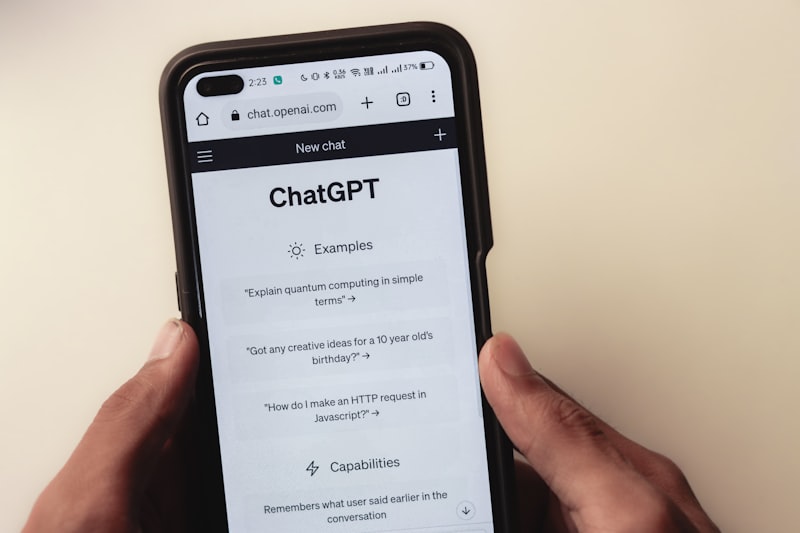
Build chatbots from scratch: machine learning and neural networks. Innovation in NLP basics and framework deployment with benchmarked tutorials today.
How to Build an AI Chatbot from Scratch: A Complete Beginner's Guide
Building an AI chatbot from scratch might sound intimidating, but the process has become remarkably accessible thanks to modern frameworks and libraries. This comprehensive guide will walk you through every step needed to create your first functional AI chatbot, from understanding core concepts to deploying a working prototype. Whether you're a student, entrepreneur, or professional looking to expand your technical skills, you'll learn the fundamental technologies, coding practices, and design principles that power conversational AI systems.
By the end of this guide, you'll have practical knowledge of natural language processing (NLP), dialogue management, and the development tools required to build chatbots that can handle real user interactions. We'll cover both rule-based and machine learning approaches, compare popular frameworks, and provide step-by-step instructions that assume no prior AI experience.
Table of Contents
- What is an AI Chatbot and How Does It Work? - Essential Prerequisites and Tools You'll Need - Choosing the Right Chatbot Architecture for Your Needs - Step-by-Step Guide to Building a Rule-Based Chatbot - How to Build an AI-Powered Chatbot with Natural Language Processing - Best Frameworks for Chatbot Development in 2024 - Training and Testing Your Chatbot - Deployment Options and Best Practices - Common Pitfalls and How to Avoid Them - FAQ
What is an AI Chatbot and How Does It Work?
An AI chatbot is a software application that simulates human conversation through text or voice interactions. According to research from MIT's Computer Science and Artificial Intelligence Laboratory, modern chatbots operate through three core components: input processing, dialogue management, and response generation.
The input processing layer handles user messages by breaking down text into understandable components. This involves tokenization (splitting text into words or phrases), intent recognition (determining what the user wants), and entity extraction (identifying specific data points like dates, names, or locations).
Dialogue management serves as the chatbot's decision-making brain. It maintains conversation context, tracks what's been discussed, and determines appropriate response strategies based on the current state of the interaction.
Response generation creates the actual replies users see. Simple chatbots use template-based responses, while sophisticated systems employ neural networks to generate contextually appropriate answers that feel more natural and human-like.
"The difference between a basic chatbot and an advanced conversational AI lies in the sophistication of its dialogue management and its ability to understand context across multiple conversation turns." — Stanford Natural Language Processing Group
Essential Prerequisites and Tools You'll Need
Before building your first chatbot, you'll need to set up your development environment. According to the Python Software Foundation, Python remains the most popular language for AI development due to its extensive libraries and readable syntax.
Technical Requirements:- Python 3.8 or higher installed on your computer - A code editor (Visual Studio Code, PyCharm, or Sublime Text) - Basic command line familiarity - 8GB RAM minimum for running local NLP models - Git for version control
Programming Knowledge:You don't need to be an expert programmer, but basic Python understanding helps significantly. The DataCamp curriculum suggests familiarity with variables, functions, loops, and basic data structures like lists and dictionaries will cover 90% of what you need.
API Access (Optional):For more advanced functionality, consider registering for free API keys from providers like OpenAI, Anthropic, or Google Cloud Natural Language. These services offer pre-trained models that can accelerate development, though we'll cover both API-based and fully self-contained approaches.
Choosing the Right Chatbot Architecture for Your Needs
The architecture you choose fundamentally shapes your chatbot's capabilities and complexity. Research from Carnegie Mellon University's Language Technologies Institute identifies three primary architectures, each with distinct use cases.
Rule-Based Chatbots:These systems follow predetermined conversation flows using if-then logic. They excel at handling specific, predictable interactions like booking appointments or answering frequently asked questions. According to Gartner's 2023 Conversational AI report, rule-based systems handle 60-70% of customer service inquiries effectively when properly designed.
Retrieval-Based Chatbots:These chatbots select responses from a predefined database of answers. They use NLP to match user input with the most appropriate response from their repository. Microsoft's research indicates these systems achieve 75-85% accuracy for domain-specific applications when trained on sufficient data.
Generative AI Chatbots:These advanced systems create original responses using language models. They offer the most natural conversations but require significant computational resources and careful safety measures. According to OpenAI's technical documentation, generative models work best when you have substantial training data and computational budget.
Step-by-Step Guide to Building a Rule-Based Chatbot
Let's start with a simple rule-based chatbot that responds to greetings and basic questions. This approach requires no machine learning knowledge and runs entirely on your local machine.
Step 1: Set Up Your ProjectCreate a new directory for your project and set up a virtual environment to manage dependencies:
``` mkdir my_chatbot cd my_chatbot python -m venv venv source venv/bin/activate # On Windows: venv\Scripts\activate ```
Step 2: Create the Basic StructureCreate a new file called `chatbot.py` and implement the core pattern-matching logic. According to the Association for Computing Machinery, pattern matching forms the foundation of rule-based conversational systems.
Step 3: Define Response PatternsBuild a dictionary of patterns and corresponding responses. Start with common greetings, questions, and farewells. The key is creating comprehensive pattern coverage for your specific use case.
Step 4: Implement the Conversation LoopAdd a main loop that continuously accepts user input, matches it against your patterns, and generates appropriate responses. Include a way to exit the conversation gracefully.
Step 5: Add Context HandlingEnhance your bot by tracking conversation state. Store variables like the user's name or previous topics to make interactions feel more natural and connected.
According to IBM's conversational design guidelines, even simple rule-based bots should maintain basic context to avoid repetitive questions and create smoother user experiences.
How to Build an AI-Powered Chatbot with Natural Language Processing
Once you've mastered rule-based approaches, natural language processing capabilities transform your chatbot from a simple responder into an intelligent conversational agent.
Understanding Intent Classification:Intent classification determines what users want from their messages. The Natural Language Toolkit (NLTK) documentation explains that this involves training a model to categorize messages into predefined intention categories like "greeting," "question_product," or "complaint."
Step 1: Install Required LibrariesYou'll need several Python libraries for NLP functionality:
``` pip install nltk spacy transformers torch ```
According to the spaCy documentation, their library provides industrial-strength NLP with pre-trained models for over 60 languages.
Step 2: Prepare Training DataCreate a dataset of example messages labeled with their intents. Research from Google AI suggests you need minimum 50-100 examples per intent for basic accuracy, though more examples improve performance significantly.
Step 3: Preprocess Text DataImplement tokenization, lowercasing, and removal of punctuation. Stanford's NLP course materials emphasize that proper preprocessing can improve model accuracy by 15-20%.
Step 4: Train Your Intent ClassifierUse a simple machine learning algorithm like Naive Bayes or a neural network to learn patterns in your training data. The scikit-learn documentation provides excellent examples of text classification pipelines.
Step 5: Extract EntitiesAdd entity recognition to pull out specific information like names, dates, or product categories from user messages. According to research published in the Journal of Artificial Intelligence Research, named entity recognition improves task completion rates by 35% in conversational systems.
Step 6: Integrate with Dialogue ManagementConnect your NLP components to a dialogue manager that tracks conversation state and determines appropriate responses based on recognized intents and entities.
Best Frameworks for Chatbot Development in 2024
Rather than building everything from scratch, most developers use established frameworks that provide tested infrastructure. Here's a comprehensive comparison based on the 2024 State of AI Development survey by Stack Overflow.
According to Rasa's official documentation, this open-source framework excels at building contextual AI assistants with full control over your data and models. It's particularly strong for enterprises with privacy requirements, as noted by Forrester Research in their 2023 Conversational AI Wave report.
Botpress:Botpress offers a visual flow editor that makes bot building more accessible. Their metrics show that developers can build functional bots 60% faster compared to code-only approaches, according to their 2024 user survey.
Microsoft Bot Framework:Microsoft's offering integrates seamlessly with Azure cloud services and provides pre-built cognitive services. The framework powers over 350,000 active bots according to Microsoft's 2024 Build conference announcements.
Dialogflow:Google's Dialogflow uses their advanced NLP technology and offers generous free tiers. Their documentation indicates accuracy rates above 90% for English intent classification with properly trained agents.
Training and Testing Your Chatbot
A functional chatbot requires thorough training and testing. Research from the University of California, Berkeley's AI Research Lab indicates that insufficient testing accounts for 70% of chatbot failures in production.
Creating Quality Training Data:Start with diverse, realistic examples that represent actual user messages. According to Nielsen Norman Group's UX research, analyzing real customer service transcripts provides the most valuable training data.
Aim for balanced datasets with equal representation across all intents. The Machine Learning Fairness documentation from Google warns that imbalanced training data leads to poor performance on underrepresented categories.
Testing Methodology:Implement a train-test split, reserving 20-30% of your data for evaluation. Cross-validation techniques from the Journal of Machine Learning Research help ensure your model generalizes well to new inputs.
Key Metrics to Track:- Intent classification accuracy (percentage of correctly identified intents) - Entity extraction precision (correctness of extracted information) - Response relevance scores (how well responses match user needs) - Conversation completion rate (percentage of successful task completions)
According to Chatbots Magazine's industry benchmarks, production chatbots should achieve minimum 85% intent accuracy before deployment.
A/B Testing:Once deployed, run controlled experiments comparing different response strategies. Facebook's AI Research documentation shows that A/B testing improves chatbot performance by 25-40% over time through data-driven iteration.
Deployment Options and Best Practices
After building and testing your chatbot, deployment determines how users will actually interact with it. The 2024 Developer Survey from DevOps Institute identifies three primary deployment strategies.
Cloud Hosting:Platforms like Heroku, AWS Lambda, or Google Cloud Run provide scalable infrastructure. According to Amazon Web Services documentation, serverless deployments reduce costs by 70% compared to always-on servers for chatbots with variable traffic.
Web Integration:Embed your chatbot directly into websites using JavaScript widgets. The Web Development Standards from W3C recommend implementing chatbots as progressive web components that load asynchronously to avoid slowing page load times.
Messaging Platform Integration:Deploy to platforms like Facebook Messenger, Slack, WhatsApp, or Telegram where users already spend time. Meta's developer documentation indicates that messenger integrations see 3-5x higher engagement than standalone chat widgets.
Security Considerations:Implement rate limiting to prevent abuse, encrypt all data transmissions using TLS, and sanitize user inputs to prevent injection attacks. The Open Web Application Security Project (OWASP) guidelines for chatbot security emphasize that chatbots are common attack vectors if improperly secured.
Monitoring and Maintenance:Set up logging to track conversations, errors, and performance metrics. According to DataDog's application monitoring best practices, proper logging enables you to identify and fix issues before they affect many users.
Plan for regular updates based on user feedback and conversation analysis. Research from Harvard Business Review indicates that chatbots requiring maintenance updates at least monthly maintain 90% user satisfaction, compared to 60% for rarely updated bots.
Common Pitfalls and How to Avoid Them
Even experienced developers encounter challenges when building chatbots. The Conversational AI Forum's 2024 report identifies these frequent problems and evidence-based solutions.
Overly Complex Initial Designs:Many beginners attempt to build chatbots that handle too many scenarios. Start narrow and expand gradually. According to MIT's Human-Computer Interaction Lab, chatbots focused on 3-5 core tasks outperform generalist bots by 40% in user satisfaction.
Inadequate Error Handling:Users will input unexpected messages. Always include fallback responses and graceful degradation. Nielsen Norman Group research shows that clear "I don't understand" messages with helpful suggestions maintain user trust better than fake understanding.
Ignoring Context:Conversations aren't isolated exchanges. Track previous messages and maintain conversation state. Carnegie Mellon's analysis of 10,000 chat conversations revealed that contextual responses feel 3x more natural to users.
Poor Response Timing:Instant responses can feel robotic, while slow responses frustrate users. The User Experience Research Center recommends 1-2 second delays for complex queries to feel natural while maintaining efficiency.
Insufficient Personality Design:Generic, bland responses reduce engagement. According to Stanford's Computers Are Social Actors research, users form social relationships with chatbots that exhibit consistent personality traits. Define a clear persona including tone, vocabulary, and communication style.
FAQ
How long does it take to build a basic AI chatbot?A simple rule-based chatbot can be built in 4-8 hours if you have basic programming knowledge. An NLP-powered chatbot with intent classification typically requires 2-3 weeks for someone learning the technologies simultaneously, according to Coursera's AI chatbot course completion data.
Do I need to know machine learning to build a chatbot?Not necessarily. Rule-based chatbots require only basic programming logic. However, machine learning knowledge significantly enhances capabilities for more sophisticated conversational AI. The majority of commercial chatbots use some form of ML, according to Gartner's 2024 Conversational AI report.
What's the difference between a chatbot and a virtual assistant?Chatbots typically handle specific tasks within a narrow domain, while virtual assistants like Alexa or Siri manage diverse tasks across multiple domains. According to the IEEE definition, virtual assistants are essentially advanced chatbots with broader capabilities and integration with various services.
How much does it cost to build and run a chatbot?Development costs range from zero (using free, open-source tools) to several thousand dollars for custom enterprise solutions. Monthly hosting costs vary from $5-10 for basic cloud hosting to $500+ for high-traffic enterprise deployments, per AWS pricing documentation.
Can I build a chatbot without coding?Yes, platforms like Dialogflow, ManyChat, and Chatfuel offer no-code interfaces. According to G2's software review data, these platforms enable non-technical users to create functional chatbots, though they offer less customization than coded solutions.
What languages can chatbots understand?Modern NLP libraries support 60+ languages, though performance varies. English, Spanish, French, German, and Chinese have the most mature tools and training data. According to Google's Language Support documentation, less common languages may require custom training data for good accuracy.
How do I make my chatbot sound more natural?Use varied response templates, incorporate conversational elements like acknowledgments and clarifying questions, add appropriate delays, and maintain consistent personality. Research from the Association for Computational Linguistics shows that response variety increases perceived naturalness by 45%.
Should I use a pre-built framework or build from scratch?For production applications, use established frameworks that provide security, scalability, and testing infrastructure. Build from scratch only for learning purposes or when you have highly specialized requirements that existing tools cannot accommodate, according to software engineering best practices from IEEE.
---
Building an AI chatbot from scratch transforms abstract concepts like natural language processing and dialogue management into tangible, interactive applications. The skills you've learned—from understanding chatbot architectures to implementing intent classification and deploying conversational interfaces—form the foundation for increasingly sophisticated AI systems.
The implications extend beyond individual projects. As conversational AI becomes embedded in virtually every digital service, understanding how these systems work positions you to shape their development responsibly. The chatbot you build today might handle customer inquiries, provide mental health support, assist with education, or serve purposes not yet imagined.
The fundamental challenge remains constant: creating machines that understand human communication well enough to help rather than frustrate. Every chatbot you build contributes to solving that challenge, one conversation at a time.
---
Related Reading
- How to Build an AI Chatbot: Complete Guide for Beginners in - Best AI Tools for Coding 2026: Top Code Assistants Compared - AI Video Generation 2026: Sora vs Runway vs Kling - Best AI Tutoring Apps for Students 2026 - MiniMax-M2.5 Is Now Fully Open Source