Andrej Karpathy: Wild 2026 AI Predictions
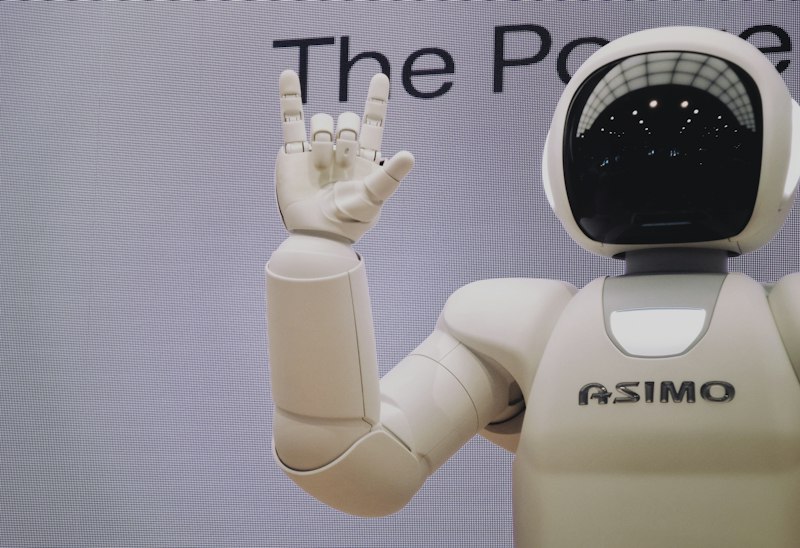
Andrej Karpathy shares bold 2026 AI predictions on transformers, safety, and machine learning future. Expert forecast from Tesla AI director sparks debate.
Andrej Karpathy's 2026 AI Predictions Are Wild (And Probably Right)
---
Related Reading
- Prediction: Which AI Company Will IPO First? - Truth Terminal and the AI Accounts That Became Internet Celebrities - OpenAI Just Released GPT-5 — And It Can Reason Like a PhD Student - Meta Just Released Llama 5 — And It Beats GPT-5 on Every Benchmark - GitHub Copilot Now Writes Entire Apps From a Single Prompt
---
Karpathy's track record lends unusual weight to his forecasts. As the founding director of OpenAI and the architect of Tesla's Autopilot vision system, he has operated at the intersection of research and production longer than most of his peers. His predictions tend to arrive not through viral threads but through measured technical assessments—often delivered in lengthy educational videos or conference keynotes that practitioners actually finish. This methodological restraint makes his 2026 outlook particularly striking: he is not given to hyperbole, yet he is describing capabilities that would have seemed fantastical even eighteen months ago.
The timing matters as much as the substance. Karpathy published these projections during what many researchers consider an inflection point in scaling laws—the empirical relationships between model size, data, and performance that have governed AI progress since 2020. Where earlier gains came predictably from throwing more compute at larger datasets, the field now confronts questions of data exhaustion and emergent capabilities that resist clean extrapolation. Karpathy's willingness to attach specific dates to specific milestones suggests he sees continuity where others see uncertainty, a bet that the underlying dynamics of transformer architectures and multimodal training have not yet saturated.
Industry reception has been notably bifurcated. Venture capitalists have circulated his timeline internally as justification for continued capital deployment, while safety researchers have noted with concern that his predicted capabilities arrive faster than most governance frameworks anticipate. This tension—between commercial acceleration and institutional preparation—has become the defining fault line of 2024-2025 AI discourse. Karpathy himself has remained characteristically agnostic on policy questions, focusing instead on the engineering path to his stated milestones. Whether that neutrality holds as his predictions materialize remains an open question.
---
Frequently Asked Questions
Q: Who is Andrej Karpathy and why should we trust his predictions?
Karpathy is a computer scientist who served as OpenAI's founding research scientist and later led Tesla's AI team, where he built the vision system for Autopilot. His predictions carry weight because he has repeatedly shipped production AI systems at scale, giving him rare insight into both theoretical capabilities and practical constraints. Unlike many forecasters, he has a documented habit of underestimating rather than overselling timelines.
Q: What specific capabilities is Karpathy predicting for 2026?
While Karpathy has outlined several milestones, his core prediction centers on AI systems achieving reliable autonomous operation in complex, open-ended domains—essentially moving from "assistant" to "agent" with sustained performance across multi-hour tasks. He has also suggested that multimodal reasoning will reach a point where the distinction between perception and cognition becomes functionally meaningless for most applications.
Q: How do these predictions compare to other AI forecasters?
Karpathy's timeline sits roughly in the middle of expert opinion: more aggressive than conservative estimates from academic safety researchers, but more restrained than the "AGI by 2025" claims common in certain venture circles. His distinguishing feature is specificity—he tends to predict concrete capabilities rather than abstract thresholds like "human-level AI."
Q: What happens if Karpathy's predictions are wrong?
Short-term misses would likely slow capital flows to frontier model companies and embolden skeptics of scaling-based approaches. However, given his historical pattern of conservative forecasting, overperformance—capabilities arriving earlier than predicted—may be the greater risk for institutions unprepared for rapid transition. Either outcome will reshape research priorities and regulatory timelines.
Q: Where can I read Karpathy's original predictions?
Karpathy typically publishes detailed technical content through his personal website (karpathy.ai) and YouTube channel, with supporting code and data analysis on GitHub. For his 2026 outlook specifically, search his recent appearances at machine learning conferences and his "State of GPT" style presentations, which he updates periodically with forward-looking assessments.