Nvidia Unveils Blackwell Ultra AI Chips
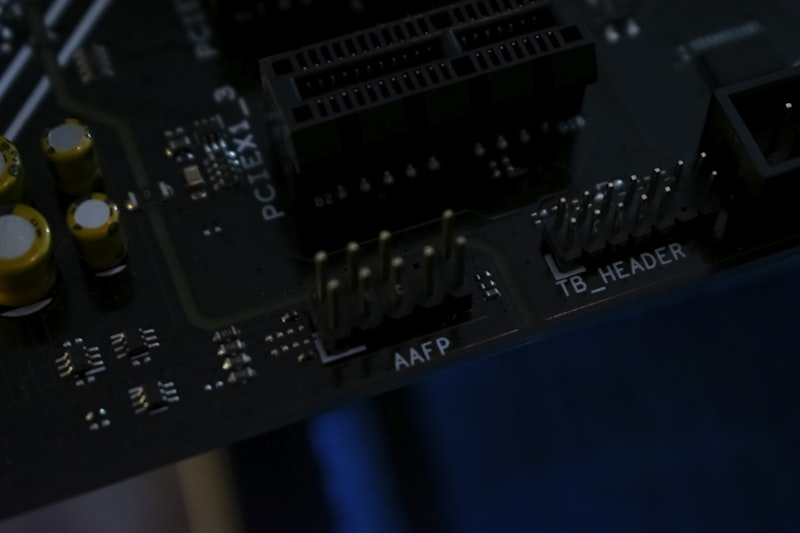
Nvidia Blackwell Ultra delivers 30x performance leap with breakthrough architecture. Neural networks advance AI computing and machine learning systems.
Nvidia announced its Blackwell Ultra AI processors on Tuesday, claiming the chips deliver a 30x performance improvement over current-generation hardware for large language model training and inference workloads. The company says the new architecture will begin shipping to data center customers in Q3 2025, with major cloud providers including Microsoft Azure, Amazon Web Services, and Google Cloud already committed to deployment.
The announcement positions Nvidia to maintain its dominant grip on the AI accelerator market, where the company currently holds an estimated 85% market share according to analysts at TechInsights. But the stakes are higher than ever. Competitors including AMD, Intel, and a wave of specialized AI chip startups have been chipping away at Nvidia's lead, while hyperscalers increasingly design their own custom silicon to reduce dependency on external suppliers.
The Numbers Behind the Leap
Nvidia CEO Jensen Huang revealed the specifications during a keynote at the company's annual developer conference. Blackwell Ultra packs 288 billion transistors — nearly double the transistor count of the previous Hopper generation. The chip features a new dual-die design connected via a proprietary 10TB/s chip-to-chip interconnect, allowing the processor to function as a single unified GPU with 1.4TB of high-bandwidth memory.
The performance claims are striking. Nvidia says Blackwell Ultra delivers 30x faster training for trillion-parameter foundation models compared to the H100, the current workhorse of AI data centers. Inference workloads see equally dramatic gains, with the company claiming 25x higher throughput for real-time AI applications while consuming 25% less power per operation.
Here's how Blackwell Ultra stacks up against Nvidia's previous generations:
---
Why This Matters Now
The timing isn't coincidental. AI labs are locked in an arms race to train ever-larger models, with parameter counts exploding from hundreds of billions to multiple trillions. OpenAI's rumored GPT-5, Google's Gemini Ultra 2.0, and Anthropic's next-generation Claude all reportedly require training clusters with tens of thousands of GPUs. At current generation performance levels, training runs for these models can take months and cost hundreds of millions of dollars.
Blackwell Ultra promises to collapse those timelines and costs dramatically. A model that required 90 days to train on H100s could potentially complete in just three days on Blackwell Ultra clusters, assuming Nvidia's performance claims hold up in production environments. That matters because faster iteration means AI labs can experiment more, test more approaches, and potentially reach breakthroughs that would be economically infeasible with slower hardware.
"The constraint on AI progress is increasingly compute, not ideas. Every order of magnitude improvement in training efficiency translates directly to capabilities we couldn't explore before," said Dario Amodei, CEO of Anthropic, in a statement following the announcement.
But there's a catch. The chips don't exist in isolation.
The Infrastructure Challenge
Deploying Blackwell Ultra at scale requires far more than just swapping out processors. The chips demand new cooling systems capable of dissipating 1000W per GPU, upgraded power delivery infrastructure, and redesigned networking to take advantage of the chip's 400Gbps NVLink interconnects. Data center operators told The Pulse Gazette they're looking at $200 million to $500 million in facility upgrades for each 10,000-GPU cluster.
That creates an opening for hyperscalers with deep pockets. Microsoft, which has invested over $10 billion in OpenAI, announced it will deploy 50,000 Blackwell Ultra GPUs across Azure data centers by the end of 2025. Amazon Web Services and Google Cloud made similar commitments, though they declined to specify exact numbers. The message is clear: the companies with the most capital will secure the most advanced compute, potentially widening the gap between AI leaders and everyone else.
Smaller AI companies and research labs face a different calculation. Renting Blackwell Ultra instances via cloud providers will likely cost $10 to $15 per GPU-hour based on current Hopper pricing and the performance differential, according to estimates from Omdia. For a startup training a 200-billion parameter model, that works out to roughly $2 million to $4 million per training run. It's still expensive, but far more accessible than building owned infrastructure.
---
Technical Breakthroughs Under the Hood
What actually enables the 30x performance jump? Nvidia points to several architectural innovations. The most significant is fourth-generation Tensor Cores optimized specifically for the FP8 and FP4 reduced-precision formats that modern transformer models increasingly rely on. Previous generations handled these formats through emulation, creating overhead. Blackwell Ultra includes dedicated silicon for these operations.
The chip also introduces Transformer Engine 2.0, a specialized processing block that accelerates the attention mechanisms at the heart of large language models. Attention calculations typically consume 60-70% of training time for transformer architectures, according to research from Stanford. Nvidia says its new engine reduces that bottleneck by 4.5x through a combination of algorithmic optimizations and hardware acceleration.
Memory bandwidth gets a major upgrade too. The 1.4TB of HBM3e memory connects to the GPU cores via a 14TB/s interconnect — essential for feeding data to the compute units fast enough to keep them busy. Memory bandwidth has become increasingly critical as models grow larger, with GPUs often sitting idle waiting for data rather than maxing out compute capacity.
Here's how different AI workloads benefit from Blackwell Ultra:
The Competition Responds
AMD wasted no time pushing back against Nvidia's claims. The company's data center head, Forrest Norrod, issued a statement hours after Nvidia's announcement pointing to AMD's upcoming MI400 series accelerators, which he said would offer "competitive or superior performance per dollar for AI inference workloads." AMD has struggled to gain traction against Nvidia in AI, holding just 5-7% market share, but has scored some wins with customers seeking supply chain diversification.
Intel's response was more muted. The company's Gaudi 3 AI accelerators launched last quarter to tepid reception, with benchmarks showing them trailing Nvidia's H100 by significant margins. Still, Intel has one advantage: aggressive pricing. The company's chips cost roughly half what Nvidia charges, making them attractive for cost-conscious customers running inference workloads that don't require bleeding-edge performance.
The wildcards are the custom silicon projects. Google's TPU v6, Amazon's Trainium 2, and Microsoft's Maia 2 all target the same performance tier as Blackwell Ultra, and their parent companies have every incentive to use their own chips when possible rather than enriching Nvidia. But these alternatives face a critical disadvantage: software ecosystem. Nvidia's CUDA platform has 15 years of development and optimization behind it. Developers know it, tools support it, and models run on it without friction.
---
What This Means for AI Development
The immediate impact will hit AI training first. Labs racing to train the next generation of frontier models can now potentially complete runs in weeks rather than months, enabling faster iteration cycles. That matters enormously in a field moving as quickly as AI, where a three-month advantage can mean the difference between leading and following.
But inference workloads might see even more significant changes. Companies deploying AI applications face a brutal economic reality: inference costs often exceed training costs once a model reaches scale. A popular AI assistant serving millions of users can burn through tens of millions of dollars monthly in GPU time. Blackwell Ultra's 25x inference improvement could make previously uneconomical applications suddenly viable.
Consider real-time video understanding. Current generation hardware struggles to process video streams at high resolution without significant latency, limiting applications like autonomous vehicles, security systems, and augmented reality. Blackwell Ultra's performance opens the door to processing 4K video at 60fps with complex models — capabilities that enable entirely new product categories.
The power efficiency gains matter too. Data centers already consume roughly 1-2% of global electricity, with AI workloads driving accelerating growth. Blackwell Ultra's 25% improvement in performance per watt won't reverse that trend, but it slows the growth curve, buying time for the industry to develop more sustainable long-term solutions.
The Price of Progress
None of this comes cheap. Industry sources tell The Pulse Gazette that Blackwell Ultra chips will likely retail for $40,000 to $50,000 each — roughly 50% more than current-generation Blackwell processors. At those prices, a modest 1,000-GPU cluster represents a $40 million to $50 million hardware investment before factoring in networking, storage, and facilities.
That creates a two-tier AI industry. Well-funded labs and hyperscalers can afford to stay on the cutting edge, training larger models and serving more customers. Everyone else faces tough choices about whether to invest in older, cheaper hardware or rent time on the newest systems at premium rates. The dynamic reinforces the concentration of AI capabilities in the hands of a small number of well-capitalized players.
Nvidia's profit margins tell the story. The company reported 76% gross margins on its data center segment last quarter — extraordinary even by semiconductor industry standards. That's generated criticism from customers and regulators alike, with the EU and US Department of Justice both investigating whether Nvidia's market dominance constitutes anticompetitive behavior. The company has denied wrongdoing, arguing that high margins reflect the value of its R&D investments and the performance advantages its products deliver.
Supply Chain Realities
Manufacturing Blackwell Ultra at scale presents enormous challenges. The chips use TSMC's most advanced 3nm process node, which has limited production capacity and serves multiple high-priority customers including Apple, AMD, and Qualcomm. Nvidia has secured substantial wafer allocation, but industry analysts expect supply to remain constrained through at least mid-2026.
That scarcity will likely mean tiered access. Nvidia's largest customers — the hyperscalers and a handful of leading AI labs — will get priority allocation. Smaller customers may face six to nine-month wait times for orders, similar to the supply constraints that plagued H100 availability through 2023 and 2024.
The geopolitical dimension looms large too. US export restrictions prohibit selling advanced AI chips to China, and recent rule changes tightened controls further. Nvidia has developed restricted versions of its chips for the Chinese market, but these deliver significantly reduced performance. That's opening opportunities for domestic Chinese chip makers, though they still lag behind Nvidia by at least one generation in capabilities.
---
The Road Ahead
Nvidia isn't standing still. Company executives hinted at the conference that Blackwell Ultra represents the "mid-series refresh" of the Blackwell architecture, with a fully redesigned next-generation platform code-named Rubin already in development for 2026 release. The chip industry's Moore's Law may have slowed, but the economic incentives driving AI hardware innovation have, if anything, accelerated.
The real question isn't whether hardware will keep improving — it will. The question is whether the AI models and applications can scale fast enough to fully utilize the available compute. We've seen hints of that tension already, with researchers debating whether simply training larger models on more data continues to yield proportional capability improvements, or whether the returns are diminishing.
Some researchers argue we're approaching fundamental limits of the current deep learning paradigm. Others counter that we haven't yet scratched the surface of what's possible with sufficient compute. Blackwell Ultra will provide a definitive test of that hypothesis. With 30x more performance available, AI labs will have the resources to train models an order of magnitude larger than anything attempted before.
What emerges from those training runs could reshape entire industries — or reveal that we need fundamentally different approaches to reach artificial general intelligence. Either way, the hardware won't be the bottleneck holding us back from finding out.
---
Related Reading
- OpenAI Unveils GPT-4.5 with 10x Faster Reasoning and Multimodal Video Understanding - Perplexity AI Launches Assistant Pro with Advanced Voice Mode and Deep Research Capabilities - OpenAI Operator: AI Agent for Browser & Computer Control - AI vs Human Capabilities in 2026: A Definitive Breakdown - The Complete Guide to Fine-Tuning AI Models for Your Business in 2026