OpenAI Hits 800 Million Weekly Users as Growth Accelerates
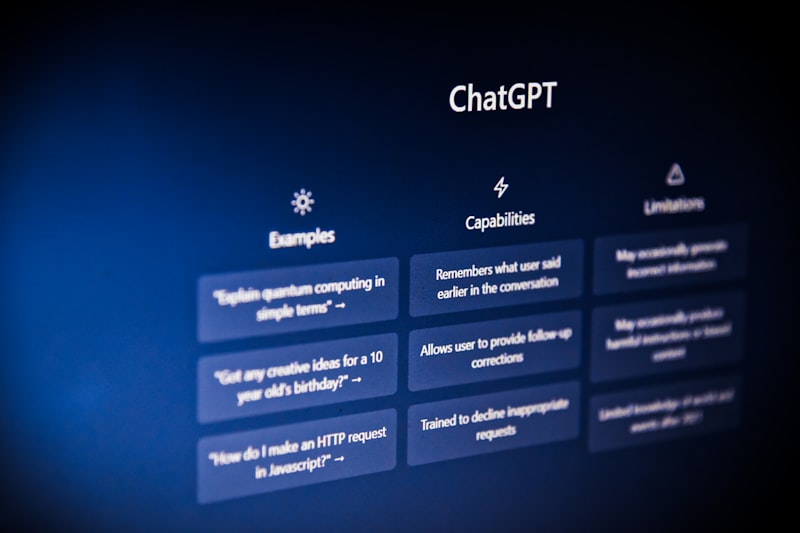
OpenAI reaches 800 million weekly active users with rapid growth acceleration. ChatGPT dominance: record-breaking unprecedented user adoption worldwide.
OpenAI Hits 800 Million Weekly Users as Growth Accelerates
Category: tech
Tags: AI, OpenAI, ChatGPT, Technology, User Growth
---
The Record-Breaking User Growth
A Rapid Scaling Trajectory in Consumer Tech History
The acceleration to 800 million weekly active users represents one of the fastest scaling trajectories in consumer technology history, outpacing even the meteoric rises of Instagram and TikTok in their comparable growth phases. This milestone arrives less than two years after ChatGPT's public debut, a timeframe that has compressed what typically requires half a decade of platform maturation into mere months. The velocity of adoption signals not merely curiosity-driven experimentation but the embedding of generative AI into daily workflows across education, software development, creative industries, and enterprise operations.Weekly Active Users as a Key Metric in the AI Sector
Industry analysts note that weekly active user metrics carry particular significance in the AI sector, where novelty-driven downloads often mask shallow engagement. OpenAI's disclosure suggests meaningful retention—users returning consistently rather than sampling and abandoning the technology. This distinction matters enormously for monetization strategy, as the company pivots from research organization to revenue-generating entity under mounting pressure from investors who have poured billions into its capitalization. The 800 million figure also positions OpenAI within striking distance of mainstream platforms like X (formerly Twitter), implying that AI assistants are graduating from niche productivity tools to essential communication infrastructure.---
The Challenges and Strategic Implications of Rapid Growth
Infrastructure Costs and Competitive Pressures
Yet this growth curve arrives alongside intensifying scrutiny of OpenAI's infrastructure costs and competitive positioning. The company reportedly burns through billions annually on compute resources, and maintaining service quality at this scale requires unprecedented coordination with semiconductor suppliers and cloud providers. Meanwhile, open-source alternatives and well-capitalized competitors from Google, Meta, and emerging players like Anthropic are racing to narrow the capability gap. Whether OpenAI can convert its user dominance into sustainable competitive moats—through network effects, data flywheels, or ecosystem lock-in—remains the central strategic question as the AI industry transitions from explosive growth to mature market dynamics.Navigating the Transition to a Profitable Model
Despite massive user adoption, OpenAI remains unprofitable on a full-cost basis. The company generates substantial revenue through ChatGPT Plus subscriptions, enterprise licenses, and API fees, but infrastructure and research expenditures continue to outpace income. Recent reports suggest the company targets $11.6 billion in revenue for 2025, with profitability timelines remaining closely guarded.---
Frequently Asked Questions
Comparing OpenAI's User Growth to Major Tech Platforms
OpenAI's weekly active user base now rivals established platforms like X (~600 million) and approaches a significant fraction of Meta's family of apps (~3.9 billion). The growth velocity is particularly notable: ChatGPT reached 100 million users in two months, whereas Instagram required roughly two years to achieve comparable scale.Understanding the Definition of a "Weekly Active User"
OpenAI defines weekly active users as unique individuals who interact with any of its consumer-facing products—primarily ChatGPT, but also including DALL-E, Sora, and mobile applications—within a rolling seven-day window. This metric excludes API usage by developers and enterprise customers, which represents a separate and substantial revenue stream.The Relationship Between User Growth and Profitability
Despite massive user adoption, OpenAI remains unprofitable on a full-cost basis. The company generates substantial revenue through ChatGPT Plus subscriptions, enterprise licenses, and API fees, but infrastructure and research expenditures continue to outpace income. Recent reports suggest the company targets $11.6 billion in revenue for 2025, with profitability timelines remaining closely guarded.Regional and Demographic Drivers of Growth
OpenAI has observed particularly strong adoption in the United States, India, Brazil, and across European knowledge-economy sectors. Demographically, usage skews toward educated professionals aged 18-34, though rapid expansion into secondary education and emerging markets is broadening the user base considerably.The Impact of Regulatory Action on User Growth
Regulatory pressure presents a material risk to expansion, particularly in the European Union under the AI Act and in jurisdictions considering restrictions on training data and model capabilities. However, OpenAI has historically adapted product offerings to comply with regional requirements rather than withdrawing entirely, suggesting that growth deceleration from regulation would likely be geographically uneven rather than systemic.---
Related Reading
- The AI Model Users Refuse to Let Die: Inside the GPT-4o Retirement Crisis - When AI CEOs Warn About AI: Inside Matt Shumer's Viral "Something Big Is Happening" Essay - Claude Opus 4.6 Dominates AI Prediction Markets: What Bettors See That Others Don't - Inside OpenAI's Reasoning Models: When AI Thinks Before It Speaks - OpenAI's Sora Video Generator Goes Public: First AI Model That Turns Text Into Hollywood-Quality Video