The AI Video Editor That's Replacing $50K Production Budgets
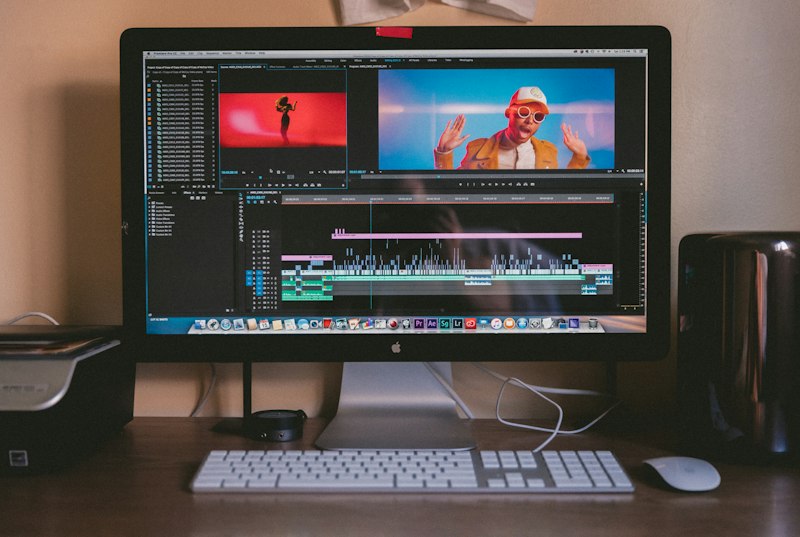
Runway's Gen-4 AI video tool produces broadcast-quality content at a fraction of traditional production costs, disrupting the video industry. Learn ho
The AI Video Editor That's Replacing $50K Production Budgets
The democratization of professional-grade video production represents more than a cost-cutting exercise—it signals a fundamental restructuring of creative labor markets. Traditional post-production workflows required specialized teams for rotoscoping, color grading, and motion graphics, each commanding premium rates that placed broadcast-quality output beyond the reach of independent creators and mid-sized brands. Runway's consolidation of these discrete functions into an accessible interface doesn't merely automate tasks; it collapses the distinction between "production value" and "production budget," forcing legacy studios to justify their overhead against increasingly capable solo operators.
The Shift in Client Expectations
Industry veterans have noted a telling shift in client expectations. Where brands once accepted that certain visual effects required weeks and substantial capital, the same stakeholders now anticipate turnaround times measured in hours. This compression of timelines is creating a bifurcation in the market: high-end productions that lean into bespoke craft and irreplaceable human judgment, and a vast middle tier where AI-augmented creators dominate through volume and agility. The $50,000 budget isn't disappearing—it's being reallocated toward conceptual development and strategic distribution while execution costs asymptotically approach zero.
Risks of AI-Driven Video Production
Yet this transition carries underexplored risks. The same generative capabilities that eliminate technical barriers also homogenize visual language, with early adopters reporting a recognizable "Runway look" across disparate content categories. Creators who thrive in this environment will likely be those who treat AI tools as compositional starting points rather than endpoints, developing proprietary workflows that layer human curation atop algorithmic generation. The economic disruption is real and accelerating, but sustainable competitive advantage may ultimately reside in taste and editorial judgment—the very skills that expensive production budgets once obscured.
Related Reading
- The Great Equalizer? How AI Is Letting Small Businesses Punch Above Their Weight - Notion Just Launched an AI That Actually Understands Your Workspace - The 7 AI Agents That Actually Save You Time in 2026 - The Best Free AI Tools in 2026: A No-BS Guide - Claude Code vs Cursor vs GitHub Copilot: The Definitive 2026 Comparison
Frequently Asked Questions
Q: Can Runway completely replace professional video editing software like Premiere or DaVinci Resolve?
Not for complex, multi-layered projects requiring precise frame-level control. Runway excels at generative tasks and rapid prototyping, but professional editors still rely on traditional NLEs for fine-tuned color science, audio post-production, and collaborative workflows with extensive asset management.
Q: What are the licensing implications for commercial use of AI-generated video content?
This remains a moving target. Runway grants commercial usage rights to subscribers, but underlying training data disputes and evolving copyright frameworks—particularly around the USCO's stance on AI-generated works—create uncertainty. Enterprises should consult legal counsel before deploying AI video in high-stakes campaigns.
Q: How does Runway's quality compare to traditional VFX for film and television?
For background plates, crowd multiplication, and preliminary concept visualization, the gap has narrowed dramatically. For hero shots requiring photorealistic integration with live-action elements or complex physics simulations, traditional pipelines maintain substantial quality advantages, though the crossover point shifts quarterly.
Q: What's the learning curve for someone with no video production background?
Remarkably shallow for basic outputs—users can generate compelling results within hours. However, achieving distinctive, commercially competitive work requires developing prompt engineering fluency and understanding fundamental cinematography principles that AI tools don't automatically impart.
Q: Are there meaningful alternatives to Runway in this space?
Pika Labs, Kling, and OpenAI's Sora represent the most credible competition, each with distinct strengths in motion coherence, temporal consistency, or text-to-video fidelity. Adobe's Firefly integration offers enterprise-friendly compliance features, while open-source alternatives like Stable Video Diffusion appeal to technically sophisticated users prioritizing customization.