Open-Source AI Helps African Farmers Double Crop Yields
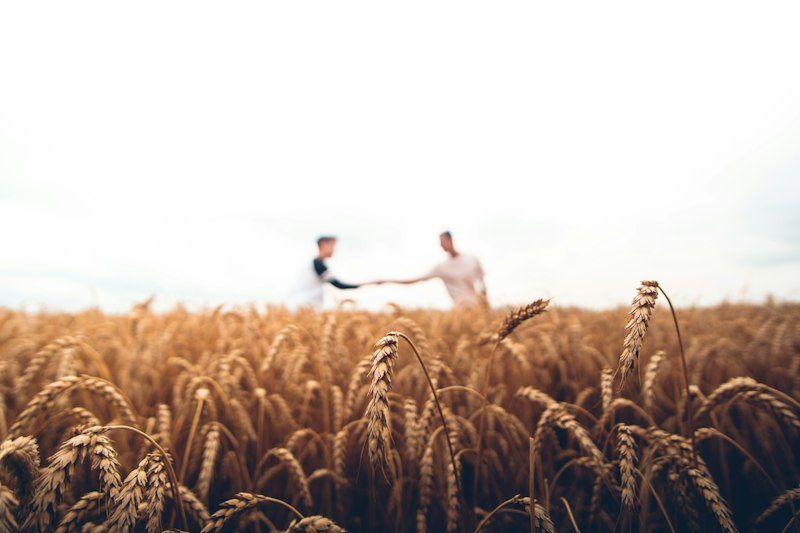
An open-source AI model trained on African agricultural data is helping smallholder farmers double crop yields through personalized planting, irrigation, and
Open-Source AI Helps African Farmers Double Crop Yields
Addressing Agricultural Challenges in Sub-Saharan Africa
Smallholder farmers in Sub-Saharan Africa face significant challenges in achieving higher crop yields due to limited access to data-driven agricultural guidance. These farmers, who cultivate plots of less than two hectares, produce approximately 80% of the region's food supply. However, they operate with minimal access to the agricultural insights that have driven productivity gains in developed nations. Climate change has introduced increasing unpredictability in rainfall patterns, while evolving pest pressures and soil degradation compound existing challenges. Agricultural extension services are often understaffed, further limiting the ability of farmers to adopt modern practices.
The CropWise AI Model: A Game-Changing Solution
CropWise is an open-source AI model developed by a consortium of universities, including the University of Nairobi, Makerere University in Uganda, and the University of Ghana, in partnership with the Bill and Melinda Gates Foundation. The model was trained on 15 years of agricultural data collected from 8 Sub-Saharan African countries, encompassing weather station records, soil surveys, crop field trial results, pest monitoring data, and yield reports from farmer cooperatives. The system's design reflects a deep understanding of its user context, tailored to the unique needs of smallholder farmers.
How CropWise Works: SMS-Based Personalized Recommendations
Farmers interact with CropWise through basic SMS messages, which require three pieces of information: their location, the crop they are growing, and a description of their soil. Based on this data, CropWise provides personalized recommendations including optimal planting dates, irrigation timing and quantity, pest identification with treatment options using locally available inputs, and harvest timing for optimal yield. A critical technical and design decision was building the entire system around 2G SMS infrastructure, ensuring accessibility in areas with limited internet connectivity.
Overcoming Infrastructure and Connectivity Barriers
Approximately 60% of Sub-Saharan Africa's population lacks reliable internet access, and smartphone penetration among smallholder farming communities remains low. CropWise requires no smartphone, no internet connection, and no application installation. After an initial calibration exchange that establishes a farmer's location and typical crops, the system can queue responses during connectivity gaps and deliver them when signal becomes available. This design ensures that even in remote areas with minimal connectivity, farmers can still receive critical agricultural guidance.
Regional Specificity and Adaptability of the Model
The training data's regional specificity is a key differentiator of CropWise. The model understands the specific crop varieties cultivated in the region — finger millet, sorghum, cassava, and local maize varieties alongside more widely studied crops. It accounts for region-specific pest pressures such as fall armyworm, which has devastated maize production across the continent, and understands microclimate variations that can shift optimal planting dates by several weeks between villages separated by as little as 50 kilometers.
Measurable Success: Pilot Program Results
Pilot program results have been substantial, with an average 47% increase in crop yields among 12,000 participating farmers in Kenya, Tanzania, and Ghana compared to matched control groups farming without CropWise guidance. Certain crop and region combinations showed even higher gains. For families operating at or near subsistence level, this improvement represents the difference between food insecurity and the ability to produce surplus for market sale.
Scaling and Cultural Challenges
The project faces significant challenges in scaling, particularly in reaching the most remote farming communities. Some areas have barely functional cell networks, and physical distance from any form of support infrastructure is measured in days of travel. Trust-building presents a cultural challenge, as farming practices are deeply rooted in generational knowledge, and recommendations from an AI system require community validation. The CropWise team has addressed this by partnering with local agricultural extension workers and farmer cooperatives, introducing the tool through trusted community relationships.
Integrating Traditional Knowledge with AI
Local farmers often possess granular understanding of their specific land and conditions — knowledge that may not appear in formal agricultural datasets. CropWise has implemented feedback mechanisms allowing farmers to report results and observations via SMS, which are incorporated into model updates. This bidirectional approach aims to complement rather than override indigenous agricultural knowledge, ensuring the model remains responsive to the needs of local communities.
Future Expansion and Open-Source Impact
The consortium plans to expand from 12,000 to 100,000 farmers by the end of 2026, extending from the three pilot countries into Rwanda, Uganda, Malawi, Mozambique, and Senegal. The model's open-source license ensures that other organizations, NGOs, and government agricultural departments can adapt and deploy it without licensing costs — a deliberate choice to maximize impact over commercial return. This approach reflects a commitment to leveraging AI for global development and food security. For those interested in understanding how AI is reshaping the broader agricultural landscape, read about the key differences between AI and machine learning in 2026. As the AI industry continues to evolve, explore the key trends shaping the AI landscape in 2026. For those looking to build their own AI agents, check out the step-by-step guide to building an AI agent in 2026. Additionally, discover how AI agents are boosting productivity across industries in 2026. Finally, for those interested in AI tools that are transforming education, explore the 12 AI tools that are transforming classrooms.