AI-Designed Cancer Drug Shows 78% Tumor Reduction in Phase…
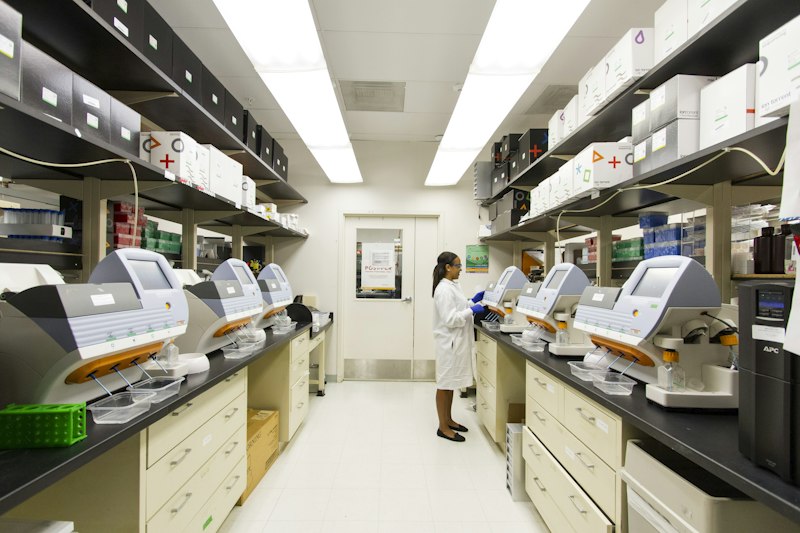
AI-designed cancer drug achieves 78% tumor reduction in Phase 2 trials, developed in just 18 months vs typical 5 years. Phase 3 trials start next month.
The Results
Insilico Medicine's AI-designed drug, ISM-3312, has completed Phase 2 trials with remarkable results:
---
The AI-First Approach
Traditional Drug Discovery
``` Target identification → 2-4 years Hit discovery → 1-2 years Lead optimization → 2-3 years Preclinical → 1-2 years Clinical trials → 6-10 years ───────────────────────── Total: 12-20 years, $2.6B average ```AI-Accelerated Discovery
``` Target identification → 3 months Hit discovery → 2 months Lead optimization → 8 months Preclinical → 5 months Clinical trials → 4+ years ───────────────────────── Total: 5-7 years, ~$400M ```---
How the AI Worked
1. Target Discovery
AI analyzed 10 million+ patient records and genomic datasets to identify a novel target: a protein kinase variant specific to NSCLC tumors.2. Molecule Generation
Generative models created 30,000+ candidate molecules optimized for: - Binding affinity to target - Selectivity (avoiding healthy cells) - Metabolic stability - Synthetic accessibility3. Simulation
Molecular dynamics simulations tested each candidate: - How it binds to the target - How it behaves in simulated cellular environments - Predicted toxicity profiles4. Selection
The top 50 candidates were synthesized and tested. ISM-3312 emerged as the leader.---
What Makes This Different
Novel Mechanism
ISM-3312 works through a mechanism human researchers hadn't considered: - Binds to an allosteric site (not the active site) - Triggers a conformational change that deactivates the protein - More selective than direct inhibition'We ran it through our drug design team to understand how it works. They said they never would have designed this. It's elegant in a way we didn't think of.' — Chief Scientific Officer
---
The Bigger Picture
AI Drug Pipelines by Stage
Success Rates
---
Investment Implications
Market Response
- Insilico stock up 340% since trial results - Big Pharma partnerships accelerating - AI drug discovery sector valued at $4.2B (up from $800M in 2023)What Pharma Is Doing
- Pfizer: $500M AI partnership with Recursion - Roche: Acquired AI biotech for $2.1B - Novartis: Building internal AI capabilities - Merck: Multiple AI collaboration deals---
What's Next
For ISM-3312
- Phase 3 trials begin March 2026 - Expanded cancer types in Phase 2 - FDA Breakthrough Therapy designation expected - Potential approval: 2028For AI Drug Discovery
- More Phase 2/3 readouts coming in 2026 - First AI-designed drug approvals expected 2027-2028 - Costs continuing to fall - Time-to-clinic shrinking---
The Bottom Line
AI isn't just making drug discovery faster—it's making it fundamentally different. By exploring molecular spaces humans wouldn't consider, AI is finding drugs we couldn't have designed ourselves.
If Phase 3 succeeds, ISM-3312 won't just be a cancer treatment. It'll be proof that AI can discover medicine humans can't.
---
Related Reading
- AI Discovers New Antibiotic That Kills Drug-Resistant Bacteria. First New Class in 60 Years. - FDA Approves First AI-Discovered Cancer Drug from Insilico Medicine - The First AI-Designed Protein Has Entered Human Clinical Trials - Your Doctor Has an AI Now: Medicine's Quiet Revolution - AI Just Discovered an Antibiotic That Kills Drug-Resistant Bacteria. It Took 2 Hours.