How AI Is Trying to Optimize Your Sleep
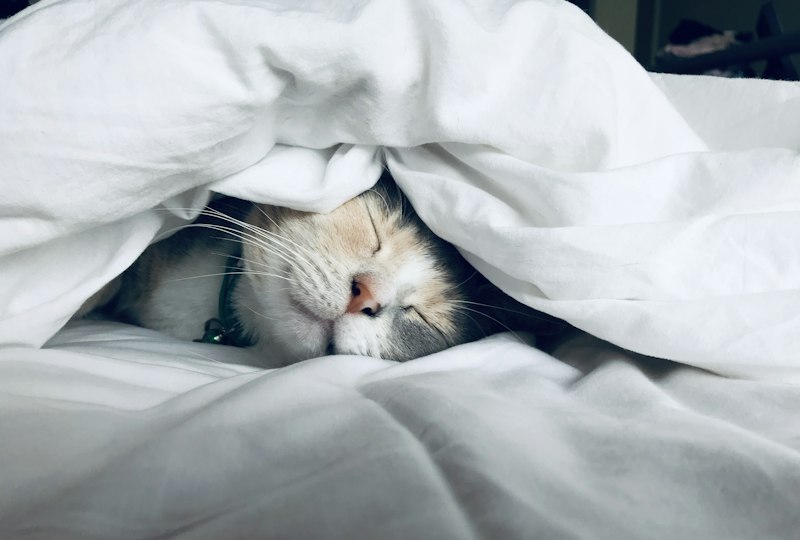
AI-powered sleep tracking promises to optimize your rest with personalized insights. What the science says and what you're giving up for better sleep.
Michael has worn an Oura ring for three years. Every morning, he checks his "readiness score"—a number from 1 to 100 that tells him how prepared his body is for the day based on sleep quality, heart rate variability, and body temperature trends.
If his score is above 85, he'll do an intense workout. Between 70 and 85, something moderate. Below 70, he takes a rest day. He's adjusted his coffee intake based on the ring's suggestions about how caffeine affects his sleep. He goes to bed within a 20-minute window because the app determined that's his optimal sleep time.
"Before Oura, I thought I slept fine," Michael says. "The data showed me I was wrong. My deep sleep was terrible. My HRV was all over the place. Once I started following the recommendations, everything improved—my energy, my workouts, even my mood."
Michael is part of a growing movement of people using AI to optimize sleep. What started as basic step counting has evolved into sophisticated systems that analyze dozens of biometric signals, identify patterns humans couldn't detect, and deliver personalized recommendations for better rest.
The promise is compelling: better sleep through data. The reality is more complicated.
The Technology Layer
Modern sleep tracking has moved far beyond the accelerometer-based systems of a decade ago.
Current devices measure:
Movement: Still the foundation. Accelerometers detect when you're restless, tossing, or still—proxies for sleep stages. Heart rate: Optical sensors track pulse throughout the night. Heart rate patterns correlate with sleep stages—lower and steady in deep sleep, more variable in REM. Heart rate variability (HRV): The variation in time between heartbeats. Higher HRV generally indicates better recovery and readiness; lower HRV suggests stress or incomplete recovery. Blood oxygen: Some devices measure SpO2, useful for detecting sleep apnea and other respiratory issues. Skin temperature: Temperature fluctuations correlate with circadian rhythm and sleep stages. Deviations can indicate illness before symptoms appear. Respiratory rate: Breathing patterns during sleep, useful for detecting respiratory issues and stress.The AI layer processes these signals to:
Stage sleep: Classify each part of the night as light sleep, deep sleep, REM, or awake. This requires pattern recognition that simple thresholds can't achieve. Calculate scores: Aggregate metrics into interpretable numbers—sleep score, readiness score, recovery score—that summarize complex data. Identify patterns: Detect correlations between behaviors (alcohol, caffeine, late meals, screen time) and sleep outcomes over time. Generate recommendations: Based on your patterns, suggest optimal bedtime, wake time, and behavioral modifications.The leading products—Oura, Whoop, Eight Sleep's Pod, Apple Watch, Fitbit—all use machine learning models trained on data from millions of nights of sleep. They're constantly improving as they collect more data.
What the Science Says
How accurate is AI sleep tracking? The research is mixed but increasingly positive.
Sleep staging: Consumer devices now achieve approximately 80% agreement with clinical polysomnography (the gold standard) for distinguishing sleep stages. This is impressive but not perfect. The remaining 20% disagreement can matter for clinical purposes but may be acceptable for general wellness tracking. HRV measurement: Optical HRV measurement from wrist or finger devices correlates well with chest-strap measurements, which correlate well with clinical ECG. The absolute numbers may vary, but trends are reliable. Sleep duration: Devices are quite accurate at measuring total sleep time, typically within 10-20 minutes of polysomnography. Sleep efficiency: Accurately detecting brief awakenings is harder. Devices may miss short arousals that a clinical study would catch.The overall picture: consumer devices provide useful approximations of sleep architecture, good enough to identify trends and problems, but not diagnostic tools. They're fitness trackers for sleep, not medical devices.
For the recommendations these devices generate, evidence is more limited. The optimization suggestions are based on population-level correlations and individual pattern detection, but few randomized trials have tested whether following the recommendations actually improves outcomes compared to standard sleep hygiene advice.
The Personalization Promise
The key claim of AI sleep optimization is personalization: the system learns your patterns and gives you advice tailored to your biology, not generic recommendations.
This is partly legitimate. If the data shows that your sleep suffers on nights after drinking alcohol, that's personalized insight. If it identifies that you get more deep sleep when you go to bed at 10:30 PM versus 11:30 PM, that's useful to know.
But the personalization has limits. The AI doesn't actually understand your biology; it detects statistical patterns in your data. Correlation isn't causation. The pattern might be real (alcohol really does disrupt your sleep) or it might be coincidental (you happen to drink on days when other factors also hurt your sleep).
The recommendations are also constrained by what's measurable. The AI doesn't know about your stress at work, your relationship conflict, your sick child, or the construction outside your window. It can only optimize within the variables it tracks, which may not be the most important ones.
And the optimization targets themselves are somewhat arbitrary. What's an "optimal" sleep score? The number is constructed by the company based on their judgment of what matters. Different companies weigh factors differently, which is why the same night can produce different scores on different platforms.
The Orthosomnia Problem
Here's an irony: obsessive sleep tracking can make sleep worse.
Sleep researchers have identified a condition they call "orthosomnia"—an unhealthy preoccupation with achieving perfect sleep as defined by tracking devices. Patients become anxious about their sleep scores, which makes them sleep poorly, which lowers their scores, which increases anxiety.
The device intended to improve sleep creates sleep problems.
This isn't universal. Many people find that tracking helps them sleep better without anxiety. But for the subset prone to health anxiety, the constant measurement and scoring can be counterproductive.
The psychological relationship with the device matters. Using the tracker as a curious observer—"I wonder what my sleep will be like tonight"—tends to be healthier than using it as a judge—"I need to achieve a good score or I've failed."
Some sleep specialists now recommend that anxious patients stop tracking, at least temporarily. The paradox: the people most desperate to improve their sleep may benefit least from sleep tracking.
The Data Intimacy
Sleep data is extraordinarily intimate.
Consider what your sleep patterns reveal:
Health conditions: Irregular heart rhythms, sleep apnea, restless leg syndrome, chronic pain, depression, anxiety—all leave signatures in sleep data. Stress and emotional state: HRV drops when you're stressed. Sleep quality suffers after difficult days. The data reflects your inner life. Substance use: Alcohol, caffeine, cannabis, and other substances affect sleep distinctively. Your patterns reveal your consumption. Sexual activity: Movement and heart rate signatures during the night can reveal intimate activities. Illness: Temperature spikes and other changes can detect infection before symptoms appear. COVID-19 studies showed this clearly. Menstrual cycle and fertility: For people who menstruate, cycle-linked temperature changes are trackable, enabling both period prediction and fertility tracking.This data exists on your device and, typically, in company cloud servers. The privacy policies of sleep tracking companies vary, but most retain the right to use aggregated data for research and improvement. Some sell data to third parties. Some share data with health insurers or employers.
The question isn't whether this data is sensitive—it obviously is. The question is whether the benefit of optimization is worth the intimacy exposure.
Who Should Track Sleep?
Sleep tracking isn't equally valuable for everyone.
Good candidates:- People with suspected sleep disorders who want data to discuss with doctors - Athletes and fitness enthusiasts optimizing performance - People whose schedules vary and want to identify patterns - Anyone genuinely curious about their sleep architecture - Those who respond well to data-driven self-improvement
Poor candidates:- People prone to health anxiety who may develop orthosomnia - Those with already good sleep habits who don't need optimization - Anyone uncomfortable with continuous biometric data collection - People who would become obsessive about scores - Those who sleep poorly for reasons tracking can't address (noisy environment, young children, shift work)
The best users tend to treat tracking as informational rather than prescriptive. They find the data interesting, use it to identify patterns, but don't let scores dictate their self-worth or drive anxiety.
The Best Practices
If you're going to track sleep with AI, here's how to do it well:
Focus on trends, not nights. A single night's data is noisy. A month's trend is meaningful. Don't react to one bad score; look for patterns across time. Treat recommendations as suggestions. The AI doesn't know your life. Its recommendations are informed guesses based on population patterns and your data. Use them as input to decisions, not commands to follow. Maintain perspective. The scores are constructed metrics, not objective truths. An 82 sleep score and an 78 are not meaningfully different. Don't sweat small variations. Take breaks. Periodically stop tracking for a week or two. Notice whether you sleep differently, feel differently. The break provides perspective and prevents over-reliance. Read the privacy policy. Understand what happens to your data. Choose devices and services whose data practices you accept. Discuss with your doctor. If you notice concerning patterns—potential apnea, irregular heart rhythms, temperature anomalies—bring the data to a medical professional. Don't self-diagnose. Don't share scores competitively. Making sleep tracking a competition with friends or family introduces unhealthy pressure. Sleep is personal.The Night Ahead
AI sleep optimization will continue advancing.
Sensing will improve. Future devices may track brain activity more directly, blood glucose, cortisol proxies, and other signals currently requiring clinical equipment. Intervention will expand. Eight Sleep's mattress already heats and cools to optimize temperature. Future systems might adjust lighting, sounds, and other environmental factors automatically based on detected sleep states. Integration will deepen. Sleep data will connect with activity data, nutrition data, mental health data, and more, enabling whole-life optimization (with corresponding whole-life privacy exposure). Medical applications will grow. As accuracy improves, consumer devices may become legitimate clinical tools for diagnosing and managing sleep disorders.Whether this future is utopian or dystopian depends on implementation. Done well, AI sleep optimization could meaningfully improve health and quality of life. Done poorly, it could create new anxieties, extract intimate data for commercial purposes, and medicate natural human variation.
Michael, with his readiness scores and optimal bedtimes, seems happy. He sleeps better than he used to. The data gives him a sense of control.
But he also admits it's become a habit he's not sure he could break. "I'd feel weird not knowing my score," he says. "Like flying blind. I've gotten used to the AI telling me how I'm doing."
That dependency—comfortable, maybe even beneficial, but also a surrender of autonomy to algorithmic assessment—is the defining feature of the quantified self. Sleep is just the latest domain to be measured, analyzed, and optimized.
How well we sleep with that remains to be seen.
---
Related Reading
- AI Sleep Coaches Are Helping Insomniacs Finally Get Rest - Dog's AI Health Collar Detected Owner's Heart Attack. He Survived. - Your Doctor Has an AI Now: Medicine's Quiet Revolution - FDA Approves First AI-Discovered Cancer Drug from Insilico Medicine - The Blind Woman Who Can See Again, Thanks to an AI-Powered Brain Implant