Blind Woman Sees Again via AI-Powered Brain Implant
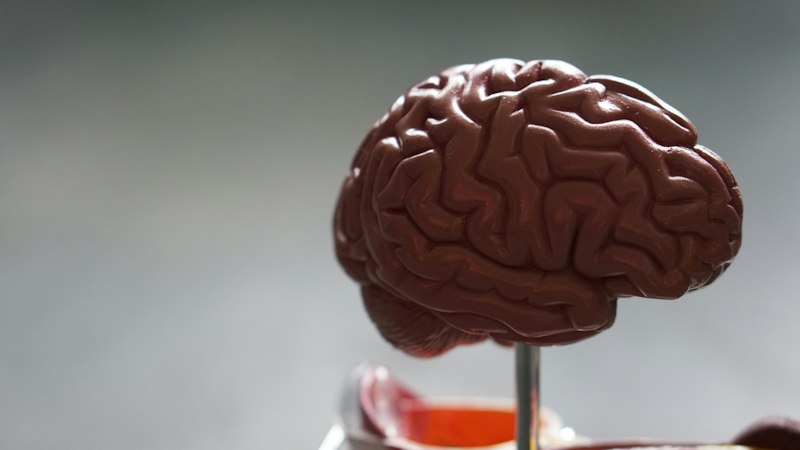
AI brain implant restores sight to blind woman. Neurotechnology breakthrough. Vision recovery through revolutionary artificial intelligence innovation.
When Bernardeta Gómez lost her sight 16 years ago, her doctors delivered the verdict with clinical finality: toxic optic neuropathy had destroyed her optic nerves. The damage was irreversible. She would never see again.
They were wrong.
Today, Gómez can read letters, identify objects, and navigate her environment—not through her eyes, but through an AI-powered brain implant that bypasses her damaged visual system entirely. She is the first person in the world to regain functional vision through a cortical brain-computer interface, a breakthrough that redefines the boundary between biological limitation and technological possibility.
The technology doesn't repair her optic nerves. It replaces them.
The Procedure: Bypassing Biology
At Miguel Hernández University in Elche, Spain, neurosurgeon Dr. Eduardo Fernández and his research team faced a fundamental challenge: how do you restore vision when the entire pathway from eye to brain is severed?
Their answer: don't restore the pathway. Build a new one.
In a six-hour surgical procedure, the team implanted a 96-electrode microarray directly into Gómez's visual cortex—the region at the back of the brain responsible for processing sight. The implant is connected to a small computer processor that receives input from a camera mounted on a pair of glasses.
When Gómez looks at something, the camera captures the visual scene. An AI algorithm analyzes the image in real-time, identifying edges, shapes, brightness levels, and spatial relationships. The system then translates this visual information into precise patterns of electrical stimulation delivered through the 96 electrodes.
Each electrode can activate or remain silent, creating a grid of sensory input directly in the visual cortex. Think of it as a 96-pixel display projected onto the brain itself—crude by modern screen standards, but revolutionary for someone who's been blind for 16 years.
"The first time we activated the device, Bernardeta saw phosphenes—spots of light. Over time, with training, her brain learned to assemble those spots into recognizable patterns. Now she sees shapes, letters, and the outlines of objects." — Dr. Eduardo Fernández
The AI Component: Translating Sight into Neural Code
Raw camera data cannot be sent directly to the brain. The visual cortex doesn't process JPEG files or pixel arrays—it processes patterns of neural activity shaped by millions of years of evolution.
This is where artificial intelligence becomes essential.
The research team trained machine learning models on thousands of visual scenarios, teaching the AI to recognize which electrode activation patterns correspond to different visual features:
- Horizontal lines: Specific electrode patterns in the lower visual cortex - Vertical lines: Different patterns in adjacent cortical regions - Curves and angles: Combined activation sequences - Motion: Temporal patterns of sequential electrode firing
The AI doesn't just detect edges in the camera image—it predicts which neural firing patterns would naturally occur if Gómez were seeing those edges through her biological eyes. The system essentially speaks the language of her visual cortex.
This is why the technology works despite the limited resolution. Human vision relies on sophisticated neural processing, not just raw pixel count. A 96-electrode grid can convey meaningful visual information because the brain is remarkably good at pattern completion and interpretation.
Clinical Results: What She Can See
After six months of progressive training, Gómez's outcomes exceeded the research team's initial projections:
Gómez describes her restored vision as "seeing with light patterns." She doesn't perceive photographic detail or color (current limitations of the system), but she can distinguish:
- The outline of a person's face and body - Individual letters of the alphabet - Common household objects (cup, book, chair) - Doorways and furniture placement
Most remarkably, her brain adapted to the artificial signals far faster than anticipated. Neural plasticity—the brain's ability to rewire itself—allowed her visual cortex to accept the implant's electrical stimulation as legitimate sensory input within weeks, not months.
fMRI scans showed her visual cortex activating in the same patterns observed in sighted individuals when she used the system. Her brain had integrated the prosthetic as part of its natural sensory processing.
Why Cortical Implants Change Everything
Most visual prosthetics focus on the retina—the light-sensitive tissue at the back of the eye. Retinal implants like Argus II have helped some patients with specific forms of retinal degeneration.
But retinal implants only work if: 1. The retina has some remaining functional cells 2. The optic nerve is intact 3. The visual cortex is healthy
They're useless for conditions that damage the optic nerve or retina beyond repair—which includes the majority of blindness cases worldwide.
Cortical implants bypass the entire eye-to-brain pathway. They work for:
- Optic nerve damage (glaucoma, trauma, toxic neuropathy) - Severe retinal degeneration (advanced macular degeneration, retinitis pigmentosa) - Traumatic eye loss (injury, cancer) - Some congenital blindness (if the visual cortex developed normally)
This expands the potential patient population from millions to tens of millions globally.
The Broader Brain-Computer Interface Landscape
Gómez's successful treatment is part of a larger wave of AI-powered brain-computer interfaces moving from research labs to clinical reality:
Motor Restoration: - Neuralink (Elon Musk): Paralyzed patients controlling computers and robotic limbs - Synchron: FDA-approved brain implant for ALS patients (no open surgery required) - BrainGate: Thought-controlled wheelchairs and prosthetics Communication Restoration: - Stanford/UC San Francisco: AI decoding attempted speech from brain signals in paralyzed patients - Speech neuroprostheses converting brain activity to synthetic voice Sensory Restoration: - Next-gen cochlear implants with AI signal processing for deafness - Tactile prosthetics for lost limb sensation Cognitive Enhancement (early research): - Memory implants for Alzheimer's patients (DARPA-funded) - Attention regulation systems for severe ADHDAll of these rely on the same fundamental breakthrough: AI algorithms that can translate between the language of silicon and the language of neurons.
Regulatory Pathway and Timeline
The FDA has granted Breakthrough Device Designation to several cortical visual prosthetic systems, including similar technology from Second Sight Medical (Orion system). This designation:
- Accelerates the review process - Provides more frequent FDA interaction during development - Prioritizes approval for conditions with no adequate alternatives
If the Spanish team's expanded 20-patient trial maintains strong safety and efficacy profiles, commercial systems could reach patients within:
- 3-5 years for severe cases of irreversible blindness (compassionate use and clinical trials) - 5-8 years for broader regulatory approval - 10+ years for refinement and cost reduction
Early adopters will face significant costs—likely $100,000-$250,000 per implant including surgery, device, and training. Over time, economies of scale and insurance coverage could reduce patient burden.
The Enhancement Question
Here's where the technology becomes philosophically complicated.
If an AI-powered cortical implant can restore lost vision, could it also enhance normal vision?
Theoretically, yes. The same electrode array and AI processing could provide:
- Infrared vision (thermal imaging integrated into normal sight) - Ultraviolet perception (seeing light wavelengths invisible to biological eyes) - Telescopic zoom (digital magnification with cortical display) - Augmented reality overlay (information displays without external screens) - Night vision (low-light image enhancement)
Some of these capabilities already exist in external devices (thermal cameras, night vision goggles). The question is whether it's ethical—or safe—to integrate them directly into the human brain for non-medical purposes.
Dr. Fernández is cautious: "Our mission is therapeutic. We're restoring lost function to people with disabilities. Human enhancement raises completely different ethical, regulatory, and safety questions that society isn't ready to answer."
But the technology doesn't care about our philosophical readiness. If cortical implants prove safe and effective, demand for elective enhancement will emerge. Regulators will need frameworks to distinguish between therapy and augmentation.
Next-Generation Systems
The current 96-electrode system is Version 1.0. The Spanish research team is already developing next-generation improvements:
Hardware upgrades: - 1,024-electrode arrays (10x current resolution) - Wireless power transmission (current system requires tethered connection) - Miniaturized processors (implantable rather than external) Software improvements: - Advanced AI models for finer visual detail - Color perception (current system is grayscale) - Depth perception and 3D spatial awareness - Facial recognition capabilities Clinical expansion: - Pediatric applications (restoring vision in blind children while visual cortex is still developing) - Bilateral implants (both hemispheres for wider field of view) - Integration with other sensory prostheticsCompeting research groups at Second Sight, Pixium Vision, and several universities are developing parallel approaches, each with different technical trade-offs. The field is moving rapidly.
What It Means to See Again
For Bernardeta Gómez, the experience is profound but difficult to articulate. She's not seeing the way she did before she lost her sight. The visual information comes from a different source, processed by algorithms, delivered as electrical stimulation.
But her brain doesn't care about the implementation details. It receives patterned neural activity and interprets it as vision. She sees letters. She recognizes her family's faces as outlines. She navigates her home without touching every wall.
She's learning to read again—slowly, one letter at a time. Her brain is rewiring itself to accept artificial sight as real sight. And she's regained a level of independence she thought was lost forever.
"When I lost my vision, I lost part of my identity. I couldn't work, couldn't read, couldn't see my children's faces. Now I'm getting pieces of that back. It's not perfect vision—but it's vision. And that changes everything." — Bernardeta Gómez
The technology is still early. The resolution is limited. The system requires external hardware and training. But it works.
For the first time in human history, we've demonstrated that artificial intelligence can directly restore a lost human sense by becoming part of the sensory pathway itself. Not by fixing biology, but by replacing it.
This isn't a future prediction. It's not a research prototype that might work someday. It's happening right now, in a woman's brain, in Spain.
She can see.
---
Related Reading
- AI Just Mapped Every Neuron in a Mouse Brain — All 70 Million of Them - Japan Is Replacing Elderly Caregivers With Robots. The Elderly Prefer It. - AI Can Detect Autism in Toddlers 2 Years Before Traditional Diagnosis - A Stroke Patient Couldn't Speak for 18 Years. AI Gave Him His Voice Back. - AI Is Rewriting Drug Discovery—And Big Pharma Is Scrambling