AI Swarms Are Here: When One Agent Isn't Enough
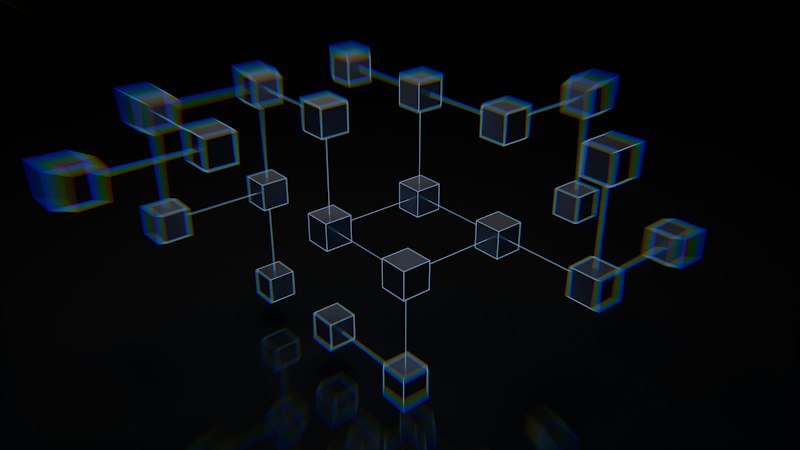
Multi-agent systems are solving problems single AIs can't touch. Here's why everyone from startups to OpenAI is going all-in on swarms.
AI Swarms Are Here: When One Agent Isn't Enough
Category: Research Tags: AI Swarms, Multi-Agent, Agents, Research---
Related Reading
- Scientists Used AI to Discover a New Antibiotic That Kills Drug-Resistant Bacteria - AI Just Mapped Every Neuron in a Mouse Brain — All 70 Million of Them - Gemini 2 Ultra Can Now Reason Across Video, Audio, and Text Simultaneously in Real-Time - Claude's Extended Thinking Mode Now Produces PhD-Level Research Papers in Hours - Frontier Models Are Now Improving Themselves. Researchers Aren't Sure How to Feel.
---
The shift from monolithic AI systems to distributed, collaborative agent architectures represents one of the most significant structural changes in how artificial intelligence is deployed. Unlike traditional single-model approaches that attempt to handle diverse tasks through increasingly massive parameter counts, swarm architectures distribute cognitive load across specialized agents—each optimized for distinct capabilities such as reasoning, memory retrieval, tool use, or verification. This modular design mirrors organizational structures in human enterprises, where teams outperform individuals not merely through parallelization but through the synthesis of complementary expertise.
What distinguishes contemporary AI swarms from earlier multi-agent research is the emergence of dynamic orchestration—the ability for systems to autonomously form, dissolve, and reconfigure agent coalitions based on task requirements. Frameworks like Microsoft's AutoGen, OpenAI's Swarm, and emerging open-source alternatives enable agents to negotiate role assignments, delegate subtasks, and even critique one another's outputs through structured debate protocols. Early empirical results suggest that properly orchestrated swarms can achieve super-linear performance gains on complex reasoning benchmarks, though this efficiency depends critically on the quality of inter-agent communication protocols and the robustness of error-handling mechanisms when individual agents fail or hallucinate.
The implications extend beyond technical performance to questions of AI governance and interpretability. Swarm architectures introduce novel failure modes—cascading errors, emergent behaviors from agent interactions, and "responsibility diffusion" where accountability becomes distributed across the collective. Researchers at leading AI safety labs are now exploring whether swarm systems can be designed with inherent constitutional constraints, where oversight agents continuously monitor for alignment violations. This approach, sometimes termed "governance by architecture," may prove essential as these systems migrate from research demonstrations to high-stakes domains such as financial trading, autonomous logistics, and scientific discovery pipelines.
---