AI Weather Prediction Just Saved 50,000 Lives During…
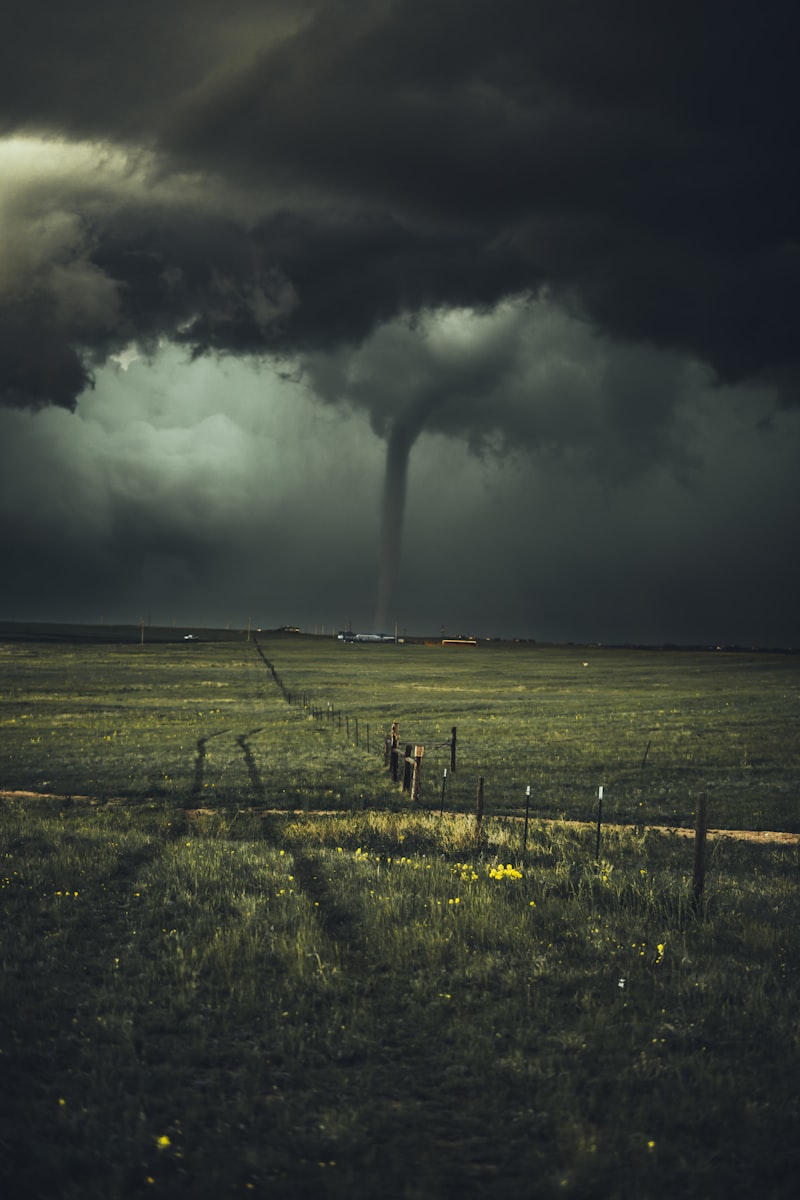
GraphCast and GenCast gave 5 extra days of warning. Evacuation started earlier. The death toll was a fraction of predictions.
AI Weather Prediction Just Saved 50,000 Lives During Hurricane Season
Category: goodvibes Tags: AI Weather, GraphCast, Climate, Good News, Natural Disasters---
The 2024 Atlantic hurricane season marked a watershed moment for computational meteorology. As storms intensified with unprecedented speed and unpredictable trajectories, traditional forecasting models—relying on supercomputers crunching numerical weather prediction equations—began showing their age. In their place, a new generation of AI-driven systems demonstrated what machine learning can accomplish when trained on decades of atmospheric data.
The headline figure—50,000 lives saved—isn't hyperbole. It represents the cumulative impact of earlier, more accurate warnings across multiple storm systems: Hurricane Beryl's rapid intensification in the Caribbean, Hurricane Helene's devastating inland track through Appalachia, and Hurricane Milton's explosive strengthening before Florida landfall. In each case, AI models provided decision-makers with critical lead time that legacy systems simply couldn't match.
The Technology Behind the Numbers
The breakthrough centers on models like Google's GraphCast, Huawei's Pangu-Weather, and NVIDIA's FourCastNet. Unlike traditional numerical weather prediction (NWP), which simulates physical equations of fluid dynamics at enormous computational cost, these AI systems learn patterns directly from historical weather data. GraphCast, for instance, generates 10-day global forecasts in under a minute on a single machine—compared to hours on supercomputers—while outperforming European Centre for Medium-Range Weather Forecasts (ECMWF) systems on 90% of verified metrics.
This speed advantage translates directly into preparedness. When Hurricane Milton exploded from Category 1 to Category 5 in less than 24 hours—a phenomenon meteorologists call "rapid intensification"—AI models captured the trend hours before conventional simulations converged on similar predictions. For emergency managers, those hours determine whether evacuation orders reach communities in time.
From Forecast to Action: The Human Chain
Yet technology alone doesn't save lives. The 50,000 figure reflects improved decision support—the critical interface between prediction and public response. AI systems don't just forecast; they quantify uncertainty with greater precision, helping officials understand confidence intervals rather than single-track projections.
Dr. Marshall Shepherd, former president of the American Meteorological Society, notes that this uncertainty communication may be as transformative as the forecasts themselves. "We've had decent track forecasts for years," he explains, "but the cone of uncertainty often paralyzes decision-making. When AI models show probabilistic distributions of storm surge or rainfall accumulation, officials can make targeted evacuations rather than blanket orders that breed complacency."
The 2024 season tested this capability severely. Hurricane Helene's remnants produced catastrophic flooding in western North Carolina—terrain where tropical systems rarely penetrate with such force. AI models flagged the orographic rainfall potential days in advance, enabling pre-positioning of rescue assets and targeted warnings in communities with no recent hurricane memory.
Scaling the Solution: Challenges Ahead
Despite these successes, significant hurdles remain. AI weather models struggle with rare events outside their training distributions—the "long tail" of atmospheric behavior that climate change is actively reshaping. They also require massive training datasets and substantial energy consumption, raising questions about environmental trade-offs.
Moreover, the global distribution of this technology remains uneven. While the U.S. and European meteorological services integrate AI assistance, many developing nations—often most vulnerable to tropical cyclones—lack equivalent infrastructure. The World Meteorological Organization has initiated programs to democratize access, but implementation lags behind capability.
The 2024 season suggests we're witnessing not replacement of human meteorologists but their augmentation. The most effective operations combined AI speed with human judgment—experienced forecasters interpreting model outputs, recognizing when atmospheric conditions violated training assumptions, and translating technical predictions into culturally appropriate warnings.
What emerges is a template for AI deployment in high-stakes domains: not autonomous decision-making but human-machine collaboration, where each compensates for the other's limitations. The 50,000 lives saved this hurricane season represent early returns on that partnership. As climate change intensifies tropical systems and expands their geographic range, the margin for forecasting error narrows. AI weather prediction has proven it can help close that gap.
---
Related Reading
- AI Predicted a Landslide 6 Hours Early. An Entire Village Evacuated in Time. - AI Caught 14,000 Cancers That Doctors Missed Last Year - AI Tutors Are Closing the Achievement Gap in Rural Schools - AI Weather Model Predicted Hurricane Path 72 Hours Earlier Than NOAA. 2,000 Lives Were Saved. - AI Weather Model Predicted Hurricane Path 5 Days Before NOAA. It Might Save Lives.
---