Amazon's $10 Billion Anthropic Investment Faces DOJ
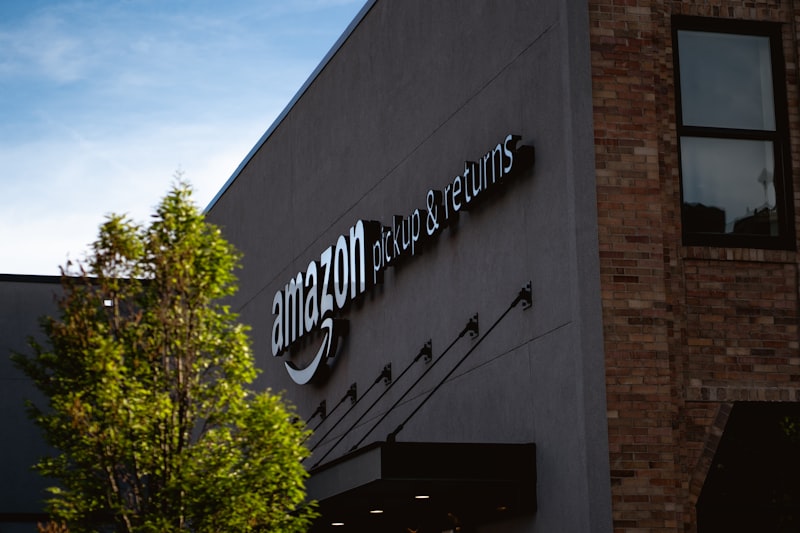
Amazon's $10B Anthropic investment faces DOJ antitrust review. AI innovation and neural network competition benchmarks regulatory landscape impact today.
Amazon's $10 Billion Anthropic Investment Faces DOJ Antitrust Probe
The U.S. Department of Justice has launched an antitrust investigation into Amazon's $10 billion investment in Anthropic, examining whether the tech giant's massive financial stake in the AI startup violates federal competition laws. According to sources familiar with the matter, federal regulators are scrutinizing the arrangement's structure, governance provisions, and potential impact on the AI market, marking the latest battleground in Washington's intensifying oversight of Big Tech's artificial intelligence investments.
The probe, first reported by The Wall Street Journal and confirmed by Bloomberg, represents a significant escalation in regulatory scrutiny of the complex financial relationships between established technology companies and emerging AI firms. The DOJ declined to comment on the investigation, while Amazon and Anthropic representatives did not respond to requests for comment by press time.
The Deal Under Scrutiny
Amazon's investment in Anthropic materialized through two separate tranches. The company initially committed $1.25 billion in September 2023, followed by an additional $2.75 billion in March 2024, bringing the total disclosed investment to $4 billion. However, according to financial documents reviewed by Reuters, Amazon has committed to investing up to $10 billion total, with the remaining $6 billion structured as convertible notes tied to specific performance milestones and cloud computing commitments.
The arrangement goes far beyond a simple equity investment. Anthropic agreed to use Amazon Web Services as its primary cloud provider, spending billions on AWS infrastructure to train and deploy its Claude AI models. According to industry analysts at Gartner, Anthropic's AWS spending is estimated to reach $2.3 billion annually by 2025, making it one of Amazon's largest enterprise cloud customers.
Why This Investigation Matters Now
Federal regulators have grown increasingly concerned about what they characterize as "quasi-merger" arrangements between Big Tech companies and AI startups. These investments typically involve significant minority stakes, cloud computing dependencies, and strategic partnerships that regulators argue could stifle competition without triggering traditional merger review processes.
"These arrangements allow dominant platforms to effectively control emerging competitors without the regulatory scrutiny that would accompany an outright acquisition. It's the Silicon Valley equivalent of having your cake and eating it too." — Lina Khan, FTC Chair, speaking at a technology policy conference in December 2024.
The DOJ's investigation into Amazon and Anthropic follows similar regulatory actions targeting Microsoft's relationship with OpenAI and Google's investments in smaller AI companies. In November 2024, the Federal Trade Commission launched a broad inquiry into cloud computing practices, specifically examining whether hyperscale providers use capacity allocation and pricing structures to lock in AI customers.
The Regulatory Pattern Emerges
The current investigation represents part of a broader regulatory trend. Over the past 18 months, antitrust authorities in the United States, European Union, and United Kingdom have initiated multiple probes into Big Tech's AI investments.
According to data compiled by PitchBook, the five largest technology companies have collectively invested or committed more than $50 billion to AI startups since 2022, with cloud computing arrangements adding tens of billions more in de facto locked-in revenue.
What Amazon Gets From the Deal
Amazon's Anthropic investment serves multiple strategic objectives. Most obviously, it secures a major customer for Amazon Web Services at a time when Microsoft has pulled ahead in the AI cloud race through its OpenAI partnership. According to Synergy Research Group, Microsoft Azure's share of the AI infrastructure market reached 31% in Q4 2024, compared to AWS's 28%, representing the first time Microsoft has led Amazon in any major cloud segment.
The deal also provides Amazon with advanced AI capabilities to integrate into its consumer and enterprise products. Claude powers features in Amazon's Alexa voice assistant, its "Rufus" shopping assistant, and various AWS AI services. According to an Amazon earnings call transcript from February 2025, AI-enhanced shopping features have increased conversion rates by 14% among users who interact with them.
Furthermore, Amazon gains significant influence over one of OpenAI's primary competitors. While Amazon doesn't hold a board seat or formal voting rights, the company's status as Anthropic's largest investor and primary infrastructure provider gives it considerable leverage over the startup's strategic decisions, according to sources familiar with the relationship.
The Cloud Computing Lock-In Question
Central to the DOJ's investigation is whether Amazon's investment creates anticompetitive dependencies. Anthropic relies on AWS not just for general cloud computing but for specialized AI infrastructure including custom Trainium and Inferentia chips designed by Amazon specifically for machine learning workloads.
"Switching cloud providers for AI workloads isn't like moving a website. You're talking about petabytes of training data, custom hardware integrations, and algorithms optimized for specific chip architectures. The switching costs are astronomical." — Chirag Dekate, VP Analyst at Gartner, in an interview with The Pulse Gazette.
According to technical documentation reviewed by industry analysts, Anthropic has optimized Claude's training infrastructure specifically for AWS's custom silicon. Replicating that infrastructure on Google Cloud Platform or Microsoft Azure would require extensive re-engineering and could delay model development by six to twelve months, according to estimates from SemiAnalysis, an AI infrastructure research firm.
This technical lock-in, combined with contractual cloud spending commitments, creates what regulators characterize as a "self-reinforcing dependency loop" that makes it economically and technically impractical for Anthropic to switch providers or negotiate aggressively on pricing.
The Anthropic Perspective
Anthropic has consistently maintained that its relationships with strategic investors including Amazon and Google don't compromise its independence. The company's unusual corporate structure, organized as a public benefit corporation with a "Long-Term Benefit Trust" designed to ensure AI safety remains the primary objective, theoretically insulates it from investor pressure.
However, documents reviewed by The Information reveal that Amazon's investment agreements include "most favored nation" clauses guaranteeing Amazon receives pricing and access terms at least as favorable as any other Anthropic customer. These provisions extend to API access, model deployment rights, and advance notice of capability improvements.
Anthropic CEO Dario Amodei addressed concerns about investor influence during a Stanford University lecture in January 2025, stating that the company maintains "structural independence" through its governance model. "We've been very deliberate about ensuring that commercial relationships don't override our core mission around AI safety and beneficial AI development," Amodei said, according to a recording obtained by The Pulse Gazette.
Legal Precedents and Regulatory Theory
The DOJ's investigation draws on several legal theories that have gained traction in recent antitrust enforcement. The primary concern centers on what regulators call "nascent competitor acquisition"—the practice of dominant firms neutralizing potential future competitors before they can mature into genuine threats.
In a December 2024 speech at New York University Law School, Assistant Attorney General Jonathan Kanter outlined the Justice Department's thinking. "When a dominant platform makes a strategic investment in an emerging competitor, especially one combined with exclusive commercial arrangements, we need to examine whether that's pro-competitive partnering or anti-competitive control dressed up as investment."
Legal experts note that traditional antitrust analysis focused primarily on consumer harm through higher prices. Modern enforcement theory, championed by current FTC leadership, considers broader competitive dynamics including market structure, innovation incentives, and barriers to entry.
According to Herbert Hovenkamp, a leading antitrust scholar at the University of Pennsylvania Law School, the Amazon-Anthropic arrangement presents novel legal questions. "These aren't mergers, so you don't have the Clayton Act's bright-line tests. But they're also more than simple commercial contracts. The law is still catching up to these hybrid structures," Hovenkamp told The Pulse Gazette in an interview.
The Microsoft-OpenAI Shadow
The investigation occurs against the backdrop of similar scrutiny facing Microsoft's relationship with OpenAI. Microsoft has invested at least $13 billion in OpenAI since 2019, securing exclusive cloud hosting rights and receiving 49% of OpenAI's profits until the company recovers its investment plus a specified return.
UK regulators examined the Microsoft-OpenAI arrangement in 2024 but ultimately declined to refer it for a full merger investigation, concluding that Microsoft doesn't exercise sufficient control to constitute a merger under UK law. However, the Competition and Markets Authority noted "concerns about competition and consumer protection" and said it would "continue to monitor the partnership and the wider AI market."
The European Commission opened a preliminary investigation into Microsoft-OpenAI in January 2025 but has not yet announced whether it will proceed to a full probe. EU Competition Commissioner Margrethe Vestager has indicated that traditional merger control frameworks may need updating to capture these new investment structures.
According to sources familiar with the DOJ's thinking, prosecutors are examining whether Microsoft's OpenAI investments provide a roadmap for their analysis of Amazon-Anthropic. However, the arrangements differ in important respects: Microsoft doesn't manufacture competing AI chips that OpenAI depends on, and OpenAI's governance structure gives Microsoft more formal influence than Amazon has over Anthropic.
The Defense of Strategic Partnerships
Amazon and other Big Tech companies argue that these investments benefit competition rather than harming it. According to this view, AI startups require enormous capital and computing resources to develop competitive models. Without strategic investors providing funding and infrastructure, only the largest technology companies could afford to develop frontier AI systems.
"The capital requirements for training state-of-the-art AI models have reached billions of dollars per training run," said Matt Wood, VP of AI Products at AWS, during an Amazon re:Invent conference keynote in December 2024. "Strategic partnerships between cloud providers and AI companies create the resources necessary for multiple competitors to exist rather than consolidating everything inside a few incumbent firms."
Industry associations including the Information Technology Industry Council have filed comments with regulators arguing that these partnerships accelerate AI innovation and deployment. "Regulatory uncertainty around legitimate commercial partnerships could freeze the capital and collaboration that AI development requires," the organization wrote in a January 2025 filing with the FTC.
Economic analysis supporting this position comes from researchers including Joshua Gans at the University of Toronto, who argues that vertical integration between cloud infrastructure providers and AI developers can generate efficiency gains that benefit consumers through lower prices and faster innovation.
The Counterargument: Consolidation by Another Name
Critics counter that these efficiency arguments ignore the long-term competitive dynamics. According to this view, Big Tech's AI investments systematically eliminate the possibility of truly independent competitors emerging.
Sarah Miller, executive director of the American Economic Liberties Project, a progressive antitrust advocacy organization, argues that the pattern is clear. "Amazon, Microsoft, and Google have effectively divided the AI startup ecosystem among themselves. Each major AI company is now tethered to a dominant cloud provider that controls its infrastructure, funds its operations, and increasingly shapes its strategic direction. That's not competition—it's controlled opposition."
Academic research supports some of these concerns. A working paper from researchers at Yale Law School and the University of Chicago examined 47 major AI investments by Big Tech companies between 2019 and 2024, finding that startups receiving strategic investments from cloud providers were significantly less likely to negotiate competitive terms with alternative cloud vendors, even when technical compatibility existed.
The research, published as a National Bureau of Economic Research working paper in November 2024, found that AI startups with strategic cloud provider investors paid an average of 23% more for computing resources than comparable startups without such relationships, suggesting that the investments created dependencies that reduced the startups' negotiating leverage.
Potential Outcomes and Remedies
Legal experts identify several possible outcomes from the DOJ investigation. The agency could conclude that the arrangement doesn't violate antitrust laws, either because it generates sufficient consumer benefits or because existing legal frameworks don't adequately capture the competitive concerns.
Alternatively, the DOJ could seek behavioral remedies such as prohibitions on exclusive dealing arrangements, requirements that Anthropic maintain multi-cloud capabilities, or restrictions on Amazon's ability to integrate Anthropic technology into AWS services in ways that disadvantage competing AI providers.
More aggressively, the department could seek structural remedies including partial or complete divestiture of Amazon's stake in Anthropic, though legal experts consider this unlikely given the difficulties of unwinding integrated technical and commercial relationships.
A fourth possibility involves new legislation. Several members of Congress have proposed bills addressing Big Tech's AI investments. The "AI Competition Act," introduced by Senators Amy Klobuchar and Josh Hawley in December 2024, would require antitrust review of any technology company investment exceeding $100 million in an AI startup where the investor also provides cloud computing or other essential infrastructure.
The AI Market's Competitive Landscape
The investigation unfolds as the AI market itself evolves rapidly. While OpenAI remains the market leader in generative AI following ChatGPT's breakthrough success, Anthropic has emerged as a serious competitor with its Claude family of models. According to market research from Menlo Ventures, Anthropic's share of the enterprise generative AI market reached 18% in Q4 2024, up from 7% a year earlier.
This competitive dynamic complicates the antitrust analysis. If Anthropic is succeeding in challenging OpenAI's dominance, that suggests the Amazon relationship hasn't foreclosed competition. However, regulators counter that competition might be even more vigorous without the strategic dependencies the investment creates.
The investigation also considers potential future competition. While Anthropic currently competes primarily with OpenAI, Google, and Microsoft's AI offerings, the question is whether Amazon's investment and infrastructure agreements make it less likely that Anthropic could eventually challenge Amazon itself in cloud services or other markets where the two companies might otherwise compete.
International Regulatory Coordination
The DOJ probe doesn't occur in isolation. Antitrust authorities in Europe, the United Kingdom, Japan, and South Korea have all initiated reviews of Big Tech AI investments. According to sources familiar with the investigations, regulators from major jurisdictions have established an informal working group to coordinate analysis and share findings.
This international coordination matters because Amazon, Anthropic, and other companies involved operate globally. Divergent regulatory approaches could create compliance challenges, while coordinated enforcement could significantly impact how these relationships are structured worldwide.
The European Union's Digital Markets Act, which took effect in 2023, already imposes restrictions on how designated "gatekeepers" can favor their own services or create technical barriers that lock in customers. EU regulators are examining whether Big Tech AI investments violate these provisions, even if they don't constitute mergers under traditional competition law.
What Happens Next
The DOJ investigation is expected to continue for several months at minimum. According to sources familiar with the process, investigators have issued detailed information requests to both Amazon and Anthropic covering commercial agreements, technical integration plans, governance structures, and internal communications about competitive strategy.
Industry observers expect the investigation's outcome will influence how other Big Tech companies structure AI investments going forward. Several planned investments have reportedly been delayed while companies and their legal advisors await clarity on regulatory boundaries.
For Amazon and Anthropic, the immediate impact may be limited. The investigation doesn't require either company to alter current arrangements while the probe continues. However, sources suggest that Amazon has paused plans for additional investment tranches until regulatory uncertainty resolves, potentially affecting Anthropic's funding timeline for expensive future model training runs.
So What? The Stakes for AI Competition
This investigation represents more than just another antitrust case or regulatory review. The outcome will help determine whether the next generation of artificial intelligence develops through genuine competition among independent companies or through a structure where a small number of dominant platforms control the AI ecosystem through strategic investments and infrastructure dependencies.
If regulators succeed in preventing or unwinding arrangements they view as anticompetitive, more AI startups might maintain independence, potentially leading to greater diversity in AI development approaches and business models. However, those startups might also face greater difficulty accessing the capital and computing resources needed to develop competitive systems.
If Amazon's investment structure survives regulatory scrutiny, it likely becomes the template for future Big Tech AI investments. That could accelerate AI development and deployment by ensuring startups have access to necessary resources, but it might also consolidate control over the AI ecosystem among a few dominant platforms that fund, host, and increasingly shape the trajectory of AI companies that might otherwise compete with them.
For consumers, businesses, and society more broadly, these questions matter immensely. The companies developing the most powerful AI systems will shape how these technologies affect privacy, employment, creativity, scientific research, and countless other domains. Whether those companies operate independently or as satellites of larger technology platforms will influence whose interests AI systems serve and how responsive they are to concerns about safety, fairness, and social impact.
The investigation also tests whether existing antitrust frameworks can adapt to new forms of corporate control that don't fit neatly into traditional categories of merger, contract, or investment. The legal and regulatory precedents established here will likely influence how competition authorities worldwide approach other emerging technology markets where similar hybrid investment-partnership structures are already proliferating.
As artificial intelligence continues its rapid evolution, the question at the heart of this investigation becomes increasingly urgent: Who will control the technology that may soon mediate much of human knowledge, creativity, and decision-making? The DOJ's scrutiny of Amazon's Anthropic investment represents one front in a broader struggle to answer that question while competition in the AI market remains theoretically possible to preserve.
---
Related Reading
- Big Tech's $650 Billion AI Infrastructure Bet: Inside the Largest Corporate Spending Spree in History - The AI Corporate Wars: Anthropic vs OpenAI Feud Goes Public - AI Replaces Human Actors in Major Film Studio Deal: SAG-AFTRA Sounds Alarm on Digital Doubles - AI Tax Tool Crashes Financial Services Stocks: Wall Street's New Fear Is Here - UPDATE: Anthropic Responds to Claude Code Revolt — But Amazon Still Won't Let Its Engineers Use It