Big Tech's $650 Billion AI Infrastructure Bet
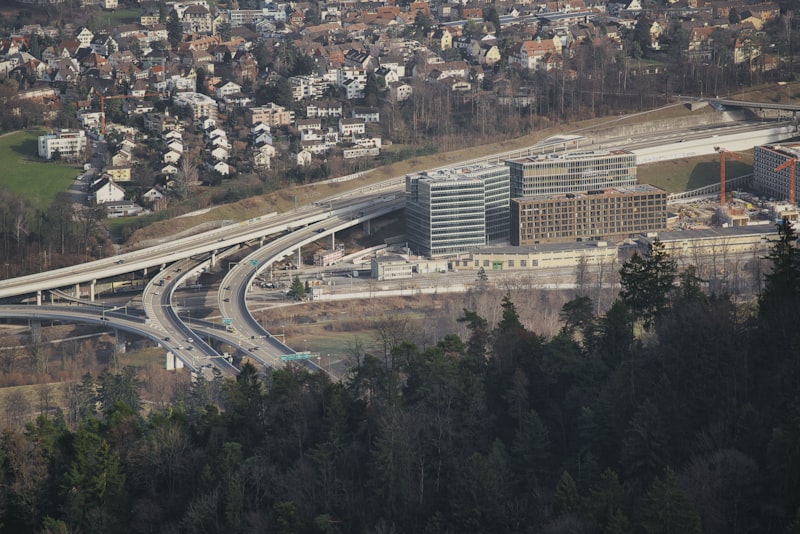
Big Tech invests $650 billion in AI infrastructure: largest spending spree on record. Amazon, Google, Meta and Microsoft build AI data centers worldwide.
The Numbers Are Staggering
Four tech giants — Amazon, Alphabet (Google), Meta, and Microsoft — plan to collectively spend roughly $650 billion on capital expenditures in 2026. Almost all of it goes to one thing: AI infrastructure. Data centers, AI chips, servers, networking equipment, and the power systems to keep it all running.
To put that number in context: $650 billion exceeds the combined 2026 capex forecasts of 21 leading US industrial firms, including automakers like Ford and GM, defense contractors like Lockheed Martin, and energy companies. The AI industry alone is outspending American manufacturing.
Who Is Spending What?
The breakdown tells a story about corporate strategy:
Amazon leads the pack at $200 billion — nearly a third of the total. That figure reflects AWS's position as the dominant cloud provider and Amazon's massive bet on custom AI silicon with its Trainium chips. Google follows closely, with its range reflecting uncertainty about how fast Gemini adoption will scale.
Microsoft's $145 billion run rate reflects its unique position as both OpenAI's primary compute provider and Azure's enterprise AI platform. Meta's spending is the most focused: training next-generation Llama models and deploying AI across its 3.9 billion monthly active users.
A 67% Year-Over-Year Jump
At the low end of guidance, the four companies would spend about $635 billion — a 67% increase from their combined $381 billion in 2025. At the high end, that jumps to $665 billion, or a 74% increase. This is not incremental growth. This is a step change.
"We are at a unique point in time. The investments we are making today will define the next decade of computing." — Sundar Pichai, Alphabet CEO
The growth trajectory has accelerated every year. In 2023, these four companies spent roughly $150 billion combined. In 2024, that rose to about $230 billion. In 2025, it hit $381 billion. Now $650 billion. The curve is exponential, and no one is pumping the brakes.
They Are Not Alone: Oracle, Micron, and Stargate
The Big Four are not the only ones writing massive checks.
Oracle announced plans to raise up to $50 billion through a mix of debt and equity sales to fund AI data center expansion. The financing targets a staggering $523 billion backlog of cloud orders from clients including Nvidia, Meta, OpenAI, AMD, TikTok, and Elon Musk's xAI. The capital raise includes $25 billion in equity-linked instruments through a Citigroup-managed ATM program, with the rest coming from bond issuance.But Oracle's aggressive play has not come without risk. The stock has been cut in half since peaking in September 2025. Bondholders have sued the company over its debt levels, questioning whether its infrastructure ambitions will translate to profits.
Micron Technology broke ground on January 16, 2026 on a $100 billion semiconductor megafab in Onondaga County, New York — the largest semiconductor facility in the United States. The four-plant campus spanning 1,377 acres will produce advanced DRAM and High Bandwidth Memory (HBM) chips critical for AI workloads.The project represents the largest private investment in New York state history. Micron plans to invest $20 billion in the first phase by the end of the decade, with the first plant operational by 2030. The facility is projected to create over 50,000 jobs and could produce roughly one-quarter of all US-made semiconductors by 2030. Micron has secured $6.4 billion in CHIPS Act direct funding, with an additional $5.5 billion available through New York's Green CHIPS incentive program.
Meanwhile, the Stargate joint venture between OpenAI, SoftBank, and Oracle has committed $100 billion to building AI data centers across the US, with potential expansion to $500 billion over the next four years.
Where Is All This Money Going?
The spending breaks down into several critical categories:
Data Center Construction
New facilities are being built at a pace never seen in the tech industry. Microsoft alone has over 60 data center projects under construction globally. Google is building campuses in 33 countries. Amazon is expanding AWS regions across every inhabited continent.
A single hyperscale data center now costs between $1 billion and $5 billion to build, depending on size and location. With hundreds planned across the industry, construction firms specializing in data centers have backlogs extending into 2029.
AI Chips and Custom Silicon
Nvidia remains the dominant supplier, with its H200 and B200 GPUs commanding premium prices and allocation queues stretching months ahead. A single B200 GPU sells for roughly $30,000-40,000, and a fully loaded AI training cluster can cost over $1 billion.
But every major cloud provider is investing heavily in custom silicon to reduce dependence on Nvidia:
The custom silicon push is not just about cost savings. It is about supply security. When Nvidia's H100 was in short supply in 2024, companies with their own chips maintained their training schedules while competitors scrambled for allocations.
Power Infrastructure
AI data centers are electricity-hungry beasts. A single hyperscale AI data center can consume 100-300 megawatts of power — enough to power a small city. The industry's total power demand is projected to reach 130 gigawatts by 2030, roughly equal to Japan's total electricity consumption.
Companies are pursuing multiple strategies: - Nuclear energy: Microsoft signed a deal with Constellation Energy to restart a unit at Three Mile Island. Google and Amazon have invested in small modular reactor companies. - Long-term power purchase agreements: Locking in renewable energy at fixed prices for 10-20 years. - On-site generation: Building natural gas plants directly adjacent to data centers.
"Power is the new bottleneck. You can buy all the GPUs you want, but if you cannot power them, they are expensive paperweights." — Industry executive
Networking and Interconnects
Training a large language model requires thousands of GPUs working in concert, which demands ultra-fast networking. Investments in InfiniBand, custom optical networking, and new interconnect technologies like NVLink account for billions in spending. The networking within a single AI cluster can cost 15-20% of the total system price.
Investors Are Nervous — And They Have History on Their Side
Not everyone is celebrating. Wall Street has shown decidedly mixed reactions to the spending announcements.
Oracle's stock has been halved since September 2025. Meta's shares dipped on its capex guidance before recovering on strong ad revenue. Microsoft traded sideways despite beating earnings estimates, weighed down by capex concerns.
The core investor worry is straightforward: what if AI demand does not materialize fast enough to justify $650 billion in infrastructure? The comparison to the fiber optic overbuild of the late 1990s is impossible to ignore. Companies like WorldCom and Global Crossing spent billions on telecommunications capacity that went unused for years, eventually collapsing in some of the largest bankruptcies in US history.
"The question is not whether AI will be transformative. It is whether the returns justify spending $650 billion in a single year on infrastructure that takes 3-5 years to generate returns." — Morgan Stanley analyst note
The risk is concentration. If three or four companies account for the vast majority of AI infrastructure spending, and AI revenue growth slows or plateaus, the write-downs could be enormous. Each company would need to demonstrate that its hundreds of billions in investment are generating commensurate returns.
But the bulls argue this time is genuinely different. Unlike the dot-com era's speculative fiber builds, AI workloads are already generating real, measurable revenue:
- Microsoft reports that AI contributes $10 billion in annualized Azure revenue. - Google says AI-related cloud revenue is growing at 50%+ year-over-year. - Meta credits AI-powered recommendation systems for a 8% increase in user engagement, which directly drives ad revenue. - Amazon reports that generative AI features have added $15 billion in annual GMV to its marketplace.
The argument is simple: these are not speculative bets on future demand. The demand is here now, and the infrastructure is struggling to keep up.
The Geopolitical Dimension
This spending spree does not exist in a vacuum. The US and China are locked in an AI competition that has made infrastructure a matter of national security.
The CHIPS and Science Act has allocated $52.7 billion to boost domestic semiconductor manufacturing. Micron's New York megafab is a direct beneficiary, receiving $6.4 billion in direct CHIPS Act funding plus up to $5.5 billion from New York State's Green CHIPS program. Intel, TSMC, and Samsung are all building or expanding fabs on US soil.
China's response has been to accelerate its own AI infrastructure buildout. Alibaba, Tencent, and Baidu collectively plan about $40 billion in AI capex for 2026 — smaller in absolute terms but significant relative to their revenue. Chinese companies are also stockpiling Nvidia chips purchased before export restrictions tighten further, and investing in domestic alternatives from Huawei and Cambricon.
The race for AI supremacy is increasingly a race for physical infrastructure: chips, data centers, power, and the engineering talent to build and operate them.
The Employment Ripple Effect
The infrastructure buildout is reshaping labor markets far beyond the tech industry:
- Construction: Data center construction employment has tripled since 2023, with electricians and HVAC technicians in particular demand. - Semiconductor manufacturing: Micron's New York fab alone projects 50,000 jobs. TSMC's Arizona fabs are creating 13,000. - Energy: Power plant operators, grid engineers, and renewable energy technicians are being recruited aggressively by tech companies. - Real estate: Data center corridors in Northern Virginia, central Ohio, and west Texas are seeing land prices double or triple.
The economic impact extends to communities that have never been associated with the tech industry. Rural areas with cheap land and abundant power — West Texas, rural Iowa, the Navajo Nation — are suddenly attractive to data center developers.
What This Means Going Forward
The $650 billion figure represents a point of no return. These investments are not easily reversed — data centers take 2-3 years to build and have 20-30 year operational lifespans. The companies making these bets are implicitly forecasting that AI demand will continue to grow exponentially through the end of the decade and beyond.
For the broader economy, the implications are enormous. Construction, semiconductor manufacturing, energy demand, and real estate markets in data center corridors are all being fundamentally reshaped.
For AI itself, more compute means larger models, faster inference, cheaper API access, and broader availability. The infrastructure being built today will determine what AI can do in 2030.
The question is no longer whether Big Tech believes in AI. They are betting their balance sheets on it. The real test comes in 2027 and 2028, when these data centers come online and the market gets to see whether the demand matches the supply.
Until then, the money keeps flowing. Six hundred and fifty billion dollars of it.
---
Related Reading
- Amazon's $10 Billion Anthropic Investment Faces DOJ Antitrust Probe - Billionaire Bill Ackman Bets $2B on Meta's AI Future: Why He Sees Zuckerberg's 'Deeply Discounted' Play - Alphabet's $50 Billion Bet: Why a 100-Year Bond Reveals Big Tech's AI Uncertainty - AI Replaces Human Actors in Major Film Studio Deal: SAG-AFTRA Sounds Alarm on Digital Doubles - AI Tax Tool Crashes Financial Services Stocks: Wall Street's New Fear Is Here