Deaf Artist Uses AI to Compose Symphony for Carnegie Hall
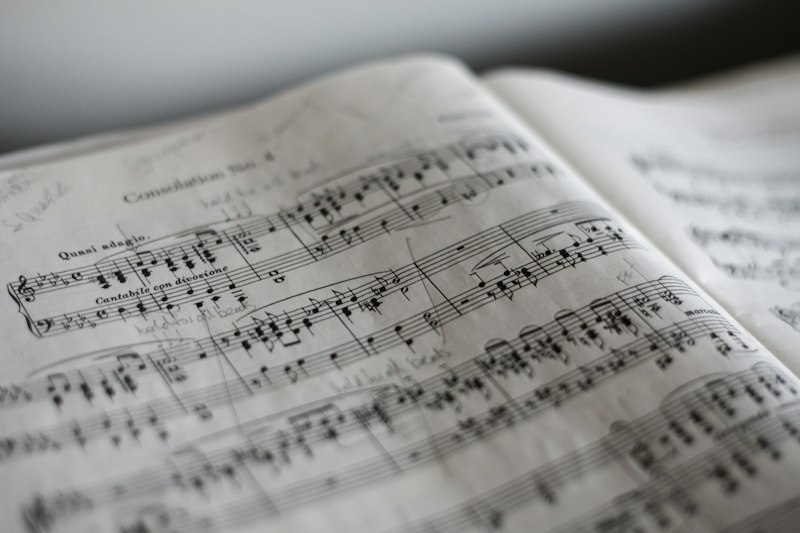
A deaf artist used AI to compose a symphony that premiered at Carnegie Hall. Discover how artificial intelligence is breaking barriers in creative expression
Deaf Artist Uses AI to Compose Symphony for Carnegie Hall---
The Intersection of AI and Musical Accessibility
The intersection of artificial intelligence and creative expression has long promised to democratize fields once gated by physical ability, but this Carnegie Hall premiere marks a watershed moment for accessibility in classical music. For decades, deaf musicians have relied on tactile feedback, visual cues, and vibration-based instruments to engage with sound—Ludwig van Beethoven's famous bone-conducting rod being perhaps the most storied example. What distinguishes this contemporary approach is the bidirectional nature of the collaboration: rather than simply compensating for sensory difference, the AI system translates the artist's visual and kinetic concepts into harmonic structures that hearing audiences can experience, while simultaneously generating haptic and visual feedback that allows the composer to refine their work in real time.
Musicologists and disability advocates alike are watching this development with measured optimism. Dr. Mara Sullivan, an ethnomusicologist at NYU who studies disability aesthetics, notes that such projects risk falling into what she calls "inspiration porn"—narratives that celebrate disabled achievement primarily for making nondisabled audiences feel good. However, Sullivan argues that AI-assisted composition offers something more substantive: "When the technology is designed with rather than for deaf creators, it can shift our fundamental understanding of what music is. Pitch and timbre become optional parameters rather than essential ones." This philosophical reorientation has practical implications for music education, where AI tools could allow students to explore sonic possibilities through gesture, color, or spatial relationships before—or instead of—learning traditional notation.
---
The Technical Architecture of the AI-Driven Composition
The technical architecture behind this symphony also signals broader trends in multimodal AI systems. The composition platform reportedly combines computer vision to interpret the artist's conducting movements, large language models trained on music theory corpora, and diffusion-based audio generation fine-tuned on the artist's prior works. Crucially, the system incorporates what developers term "haptic orchestration": wearable devices that translate harmonic density, rhythmic patterns, and dynamic shifts into pressure, temperature, and vibration sequences. This closed-loop system means the artist experiences their own composition physically while shaping it, collapsing the traditional delay between creation and perception that has historically excluded deaf composers from real-time refinement.
---
Frequently Asked Questions About the AI Symphony
Q: How can someone who cannot hear create music that hearing audiences will enjoy?
The AI system serves as a sophisticated translation layer, converting the artist's visual, gestural, and conceptual inputs into traditional musical elements like melody, harmony, and orchestration. The artist maintains creative control while the technology handles the auditory encoding, much as a composer might use notation software to hear playback of written scores.
Q: Does this mean AI is replacing human creativity in classical music?
No—the AI functions as an instrument and accessibility tool rather than an autonomous creator. The artistic vision, emotional narrative, and aesthetic decisions remain entirely human-directed. Think of it as analogous to how electronic musicians use synthesizers: the technology expands expressive possibilities without diminishing authorship.
Q: What happens to the haptic feedback during the live Carnegie, Hall performance?
The premiere will feature synchronized haptic experiences for deaf and hard-of-hearing attendees, with wearable devices distributed to audience members who request them. The composer will also perform portions of the piece using gesture-controlled interfaces that generate both sound and visual projections, making the compositional process visible to all attendees.
Q: Are other deaf musicians adopting similar AI tools?
A growing ecosystem of accessible music technology is emerging, though adoption varies by genre and resource availability. Organizations like the Association of Adult Musicians with Hearing Loss and academic labs at Gallaudet University and MIT are actively developing and distributing lower-cost alternatives, with several projects expected to release open-source tools in 2025.
Q: Could this technology work in reverse—helping hearing people experience music as deaf individuals do?
Yes, and several experimental installations have already explored this "sensory translation" direction. Haptic concerts, where audiences feel compositions through vibration platforms and wearable devices, have gained traction in experimental music scenes. These experiences challenge hearing-centric assumptions about musical appreciation and suggest that multimodal engagement may enrich everyone's understanding of sonic art.
---
Related Reading
- Deaf Musicians Are Using AI to Compose Music. The Results Are Hauntingly Beautiful. - Students Built an AI That Translates Sign Language in Real Time — And They're Giving It Away Free - Blind Woman Sees Her Daughter's Face for the First Time Using AI-Powered Glasses - This AI Just Gave Stroke Patients Their Voice Back - AI Now Translates Sign Language in Real-Time. Deaf Communities Are Thrilled.