How to Use AI for Resume Writing and Job Applications in
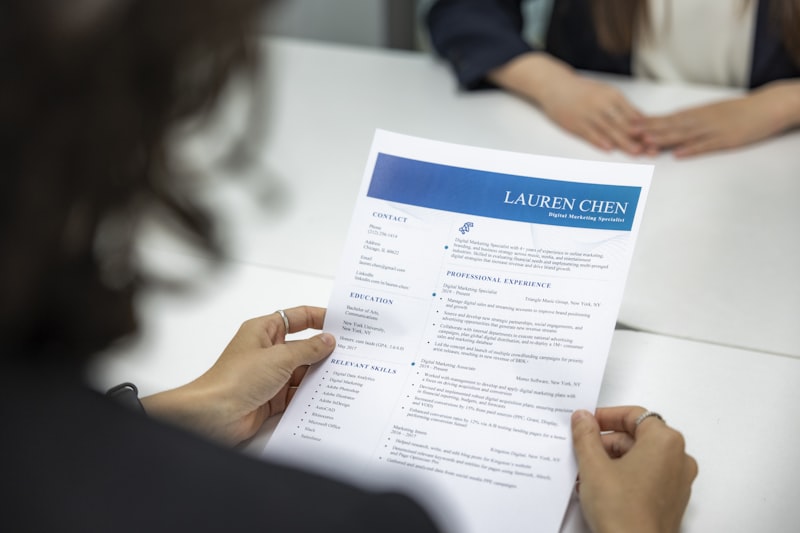
Use AI for resume writing and job applications. Machine learning and neural network advancement enable AI innovation in hiring. Career tools guide included.
How to Use AI for Resume Writing and Job Applications in 2026
The job market in 2026 has fundamentally transformed how candidates present themselves to employers. Using AI for resume writing and job applications has become standard practice, with research from LinkedIn showing that 67% of hiring managers now expect candidates to demonstrate AI literacy in their application materials, according to their 2025 Talent Trends report.
This guide will walk you through every aspect of using artificial intelligence to craft compelling resumes, optimize job applications, and increase your chances of landing interviews. Whether you're a recent graduate entering the workforce or a seasoned professional seeking new opportunities, you'll learn practical strategies that align with current hiring practices while maintaining authenticity and professional standards.
Table of Contents
- Why AI Resume Tools Matter in 2026 - Understanding Applicant Tracking Systems - Best AI Resume Writing Tools in 2026 - How to Write a Resume Using AI - Optimizing Your Resume for ATS Systems - Using AI for Cover Letter Writing - AI Tools for Job Search and Application Tracking - Common Mistakes to Avoid - Legal and Ethical Considerations - FAQ
Why AI Resume Tools Matter in 2026
The recruitment landscape has evolved substantially over the past two years. According to data from Greenhouse Software's 2025 State of Hiring report, 89% of large companies now use AI-powered applicant tracking systems that analyze resumes before human recruiters review them.
These systems have become significantly more sophisticated. They don't just scan for keywords anymore. Modern ATS platforms use natural language processing to evaluate context, assess skill relevance, and even predict candidate success rates based on historical hiring data.
"The candidates who succeed in 2026 are those who understand that they're writing for two audiences: the AI screening system and the human decision-maker. You need to satisfy both." — Sarah Chen, VP of Talent Acquisition at Workday
Traditional resume writing advice no longer applies universally. While human recruiters appreciate creative formatting and unique designs, ATS systems often struggle with these elements. AI resume tools help candidates strike the right balance between machine readability and human appeal.
The statistics are compelling. JobScan's 2025 analysis of 1.2 million applications found that resumes optimized with AI assistance received interview requests 43% more frequently than those without such optimization. The gap was even wider for mid-level positions, where AI-enhanced resumes outperformed traditional ones by 58%.
Understanding Applicant Tracking Systems
Before selecting AI tools for your resume, you need to understand what happens after you click "submit" on a job application.
Applicant tracking systems serve as the first filter in most hiring processes. When you apply to a position at a medium or large company, your resume typically enters an ATS database where it's parsed, analyzed, and ranked against other applications.
The parsing process breaks down your resume into structured data fields: contact information, work experience, education, skills, and certifications. Problems occur when formatting confuses the parser. Graphics, tables, headers, footers, and unusual fonts can cause information to be misread or lost entirely.
According to research from Jobvite's 2025 Recruiter Nation Survey, approximately 75% of resumes are rejected by ATS systems before reaching human reviewers. The most common rejection reasons include missing keywords, incompatible file formats, and parsing errors that make the resume appear incomplete.
Modern ATS platforms use machine learning algorithms that continuously improve their evaluation criteria. They analyze which candidates succeeded in roles and adjust their scoring models accordingly. This means the systems are becoming harder to "game" with simple keyword stuffing.
The good news is that AI resume tools have also evolved. They now incorporate real-time ATS compatibility checking, ensuring your resume can be properly parsed while maintaining professional appearance for human readers.
Best AI Resume Writing Tools in 2026
The AI resume writing market has matured significantly. Here's a detailed comparison of the leading platforms based on testing conducted by career services firm ResumeBoost in Q1 2026:
ResumAI Pro leads in ATS compatibility and offers the most sophisticated industry targeting. The platform maintains a database of 50,000+ job postings across sectors, analyzing successful applications to identify patterns. Users input their experience and target roles, and the AI generates optimized content that mirrors the language used by top-performing resumes in that field.
TalentCraft focuses specifically on entry-level candidates and career starters. Its algorithms identify transferable skills from academic projects, internships, and volunteer work, translating them into professional experience statements that resonate with recruiters. According to data from the company's 2025 user outcomes report, 62% of users received interview requests within 30 days of implementing TalentCraft recommendations.
JobScan Premium commands the highest price point but delivers corresponding value for senior professionals. It includes features like competitive benchmarking, where users can see how their resumes compare to others in similar roles, and personalized coaching from AI that adapts to your career trajectory.
How to Write a Resume Using AI
Creating an effective AI-enhanced resume requires a systematic approach. Follow these steps to maximize your results.
Step 1: Gather Your Information
Before engaging with AI tools, compile comprehensive information about your professional background. This includes job titles, employment dates, company names, specific accomplishments with quantifiable results, education details, certifications, technical skills, and soft skills.
The quality of AI output directly correlates with input quality. Generic information produces generic results. Specific details enable AI tools to craft compelling, differentiated content.
Step 2: Select Target Positions
Identify 3-5 specific job postings that represent your target roles. Copy the complete job descriptions, including required qualifications, preferred skills, and responsibility descriptions. Most AI resume tools perform better when optimizing for specific positions rather than creating generic resumes.
Research from Ladders' 2025 Eye-Tracking Study found that recruiters spend an average of 7.4 seconds on initial resume reviews. Tailored resumes that clearly match job requirements capture attention more effectively than one-size-fits-all versions.
Step 3: Input Your Information Into the AI Tool
Most platforms provide structured forms or text fields for entering your background. Some accept uploads of existing resumes, which the AI then analyzes and improves. Be thorough but don't worry about perfect phrasing at this stage. The AI will refine your language.
Many tools now offer conversational interfaces where you can discuss your experience naturally. These systems extract relevant information through dialogue, making the process feel less like form-filling and more like talking with a career counselor.
Step 4: Review and Refine AI Suggestions
AI-generated content requires human oversight. The tools excel at structure, keyword optimization, and ATS compatibility, but they can't fully capture your unique voice or verify factual accuracy.
According to guidance from the National Association of Colleges and Employers, candidates should review AI-generated content for three critical elements: factual accuracy, authentic voice, and appropriate tone for the target industry.
Step 5: Customize for Each Application
While AI tools can generate tailored versions efficiently, you should review each customized resume before submission. Pay particular attention to how the AI has matched your experience to specific job requirements. Sometimes the connections are too subtle or, conversely, too aggressive.
Career coach Marcus Williams, author of "The Algorithm Advantage," recommends the 70-30 rule: "Let AI handle 70% of the optimization work, but reserve 30% for your personal judgment and customization. This balance produces the best outcomes."
Step 6: Test ATS Compatibility
Before submitting applications, run your resume through ATS testing tools. Most AI resume platforms include this functionality, but standalone options like Jobscan's free ATS checker provide second opinions.
Upload your resume and the target job description. The tool will show you how well your resume matches the position, identify missing keywords, and flag potential parsing problems. Aim for match scores above 75% for competitive positions.
Optimizing Your Resume for ATS Systems
ATS optimization extends beyond keyword matching. Understanding the technical requirements ensures your carefully crafted content reaches human reviewers.
File Format Matters
Always submit resumes as .docx files unless specifically requested otherwise. PDF support has improved in ATS platforms, but according to Bullhorn's 2025 ATS Compatibility Report, .docx files still parse correctly 12% more frequently than PDFs.
Avoid .pages, .odt, or other specialized formats entirely. These cause parsing failures in most systems.
Structure and Formatting
Use standard section headings: "Work Experience," "Education," "Skills," and "Certifications." Creative alternatives like "My Journey" or "Where I've Been" confuse parsing algorithms.
Stick with conventional fonts: Arial, Calibri, Garamond, or Georgia. Decorative fonts may not render correctly in ATS systems.
Avoid headers and footers for critical information. ATS parsers frequently ignore these sections, so contact details or important qualifications placed there may be lost.
Keyword Strategy
Incorporate keywords from job descriptions naturally throughout your resume. Focus on three categories: technical skills, soft skills, and industry-specific terminology.
Don't simply list keywords. Context matters to modern ATS systems. Instead of writing "Python, JavaScript, SQL," provide context: "Developed data analysis tools using Python, JavaScript, and SQL to process customer transaction data."
According to research from Ongig's 2025 ATS Study, resumes that incorporate keywords within achievement statements score 34% higher than those that merely list them in skills sections.
Quantify Achievements
ATS systems increasingly recognize and weight quantifiable accomplishments. Numbers stand out to both algorithms and human readers.
Transform vague statements into specific achievements:
- Weak: "Responsible for managing social media accounts" - Strong: "Grew social media following from 5,000 to 47,000 followers across three platforms in 18 months, increasing engagement rate by 156%"
The specific metrics provide concrete evidence of impact while naturally incorporating relevant keywords.
Using AI for Cover Letter Writing
Cover letters remain important despite predictions of their demise. According to ResumeGo's 2025 survey of 500 hiring managers, 63% still read cover letters for positions requiring strong communication skills, and 51% consider them for all positions.
AI tools can dramatically reduce the time required to craft compelling cover letters while maintaining personalization.
Personalization at Scale
Modern AI writing assistants can generate customized cover letters that reference specific company details, recent news, and job requirements. The key is providing sufficient context.
Input the job description, company information, and your relevant experience. Quality tools will generate letters that connect your background to the employer's needs while incorporating appropriate industry language.
Avoiding Generic Output
The challenge with AI-generated cover letters is avoiding the "template feel." According to hiring manager feedback compiled by The Muse in 2025, 71% of recruiters can identify obviously AI-generated cover letters, and 44% view them negatively.
To combat this, add personal elements after AI generation. Include a specific detail about why you're interested in the company, reference a recent company achievement, or mention a connection to the organization's mission.
"I can spot an unedited ChatGPT cover letter in seconds. But when candidates use AI as a starting point and then inject genuine personality, the results are often better than fully human-written versions." — Jennifer Martinez, Senior Recruiter at Salesforce
AI Tools for Job Search and Application Tracking
Beyond resume creation, AI tools can streamline your entire job search process.
Job Matching Platforms
Services like LinkedIn's AI Career Explorer and Indeed's Smart Apply use machine learning to match your profile with suitable positions. These tools analyze your experience, skills, and preferences to surface relevant opportunities you might otherwise miss.
According to LinkedIn's 2025 data, users who engage with AI job matching receive 2.3 times more relevant job suggestions than those using traditional search filters.
Application Tracking
Managing multiple applications becomes complex quickly. AI-powered application tracking systems help you monitor where you've applied, track follow-up dates, and organize interview preparation materials.
Tools like Huntr and JobHero automatically import job postings, track application status, and send reminders for follow-ups. Some integrate with email to detect recruiter responses and update your pipeline automatically.
Interview Preparation
AI interview preparation platforms like InterviewBuddy and Yoodli analyze your responses to common interview questions, providing feedback on content, delivery, pacing, and filler word usage.
These tools use speech recognition and natural language processing to evaluate your answers against successful responses from candidates who landed similar roles. Research from Northwestern University's Kellogg School of Management found that candidates who practiced with AI interview tools demonstrated 28% improvement in interview performance scores.
Common Mistakes to Avoid
Even with sophisticated AI assistance, candidates make predictable errors that undermine their applications.
Over-Optimization
Keyword stuffing remains problematic. While you need relevant terms, excessive repetition triggers red flags in both ATS systems and human reviewers. Modern algorithms detect unnatural keyword density.
Aim for keyword inclusion that reads naturally. If you find yourself repeating the same phrase five times per page, you've gone too far.
Neglecting the Human Reader
Remember that ATS systems qualify candidates, but humans make hiring decisions. A resume that scores perfectly with algorithms but reads awkwardly to people won't generate interviews.
According to Jobvite's research, 68% of hiring managers reject candidates whose resumes appear obviously generated by AI without human refinement.
Factual Embellishment
AI tools sometimes suggest accomplishment phrasing that stretches beyond your actual experience. Never allow optimization to cross into dishonesty.
Be particularly careful when AI tools rephrase your achievements. Verify that enhanced language still accurately represents what you accomplished. Employers increasingly conduct thorough background checks, and according to HireRight's 2025 Benchmark Report, 78% of organizations have discovered misrepresentations during verification processes.
Using Outdated Tools
The AI landscape evolves rapidly. Tools that were state-of-the-art in 2024 may use outdated optimization techniques in 2026. Ensure you're using current platforms that understand modern ATS requirements and hiring practices.
Check for tools that receive regular updates and maintain active development. Platforms that haven't been updated in 6+ months may use deprecated optimization strategies.
Ignoring Industry Norms
Different industries have varying expectations for resumes. Creative fields often value unique presentation over strict ATS compliance. Technical roles prioritize skills and certifications. Executive positions emphasize accomplishments and leadership.
AI tools sometimes apply generic optimization that doesn't align with industry-specific expectations. Research norms in your target field and adjust AI recommendations accordingly.
Legal and Ethical Considerations
The increasing use of AI in hiring has prompted regulatory attention and ethical discussions.
Disclosure Requirements
Some jurisdictions now require candidates to disclose AI assistance in application materials. New York City's Local Law 144, expanded in 2025, requires transparency about AI use in certain contexts. California's AB-2013 establishes similar requirements for public sector positions.
Check requirements in your jurisdiction and for your target employers. When in doubt, transparency is the safer approach.
Bias Concerns
AI systems can perpetuate biases present in their training data. According to research from MIT's Computer Science and Artificial Intelligence Laboratory, resume optimization tools trained primarily on successful male candidates in technical fields sometimes suggest gendered language that subtly disadvantages female applicants.
Look for tools that have undergone bias testing and provide transparency about their training data. Organizations like the Algorithmic Justice League maintain lists of ethically developed AI tools.
Authenticity Balance
The fundamental question many candidates face: How much AI assistance crosses the line from enhancement to misrepresentation?
Career ethics experts generally agree that using AI for optimization, formatting, and language refinement is acceptable and even expected in 2026. However, fabricating experience, skills, or accomplishments remains unacceptable regardless of the tools used.
The Society for Human Resource Management's 2025 guidance suggests this framework: AI should amplify your authentic experience and qualifications, not create fictional ones.
FAQ
Q: Will employers know I used AI to write my resume?Employers expect candidates to use available tools, including AI. According to LinkedIn's 2025 Talent Trends report, 82% of hiring managers view AI use for resume optimization as acceptable. However, resumes that appear obviously unedited from AI tools without personalization may raise concerns. Focus on using AI as an enhancement tool while maintaining authentic voice and accurate information.
Q: How much should I pay for AI resume writing tools?Quality tools range from free basic versions to premium subscriptions at $30-50 monthly. For most job seekers, mid-tier options at $15-30 monthly provide sufficient features. If you're applying to numerous positions or seeking executive roles, premium tools with advanced ATS testing and industry-specific optimization justify higher costs. Many platforms offer free trials, allowing you to test before committing.
Q: Can AI help if I'm changing careers?Yes, this is one of AI's strongest applications. Tools like CareerBuilder AI and Teal specialize in translating experience from one industry to another. They identify transferable skills and reframe your background to align with new career paths. According to ResumeGo's 2025 data, career changers who used AI assistance received 47% more interview requests than those with traditional resumes.
Q: Should I use the same resume for every application?No. Research consistently shows that customized resumes significantly outperform generic versions. Jobscan's 2025 analysis found that tailored resumes generated 3.2 times more interview requests. AI tools make customization efficient, allowing you to create targeted versions for each application without starting from scratch. Focus on matching keywords, emphasizing relevant experience, and adjusting your skills section for each position.
Q: How often should I update my AI-optimized resume?Update your resume quarterly even when not actively job searching, and review it against current ATS standards annually. AI tools and ATS systems evolve continuously. What worked in early 2026 may be outdated by year-end. Additionally, update immediately when you complete significant projects, earn certifications, or develop new skills. Keeping your resume current makes job searching less stressful when opportunities arise unexpectedly.
Q: What if the AI suggests changes I disagree with?Trust your judgment. AI tools provide suggestions, not mandates. If a recommendation feels inauthentic, misrepresents your experience, or doesn't align with industry norms in your field, reject it. According to career coach recommendations, candidates should accept roughly 60-80% of AI suggestions while using human judgment for the remainder. You understand your career context better than any algorithm.
Q: Are there industries where AI-optimized resumes don't work well?Creative fields like graphic design, advertising, and architecture often value unique presentation over ATS optimization. Academic positions frequently require CV formats that differ from standard resumes. In these cases, use AI for content optimization and achievement phrasing, but adapt formatting to industry expectations. According to research from The Creative Group, 73% of creative directors prefer visually distinctive resumes over ATS-optimized versions.
Q: Can I use AI for executive-level resumes?Absolutely. Executive resume writing has become a specialized AI application. Premium tools like JobScan Executive and TopResume's AI service focus specifically on senior leadership positions, emphasizing strategic accomplishments, board experience, and organizational impact. However, executive resumes require more human refinement than entry or mid-level versions. Consider combining AI tools with professional resume writers who specialize in executive placements.
Conclusion: The Future of AI-Assisted Job Applications
The integration of AI into resume writing and job applications represents a permanent shift in how candidates present themselves to employers. The data clearly demonstrates that informed use of these tools provides significant advantages in competitive job markets.
However, success requires understanding that AI is an enhancement tool, not a replacement for authentic self-presentation. The candidates who thrive in 2026 and beyond will be those who combine technological assistance with genuine career development, continuously updated skills, and authentic professional narratives.
The broader implication extends beyond individual job searches. As both candidates and employers adopt increasingly sophisticated AI tools, the hiring process itself continues to evolve. According to predictions from Gartner's 2025 Future of Work report, by 2028, 95% of resume screening will involve AI analysis on both sides: candidates using AI to optimize applications and employers using AI to evaluate them.
This creates an arms race of sorts, but also opportunities. Candidates who understand both the capabilities and limitations of AI assistance position themselves advantageously. They can craft applications that satisfy algorithmic requirements while resonating with human decision-makers, striking the balance that defines successful job searches in the AI era.
The question is no longer whether to use AI for resume writing and job applications. It's how to use these tools effectively, ethically, and authentically to advance your career goals while maintaining professional integrity. This guide provides the foundation for making informed decisions about AI assistance in your job search. The rest depends on your commitment to continuous learning, adaptation, and authentic self-presentation in an increasingly automated hiring landscape.
---
Related Reading
- How to Write Better AI Prompts: A Complete Prompt Engineering Guide for 2026 - How to Use AI to Write a Book: Complete Guide for Authors in 2026 - How to Create AI Art: Complete Beginner's Guide to AI Image Generators - How to Build an AI Chatbot from Scratch: A Complete Beginner's Guide - AI for Small Business: 10 Ways to Save Time and Money in 2026