NASA AI Found 12 Potentially Habitable Exoplanets
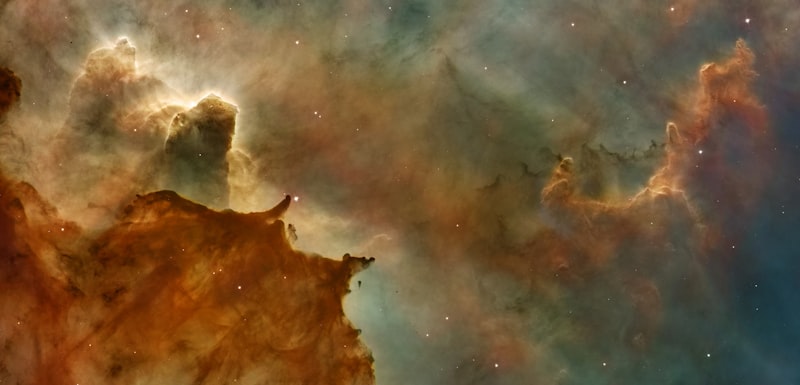
A NASA AI system re-analyzed archived Kepler telescope data and identified 12 previously overlooked exoplanets in the habitable zone, includ - NASA's insights.
NASA AI Unveils 12 Potentially Habitable Exoplanets in Kepler Data
A neural network developed at NASA's Jet Propulsion Laboratory has identified 12 new potentially habitable exoplanet candidates hidden within decades-old data from the Kepler Space Telescope. This breakthrough not only expands the catalog of potentially habitable worlds but also highlights the transformative power of artificial intelligence in uncovering hidden scientific insights from existing datasets.
The Role of AI in Exoplanet Detection
The system, named ExoMiner-3, is the latest iteration of JPL’s exoplanet detection neural network. It was trained on the full catalog of confirmed Kepler exoplanets to identify subtle transit signals — the periodic dips in starlight that occur when a planet passes between its host star and our line of sight. While previous versions of ExoMiner had already proven effective in confirming planet candidates, ExoMiner-3 was specifically designed to detect signals that fell below the traditional signal-to-noise thresholds used in conventional detection pipelines.
Overcoming the Noise Floor
Conventional analysis methods apply strict thresholds to minimize false positives, which often results in the loss of genuine but weak signals. ExoMiner-3 was trained to distinguish authentic planetary transits from false positives caused by eclipsing binary stars, stellar variability, and other sources of confusion. This ability to detect faint signals even when buried in noise marks a significant advancement in exoplanet detection.
The 12 New Potentially Habitable Candidates
Among the 12 newly identified candidates, three rocky, Earth-sized planets have sparked particular scientific interest. These planets, previously overlooked by human analysts, were detected through the AI’s ability to recognize subtle transit patterns in Kepler's data.
Rocky Earth-Sized Worlds Around K-Type Stars
Two of the three rocky candidates orbit K-type stars, which are considered favorable hosts for life due to their stability and long lifespans. These stars are dimmer and cooler than our Sun but provide a stable environment for potential life. Their extended lifespans — ranging from 15 to 45 billion years — offer a longer window for biological evolution compared to the Sun’s 10-billion-year lifespan.
The M-Type Red Dwarf Candidate
The third rocky candidate orbits an M-type red dwarf star, which, while common in the galaxy, presents unique challenges. M-dwarfs have habitable zones that are much closer to the star, often leading to tidal locking. Additionally, their high flare activity poses a threat to planetary atmospheres. Despite these challenges, the candidate is still considered worthy of further investigation.
Follow-Up Observations with the James Webb Space Telescope
NASA has prioritized follow-up observations of these candidates using the James Webb Space Telescope. Transit spectroscopy — the analysis of starlight passing through a planet’s atmosphere — could reveal the presence of biosignature gases such as oxygen, methane, water vapor, and carbon dioxide. These observations are critical for assessing the potential habitability of these exoplanets.
Implications for Future Exoplanet Research
The discovery of 12 potentially habitable exoplanets in Kepler data suggests that many more such planets may have been overlooked in the mission’s extensive photometric dataset. NASA plans to apply ExoMiner-3 to data from the Transiting Exoplanet Survey Satellite (TESS), which has surveyed a much larger portion of the sky.
A Broader Trend in Scientific Discovery
This finding is part of a growing trend in scientific research where AI systems uncover meaningful insights from archival data sets. Similar examples have emerged in fields such as particle physics, genomics, materials science, and climate research. These discoveries underscore the potential for AI to unlock a wealth of previously undetected findings in already collected and cataloged data.
Related Reading
- AI Discovers New Law of Physics Hidden in Decades of Particle Collider Data - FDA Approves First AI-Discovered Cancer Drug from Insilico Medicine - The Blind Woman Who Can See Again, Thanks to an AI-Powered Brain Implant - DeepMind's AI Just Solved a 150-Year-Old Math Problem That Stumped Every Human - Scientists Built an AI That Predicts Earthquakes 48 Hours in Advance