AI Is Rewriting Drug Discovery—And Big Pharma Is Scrambling
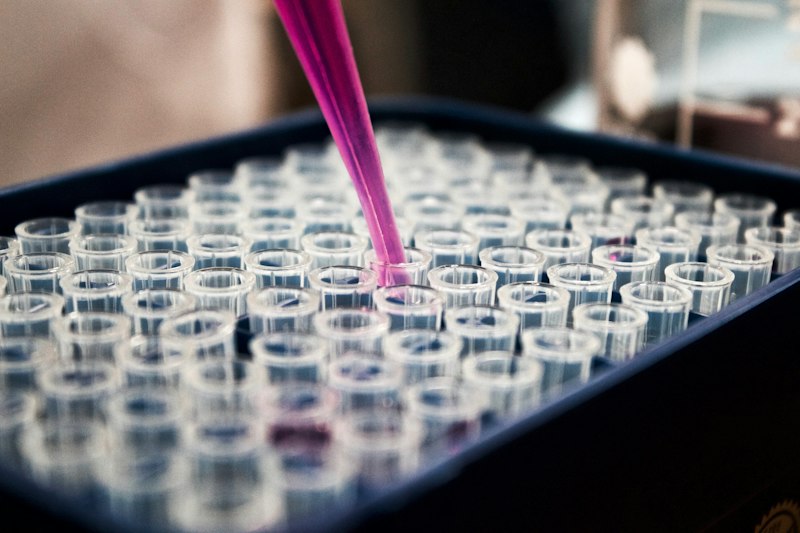
AI-designed drugs reach Phase 3 trials as Big Pharma faces disruption. How artificial intelligence is transforming drug discovery and the future of medicine.
AI Is Rewriting Drug Discovery—And Big Pharma Is Scrambling
Category: research Tags: Drug Discovery, Pharma, Healthcare, AlphaFold, Biotech
Current content:
---
The Computational Shift Upending a Century-Old Model
For decades, pharmaceutical discovery followed a familiar, expensive rhythm: identify a disease target, screen thousands of compounds in wet labs, optimize through countless iterations, and hope—years and billions of dollars later—that a viable drug emerged. AI is collapsing that timeline. Machine learning models can now predict protein structures in minutes rather than years, generate novel molecular architectures that human chemists would never conceive, and flag safety liabilities before a single animal study begins. The result is a fundamental restructuring of how medicines are born.
This shift is not merely incremental improvement. DeepMind's AlphaFold, which solved the 50-year-old protein folding problem, has already mapped over 200 million protein structures—nearly every known protein in existence. Meanwhile, generative AI platforms like those from Insilico Medicine and Recursion Pharmaceuticals are advancing candidates from concept to preclinical validation in 18 months rather than the traditional 4-5 years. For an industry where a single failed Phase III trial can erase billions in market value, the risk reduction alone is transformative.
Why Incumbents Are Racing to Adapt—or Acquire
The pharmaceutical giants are responding with characteristic speed and capital. Pfizer's partnership with IBM Watson, Roche's $1.8 billion acquisition of Flatiron Health, and Merck's collaboration with BenevolentAI represent more than hedging bets; they are admissions that the old R&D playbook is becoming obsolete. Yet cultural friction persists. Big Pharma's organizational structures—built around siloed therapeutic areas, cautious regulatory navigation, and quarterly earnings pressures—clash with the iterative, failure-tolerant ethos of AI-native biotechs.
The most telling indicator of this tension lies in talent flows. Leading AI researchers increasingly prefer the agility of startups like Isomorphic Labs (DeepMind's drug discovery spinout) or the computational-first environment of firms like Schrödinger, where their models can be tested and refined without navigating the bureaucratic machinery of a 70,000-person organization. In response, traditional pharma has deployed its most potent weapon: acquisition premiums that often exceed 100% of market value. The 2021 purchase of Acceleron Pharma by Merck and the 2022 acquisition of Chemogenomics by Sanofi illustrate a strategy of buying capabilities rather than building them organically.
The Regulatory and Scientific Frontiers Ahead
The integration of AI into drug development raises questions that regulators are only beginning to address. The FDA and EMA have established exploratory frameworks for AI-enabled drug discovery, but clear guidance on validation standards—how to prove that a generative model's output is reliable, reproducible, and biologically meaningful—remains under development. This uncertainty creates both opportunity and peril: first movers may shape regulatory precedent, yet missteps could trigger restrictive oversight that stifles innovation.
Scientifically, the field is confronting the limits of current methodologies. While AlphaFold's structural predictions are revolutionary, they remain static snapshots. Proteins are dynamic machines, and capturing their conformational changes—the "breathing" motions that determine function and drug accessibility—requires computational approaches still in their infancy. Similarly, AI's strength in pattern recognition does not automatically translate to understanding causal biological mechanisms. A model may identify a molecule that binds a target with nanomolar affinity without revealing why, or whether that binding produces therapeutic rather than toxic effects. The next generation of AI drug discovery tools will need to integrate multi-omic data, patient-specific factors, and mechanistic reasoning to fulfill their transformative promise.
---
Related Reading
- The Blind Woman Who Can See Again, Thanks to an AI-Powered Brain Implant - Scientists Used AI to Discover a New Antibiotic That Kills Drug-Resistant Bacteria - The First AI-Designed Protein Has Entered Human Clinical Trials - This AI Can Generate Functional Proteins That Don't Exist in Nature - Japan Is Replacing Elderly Caregivers With Robots. The Elderly Prefer It.