AI Agents: Understanding Their Role and Impact
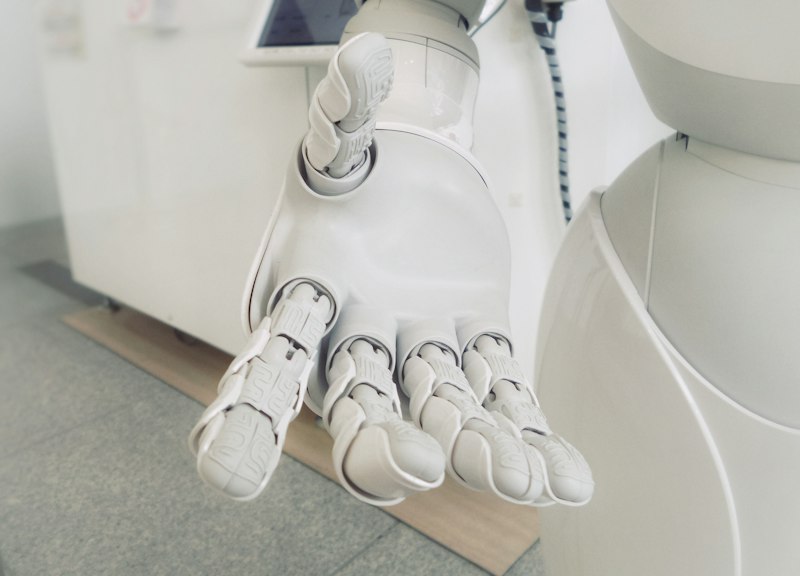
AI agents explained: Learn what they are, how they work, and why they matter. Discover the complete guide to autonomous AI systems transforming work in 2026.
What is an AI Agent?
An AI agent is an artificial intelligence system that can:
1. Understand natural language instructions 2. Plan how to accomplish goals 3. Take actions in the real world or digital systems 4. Learn from results and adjust
Unlike a simple chatbot that only responds to questions, an agent can actually do things: browse the web, write and run code, send emails, book appointments, and more.
---
The Evolution: Chatbot → Assistant → Agent
``` 2022: CHATBOT ├── Answers questions ├── Text in, text out └── No memory or actions ↓ 2023-2024: ASSISTANT ├── Remembers context ├── Can use tools (search, calculate) └── Still needs human in the loop ↓ 2025-2026: AGENT ├── Takes autonomous actions ├── Plans multi-step tasks ├── Executes without supervision └── Handles complex workflows ```
---
How AI Agents Work
The Agent Loop
Every AI agent follows a basic cycle:
``` 1. PERCEIVE └── Receive task or observe environment ↓ 2. THINK └── Plan approach using LLM reasoning ↓ 3. ACT └── Execute action (API call, code, browse) ↓ 4. OBSERVE └── Check results ↓ 5. REFLECT └── Adjust plan if needed ↓ [Repeat until task complete] ```
Core Components
---
Types of AI Agents
1. Simple Reflex Agents
- React to current situation only - No memory or planning - Example: Spam filter2. Model-Based Agents
- Maintain internal model of world - Track state changes - Example: GPS navigation3. Goal-Based Agents
- Work toward specific goals - Plan sequences of actions - Example: Game-playing AI4. Utility-Based Agents
- Maximize utility function - Make trade-offs - Example: Trading algorithms5. Learning Agents
- Improve from experience - Adapt to new situations - Example: Recommendation systems6. LLM-Based Agents (2024-2026)
- Use language models for reasoning - Can handle open-ended tasks - Example: Claude Code, OpenClaw---
Real-World AI Agent Examples
Claude Code (Anthropic)
What it does: Writes, runs, and debugs code autonomously``` User: 'Add user authentication to this Flask app'
Claude Code: 1. Reads existing codebase 2. Plans authentication approach 3. Writes code for routes, models, forms 4. Creates database migrations 5. Writes tests 6. Runs tests and fixes failures 7. Commits changes ```
OpenClaw
What it does: Personal AI agent with full computer access- Manages email - Schedules calendar - Books reservations - Monitors smart home - Runs indefinitely
Devin (Cognition)
What it does: AI software engineer- Takes feature requests - Writes pull requests - Responds to code reviews - Deploys changes
AutoGPT (Open Source)
What it does: General-purpose autonomous agent- Pursues goals independently - Searches web, writes files - Spawns sub-agents
---
Why AI Agents Matter
The Productivity Shift
Economic Impact
McKinsey estimates AI agents could: - Automate 60-70% of current work activities - Add $4.4 trillion annually to global economy - Transform 75% of occupations by 2030
---
How to Use AI Agents Today
For Individuals
1. Claude Code - Coding projects - Install: `npm install -g @anthropic/claude-code` - Use: Describe what you want built
2. ChatGPT with Actions - Browsing and analysis - Enable in ChatGPT Plus - Ask it to research and summarize
3. OpenClaw - Personal automation - Self-host on secondary computer - Start with read-only access
For Teams
1. Microsoft Copilot - Office automation - Summarize meetings - Draft documents - Analyze spreadsheets
2. Custom Agents - Business workflows - Use Claude API or GPT-5 API - Build with LangChain or AutoGen
---
Building Your Own Agent
The Simplest Agent (Python)
```python import anthropic
client = anthropic.Anthropic()
def simple_agent(task): messages = [{ 'role': 'user', 'content': f'Complete this task step by step: {task}' }] while True: response = client.messages.create( model='claude-opus-4-5-20251101', messages=messages, tools=[browse_tool, code_tool, file_tool] ) if response.stop_reason == 'end_turn': return response.content # Execute tool calls tool_results = execute_tools(response.tool_calls) messages.append({'role': 'assistant', 'content': response.content}) messages.append({'role': 'user', 'content': tool_results}) ```
Agent Frameworks
---
Safety and Risks
The Control Problem
AI agents can: - Take actions humans didn't anticipate - Pursue goals in unexpected ways - Make mistakes at scale and speed
Best Practices
``` 1. START SMALL └── Read-only access first └── Limited scope └── Human approval for actions
2. MONITOR CONTINUOUSLY └── Log all actions └── Alert on anomalies └── Regular audits
3. LIMIT BLAST RADIUS └── Sandboxed environments └── Revocable permissions └── Kill switches
4. MAINTAIN OVERSIGHT └── Human in the loop for high-stakes └── Clear escalation paths └── Regular reviews ```
Known Failure Modes
---
The Future of AI Agents
2026-2027 Predictions
- Multi-agent systems: Teams of specialized agents - Longer autonomy: Days/weeks without human input - Physical agents: Robotics integration - Agent marketplaces: Pre-built agents for hire
The Ultimate Vision
'The goal is not to have AI that you talk to, but AI that works for you—understanding your goals, taking initiative, and delivering results while you sleep.'
— Dario Amodei, Anthropic CEO
---
Getting Started
Beginner Path
1. Use ChatGPT with browsing enabled 2. Try Claude with tool use 3. Explore GitHub Copilot for codingIntermediate Path
1. Install Claude Code 2. Build simple agent with API 3. Experiment with LangChainAdvanced Path
1. Deploy OpenClaw carefully 2. Build multi-agent systems 3. Create custom tools and integrations---
Key Takeaways
- AI agents = LLMs that take actions in the real world - The shift is from AI that answers to AI that does - Start with limited permissions and expand carefully - The productivity potential is massive but so are the risks - 2026 is the year agents go mainstream
---
Related Reading
- AI Agents Are Getting Their Own Wallets. The Autonomous Economy Is Here. - Robot Shoppers Are Coming: How NVIDIA's AI Is Remaking Retail - FDA Approves First AI-Discovered Cancer Drug from Insilico Medicine - The Blind Woman Who Can See Again, Thanks to an AI-Powered Brain Implant - DeepMind's AI Just Solved a 150-Year-Old Math Problem That Stumped Every Human