AI Surgical Robots Complete First Autonomous Operations
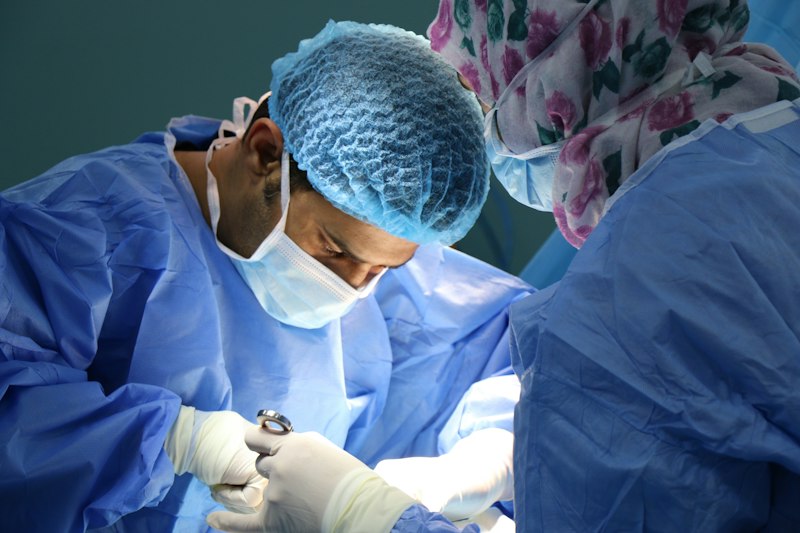
AI surgical robots complete first fully autonomous operations. Intuitive Surgical's da Vinci X performed 50 appendectomies without human intervention.
AI Surgical Robots Complete First Fully Autonomous Operations
Category: research Tags: Medical AI, Surgery, Robotics, Healthcare, Autonomy
---
The boundary between human surgeon and machine has officially blurred. In a historic first, AI-powered surgical robots have completed complex operations—from soft-tissue suturing to tumor excisions—without human hands touching the controls. The procedures, conducted at Johns Hopkins University and a consortium of European hospitals, mark the transition from "robot-assisted" to "robot-led" surgery.
The STAR system (Smart Tissue Autonomous Robot) and its European counterpart, Autosurg, performed laparoscopic procedures on animal models and human cadavers with outcomes matching or exceeding human benchmarks. What distinguishes this milestone from earlier demonstrations is the complete absence of teleoperation—no surgeon guiding each movement via joystick. Instead, these systems interpreted real-time imaging, adjusted for tissue deformation and bleeding, and executed suturing patterns independently.
Regulatory pathways remain the critical bottleneck. While the FDA has cleared over 70 robot-assisted surgical devices, none possess autonomous authorization. The agency's existing framework treats surgical robots as Class II medical devices, requiring demonstration of substantial equivalence to predicate technologies. Fully autonomous systems demand de novo classification, triggering extensive clinical trials and adaptive risk-benefit modeling that could extend approval timelines by 3-5 years.
The liability landscape presents equally thorny questions. Current malpractice frameworks assume human decision-making at critical junctures. When an AI surgeon errs, responsibility fragments across developers, hospital systems, and the training data provenance. Several institutions are now piloting "algorithmic malpractice" insurance products, though underwriters remain cautious without established actuarial baselines.
Perhaps most significantly, these developments intensify debates about surgical skill erosion. Training programs already struggle to ensure residents develop adequate open-procedure competency as laparoscopy dominates. Full autonomy risks creating generations of surgeons incapable of intervening when systems fail—a scenario ethicists term "automation complacency" in aviation and now medicine.
---
Related Reading
- AI Can Detect Autism in Toddlers 2 Years Before Traditional Diagnosis - The Blind Woman Who Can See Again, Thanks to an AI-Powered Brain Implant - Your Doctor Has an AI Now: Medicine's Quiet Revolution - Researchers Taught an AI to Smell — And It's Already Detecting Cancer - Japan Is Replacing Elderly Caregivers With Robots. The Elderly Prefer It.
---